Do you want plants in your home, but you are scared you will kill them? You are not alone. A lot of people love the idea of plants but feel worried the moment they bring one home. What if I water it too much? What if it does not get enough light? And I just forget about it for two weeks?
The good news is simple: you do not need a “green thumb” to grow plants. You need the right plants. Some plants are tough. They can handle a little neglect. They do not need special food, special pots, or hours of your time every week. These are called low-maintenance plants, and they are perfect for beginners.
In this guide, we’ll cover the best low-maintenance plants for beginners. We will also share easy tips on watering, light, soil, and common mistakes. By the end, you will know exactly which plants to pick and how to keep them alive and happy.
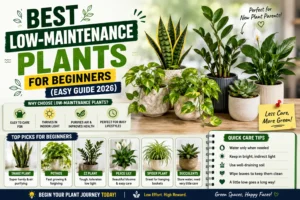
Why Choose Low-Maintenance Plants When You Are a Beginner?
Before we jump into the plant list, let’s talk about why low-maintenance plants are a smart first choice.
- They forgive mistakes: Everyone forgets to water a plant sometimes. Tough plants can handle this without dying.
- They build your confidence: When your first plant survives (and even grows new leaves!), you feel proud. This makes you want to try more plants.
- They save you money: Fragile plants that die often mean you keep buying new ones. Tough plants live for years, so you spend less over time.
- They fit busy lives: Not everyone has time to check on plants every single day. Easy plants are perfect for people with busy jobs, school, or family life.
- They still look beautiful: Low-maintenance does not mean boring. Many of these plants have pretty leaves, bright colors, or interesting shapes.
Now, let’s get into the best plants for beginners.
The Best Low-Maintenance Indoor Plants for Beginners
1. Snake Plant (Sansevieria)
The snake plant is probably the most famous “hard to kill” plant, and for good reason. It has tall, stiff leaves that stand straight up, often with green and yellow stripes.
- Light: It can grow in low light or bright light. It is very flexible.
- Water: Water it only when the soil is fully dry. This might be once every two or three weeks. Too much water is the only real way to hurt this plant.
- Extra benefit: Some studies suggest it can help clean the air in your home by filtering out things like formaldehyde.
This plant is a perfect first plant because it truly does not ask for much. If you forget about it for a while, it will likely still be fine when you remember.
2. Pothos
Pothos is a vine plant with heart-shaped leaves. It can trail down from a shelf or climb up a pole. It comes in different colors, like green, yellow-green, or white and green mixed together.
- Light: It grows well in low light, but it grows faster in bright, indirect light.
- Water: Water when the top of the soil feels dry. It will even tell you when it’s thirsty because the leaves droop a little, then perk back up after watering.
- Bonus: It is very easy to grow more pothos plants. Just cut a piece of the vine, put it in a cup of water, and roots will grow. Then you can plant it in soil.
Pothos is a great choice if you want a plant that grows fast and looks lush without much effort.
3. ZZ Plant (Zamioculcas zamiifolia)
The ZZ plant has shiny, dark green leaves that almost look fake because they are so smooth and glossy. It grows slowly, which is actually helpful for beginners because it means less work.
- Light: It can handle low light very well, which makes it great for offices or rooms without big windows.
- Water: This plant stores water in its roots, so it can go weeks without watering. Water only when the soil is completely dry.
- Warning: The biggest mistake with ZZ plants is watering too often. When in doubt, wait a few more days.
If you want a plant for a room with little sunlight, the ZZ plant is one of your best options.
4. Spider Plant
The spider plant has long, thin, curved leaves, often with white stripes down the middle. It gets its name because it grows small “baby” plants that hang down like little spiders on strings.
- Light: It likes bright, indirect light but can also handle medium light.
- Water: Water it when the soil feels dry about an inch down. It likes soil that dries out a bit between waterings.
- Fun fact: The baby plants that grow can be cut off and planted to make brand-new spider plants. This makes it a fun plant for beginners who want to try propagation.
5. Peace Lily
If you want a plant with flowers but do not want the stress of a fussy flowering plant, the peace lily is a great pick. It has dark green leaves and white flowers shaped like little flags.
- Light: It grows best in low to medium light, away from direct sun.
- Water: This plant is very easy to read. When it needs water, the leaves droop down. Once you water it, the leaves stand back up within a few hours. This makes it almost impossible to guess wrong.
- Note: Keep it away from pets, since peace lilies can be mildly toxic if eaten.
6. Aloe Vera
Aloe vera is a succulent, which means it stores water in its thick, fleshy leaves. This is why it does not need frequent watering.
- Light: It loves bright light, so put it near a sunny window.
- Water: Water deeply, then wait until the soil is completely dry before watering again. This might be every two to three weeks.
- Bonus: The gel inside the leaves can be used to soothe minor burns and skin irritation, which makes this plant both pretty and useful.
7. Chinese Evergreen (Aglaonema)
This plant has broad, patterned leaves in colors like green, silver, pink, or red, depending on the variety. It adds a nice pop of color to a room.
- Light: It handles low light well, but variety with more color (like pink) may want a bit more light to keep its color bright.
- Water: Water when the top inch of soil is dry. It is fairly forgiving if you miss a watering.
8. Cast Iron Plant
As the name suggests, this plant is tough as iron. It has thick, dark green leaves and can survive in conditions that would kill many other plants.
- Light: It tolerates low light very well, plus it can also handle some neglect in temperature changes.
- Water: Water only when the soil is dry. It rarely needs fertilizer.
- Best for: Dim hallways, offices, or rooms with small windows.
9. Jade Plant
The jade plant is another succulent, with round, shiny, thick leaves that look like little coins. Many people believe it brings good luck, which makes it a popular gift.
- Light: It needs bright light to thrive, so a sunny windowsill is ideal.
- Water: Let the soil dry out completely between waterings. Overwatering is the main danger for this plant.
10. Philodendron (Heartleaf)
This trailing plant has soft, heart-shaped leaves and grows quickly. It looks great on a shelf, in a hanging basket, or climbing up a small trellis.
- Light: It grows in low to medium light, though it grows faster with more light.
- Water: Water when the top of the soil feels dry to the touch.
- Bonus: Like pothos, it is easy to grow new plants from cuttings in water.
Best Low-Maintenance Outdoor Plants for Beginners
Not everyone wants indoor plants. Maybe you have a garden, a balcony, or a small yard. Here are a few outdoor plants that are known for being tough and easy to grow.
1. Black-Eyed Susan
This cheerful flower has bright yellow-orange petals with a dark brown center. It has sturdy stems and vibrant color, and gardening experts expect it to remain popular because it reads clearly from a distance and grows well in heat and full sun.
- Light: Full sun.
- Water: It is low maintenance and drought-tolerant once it settles into the ground.
- Bonus: It attracts bees and butterflies, so it helps your garden’s ecosystem too.
2. Ornamental Grasses
If you want texture instead of just flowers, ornamental grasses are a great low-effort choice. They add movement and softness to a garden without needing much attention.
- Light: Most types like full sun.
- Water: Once they are established, they need very little watering.
- Bonus: They look good in every season, even in fall and winter when many flowers are gone.
3. Hawthorn
For those who want a small tree or a hedge, hawthorn is a hardy option. Its sharp thorns make it useful as a hedge or barrier, and it works well as an accent tree in a low-maintenance yard. Just plant it in early spring or early fall and water it during the first year while it settles in.
4. Succulents (Outdoor Varieties)
Many succulents can live outdoors in the right climate. They store water in their leaves, so they can handle dry spells better than most plants.
- Light: Bright, direct sun for most varieties.
- Water: Very little. Overwatering is more dangerous than underwatering.
How to Choose the Right Plant for Your Space
Picking a plant is not just about what looks pretty in the store. It is about matching the plant to your space and your lifestyle. Here is a simple way to think about it.
Check your light: Stand in the room where you want to put the plant. Is there a window nearby? Does the sun shine in directly, or is the light soft and indirect? Rooms with little light need plants like snake plants, ZZ plants, or cast iron plants. Sunny rooms are perfect for aloe vera, jade plants, or succulents.
Think about your schedule: If you travel a lot or often forget small tasks, pick plants that can go weeks without water, like succulents or snake plants. If you enjoy caring for plants daily, you can pick from a wider range.
Consider pets and children: Some plants, like peace lilies and philodendrons, can be mildly toxic if eaten. If you have curious pets or small kids, look up the plant’s safety before buying it, or choose pet-safe options like spider plants.
Think about size: Some plants, like rubber plants or Chinese evergreen, can grow quite large and need space. Others, like snake plants or ZZ plants, stay smaller and fit well in tight spaces.
Simple Care Tips Every Beginner Should Know
Even low-maintenance plants need a little bit of basic care. Here are some simple rules that apply to almost every plant on this list.
1. Do Not Overwater
This is the number one mistake beginners make. People often think more water equals more love, but it is the opposite for most plants. Too much water can cause root rot, which is when the roots start to rot in soggy soil. The plant cannot fix this once it gets bad.
A simple trick: stick your finger about an inch into the soil. If it feels dry, water the plant. If it feels damp, wait a few more days.
2. Use Pots With Drainage Holes
A pot with a hole in the bottom lets extra water escape instead of sitting at the bottom and drowning the roots. If your pot does not have a hole, you can still use it as a decorative outer pot, but keep the plant in a plastic nursery pot with holes inside it.
3. Match the Light to the Plant
Reading a plant tag or a quick guide (like this one) will tell you if a plant needs bright light or can survive in low light. Putting a sun-loving plant in a dark corner, or a shade-loving plant in direct sun, is one of the easiest ways to stress out a plant.
4. Do Not Worry Too Much About Fertilizer
Beginners often think plants need constant feeding. In reality, most low-maintenance plants only need fertilizer once every month or two during their growing season (spring and summer), and little to none in fall and winter. When in doubt, skip it. Too much fertilizer can actually harm a plant more than too little.
5. Watch the Leaves for Clues
Plants often “talk” to you through their leaves.
- Yellow leaves often mean too much water.
- Brown, crispy edges often mean too little water or too much direct sun.
- Drooping leaves can mean the plant is thirsty (water it and see if it perks up).
- Leaves falling off suddenly can be a sign of shock from a big change, like a new location or temperature swing.
Learning to read these signs will help you catch problems early.
6. Start Small
You do not need to buy ten plants on your first trip to the store. Start with one or two easy plants from this list. Get comfortable with watering and light before adding more to your collection.
7. Repot Only When Needed
New plant owners sometimes repot too soon, thinking bigger pots are always better. In truth, most plants like to be a little snug in their pot. Only repot when you see roots coming out of the drainage holes or circling tightly around the inside of the pot, which usually happens once every one to two years.
Common Mistakes Beginners Make (And How to Avoid Them)
Let’s go over a few more mistakes that new plant owners often make, so you can avoid them from day one.
Mistake 1: Watering on a fixed schedule: Watering “every Monday” no matter what does not work well, because plants need different amounts of water depending on the season, temperature, and light. Instead, check the soil each time before you water.
Mistake 2: Ignoring pests: No plant is completely free of bugs, and it’s possible for any houseplant to get insects. The good news is that most low-maintenance plants are naturally less likely to attract pests. Still, it helps to check new plants closely before bringing them home, and to keep new plants away from your other plants for a few weeks just in case.
Mistake 3: Placing plants near heating or cooling vents: Plants do not like sudden blasts of hot or cold air. Keep them away from air conditioners, heaters, and drafty windows.
Mistake 4: Choosing a plant based on looks alone: A beautiful plant that needs constant care can be stressful for a beginner. It is smarter to start with an easy plant, even if it is a bit plain, and build your confidence first.
Mistake 5: Giving up after one plant dies: Almost every plant lover has killed a plant at some point. It happens to everyone. The key is to learn from it rather than give up. Ask yourself: was it too much water? Not enough light? Then try again with a new plant.
How Propagation Can Save You Money
One more reason low-maintenance plants are great for beginners is how easy many of them are to multiply. Propagation is the process of creating new plants from parts of other plants, and it helps people grow their plant collection without spending more money. For plants like pothos and philodendron, this is as simple as snipping a piece of the vine and placing it in water until roots grow.
This means that once you have one healthy pothos or spider plant, you can create many more to fill your home, share with friends, or even give as gifts.
Frequently Asked Questions
What is the easiest plant to keep alive? Many people agree that the snake plant and the ZZ plant are the easiest to keep alive. Both can survive low light and can go weeks without water.
Can low-maintenance plants still die? Yes. “Low-maintenance” does not mean “impossible to kill.” These plants are simply more forgiving of small mistakes, like missing a watering or getting a bit less light than they prefer. They still need basic care.
Do low-maintenance plants need sunlight? Most of them can survive in low or medium light, but almost every plant grows better and looks fuller with more natural light, even if it is indirect.
How often should I water a low-maintenance plant? This depends on the specific plant, but a good general rule is to check the soil first. If it feels dry an inch or two down, it is time to water. If it feels damp, wait.
Are low-maintenance plants safe for pets? Not always. Some, like peace lilies, can be mildly toxic if eaten. Always check a specific plant’s safety before bringing it home if you have pets or small children.
What is the fastest-growing low-maintenance plant? Pothos and philodendron are known for growing quickly with very little effort, making them satisfying choices for beginners who want to see fast results.
Final Thoughts
Growing plants does not have to be stressful. With the right choices, like snake plants, pothos, ZZ plants, and peace lilies indoors, or black-eyed Susans and ornamental grasses outdoors, you can enjoy greenery in your home or garden without spending hours worrying about it.
Remember the basics: check the soil before watering, match the plant to the light in your space, and watch the leaves for clues about what your plant needs. Start with just one or two plants, learn how they behave, and grow your collection from there.
Every plant expert started as a beginner once. With these low-maintenance plants by your side, you are already off to a strong start.