

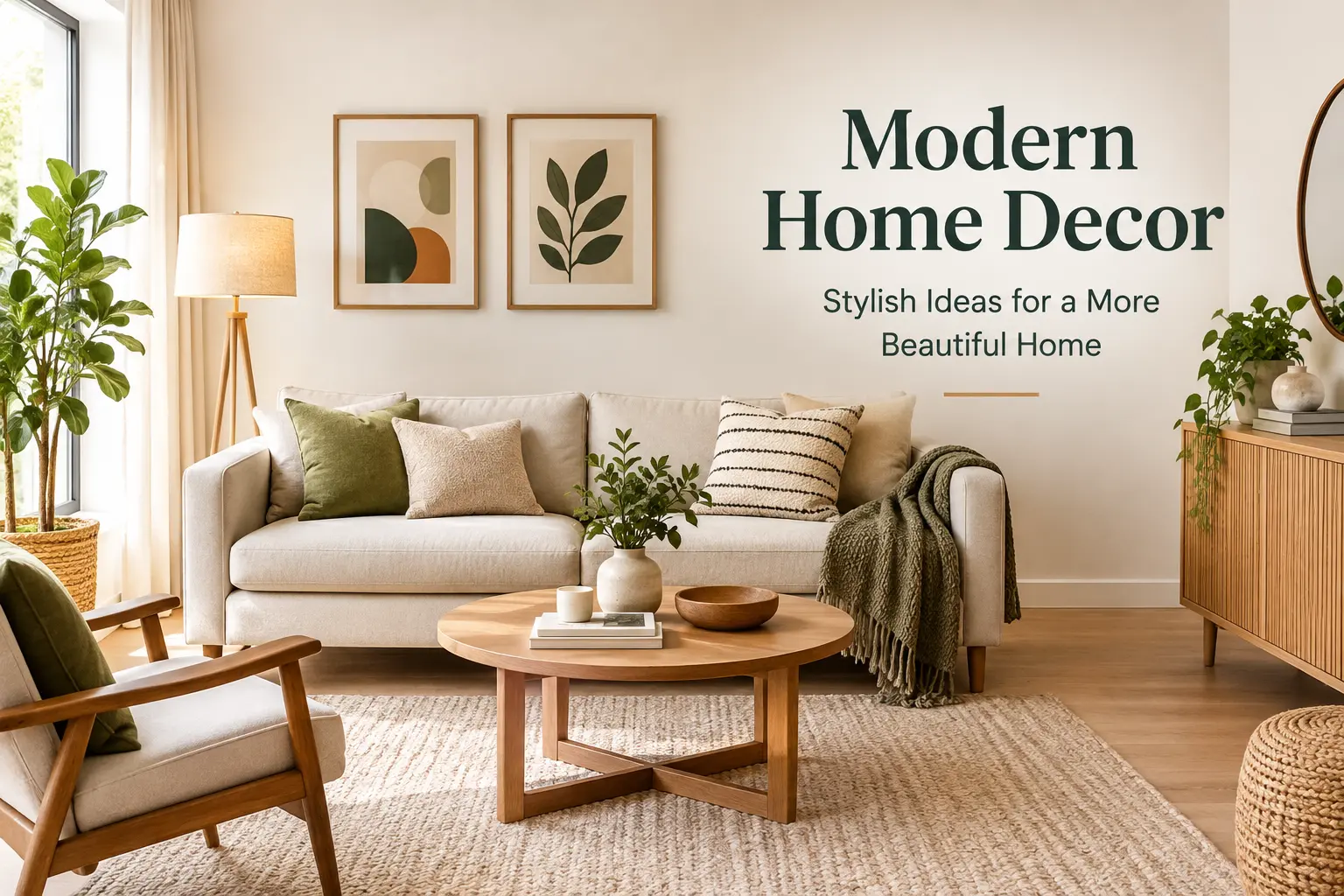
Modern home decor is about creating a home that feels stylish, comfortable, functional, and personal. It combines clean lines, thoughtful furniture choices, balanced colors, natural materials, and practical lighting to create spaces that look beautiful without feeling overcrowded. Whether you live in a small apartment or a spacious house, the right decorating choices can make your rooms feel more welcoming.
You do not need expensive furniture or a complete renovation to achieve a modern look. Simple changes, such as adding textured cushions, updating wall colors, improving lighting, choosing functional storage, or rearranging existing furniture, can make a noticeable difference.
The best modern home decor ideas focus on how you actually use your space. A living room should encourage relaxation, a bedroom should feel restful, and a kitchen should support everyday tasks. Decorative details should bring these functions together rather than compete with them.
In this guide, you will discover practical modern home decor ideas for different rooms, learn how to select colors and furniture, explore affordable decorating methods, and find ways to create a contemporary home that reflects your personality.
What Is Modern Home Decor?
Modern home decor describes an approach to interior styling that values simplicity, useful design, balanced proportions, and carefully selected decorative elements. It often features clean furniture shapes, uncluttered surfaces, neutral colors, and materials such as wood, glass, metal, stone, and natural fabrics.
Modern design originally developed alongside architectural and furniture movements that emphasized function and simpler forms. Today, people also use the term to describe contemporary interiors that combine modern principles with current colors, textures, and personal accessories.
A modern home does not have to look cold or empty. Warm wood, soft rugs, comfortable seating, indoor plants, and layered lighting can make a minimalist room feel inviting.
Key Features of Modern Interior Design
Several characteristics help define a modern interior:
- Clean lines: Furniture and architectural details have clear, simple shapes.
- Functional furniture: Each piece serves a practical purpose while supporting the overall design.
- Balanced colors: Neutral shades often provide a foundation for stronger accent colors.
- Natural textures: Wood, linen, cotton, stone, and woven materials add warmth and visual depth.
- Thoughtful lighting: Different light sources support relaxation, work, and everyday activities.
- Intentional decoration: Artwork, plants, books, and accessories are selected with care.
- Open visual space: Furniture placement and storage help rooms feel organized and easy to use.
These features provide a flexible starting point. You can adapt them to your budget, home size, cultural preferences, and existing furniture.
15 Modern Home Decor Ideas to Transform Your Space
1. Choose a Warm and Balanced Color Palette
Color is one of the easiest ways to change the atmosphere of a room. A carefully planned palette helps furniture, flooring, curtains, and decorative accessories work together.
White, beige, cream, warm gray, and soft taupe are popular starting points for modern interiors. However, you do not need to paint every wall white to create a contemporary look. Muted green, dusty blue, terracotta, and earthy brown can add character without overwhelming the space.
Start by selecting three main color roles:
- Base color: Use a neutral shade for the largest surfaces, such as walls.
- Supporting color: Introduce a complementary shade through furniture, curtains, or bedding.
- Accent color: Add a smaller amount of a stronger color through cushions, artwork, vases, or decorative objects.
For example, a living room with warm white walls, a beige sofa, oak furniture, and olive-green cushions can feel coordinated without looking overly matched.
Before buying paint or fabric, test samples under your room’s natural and artificial lighting. A color that appears warm in a showroom may look different in a north-facing room or under cool white bulbs.
Best for: Living rooms, bedrooms, dining rooms, and small apartments.
2. Keep Furniture Simple and Functional
Furniture has a major influence on the appearance of a room. Modern home decorating ideas often favor furniture with straightforward shapes, useful storage, and proportions that suit the available space.
Look for sofas with clean silhouettes, dining tables with simple legs, beds with understated headboards, and cabinets that provide storage without unnecessary decoration.
You do not have to replace every piece of furniture. A traditional wooden table can work beautifully with modern chairs, while a simple contemporary sofa can complement a vintage cabinet. Combining different styles creates interest when the colors and proportions feel balanced.
Measure the room before buying anything. Leave enough space to walk comfortably around seating, tables, and storage units. Oversized furniture can make a small room feel crowded, even when the individual pieces look attractive.
Consider multifunctional options such as storage beds, nesting tables, extendable dining tables, and ottomans with hidden compartments. These choices support a modern aesthetic while helping you use your space efficiently.
Practical tip: Prioritize comfort, construction quality, and everyday usefulness over decorative trends that may not suit your lifestyle.
3. Create a Welcoming Modern Living Room
The living room is often the main gathering space in a home. Modern living room decor should balance appearance, comfort, conversation, entertainment, and storage.
Begin with the seating arrangement. Position the sofa and chairs to encourage conversation rather than automatically pushing every piece against a wall. In a compact room, a smaller sofa and one accent chair may work better than a large sectional.
Add a rug to define the seating area. Choose a size that allows at least the front legs of the main seating pieces to sit on it, where the layout permits. This helps the furniture feel connected.
Use a coffee table that fits the scale of the sofa and leaves enough room to move around it. A wooden table adds warmth, while a glass or metal design can create a lighter visual effect.
Next, introduce layers through cushions, throws, artwork, and lighting. A floor lamp beside the sofa provides useful reading light, while a table lamp can create a softer evening atmosphere.
Avoid filling every shelf and surface. Leave some open space around decorative objects so the room feels organized.
For a finishing touch, display a few personal items, such as framed photographs, books, handmade ceramics, or travel souvenirs. These details make the room feel lived in rather than copied from a furniture showroom.
4. Make the Bedroom Calm and Comfortable
Modern bedroom decor should create a restful environment while keeping essential items within easy reach. A simple color scheme, comfortable bedding, practical storage, and gentle lighting can achieve this without an expensive makeover.
Start with the bed because it usually dominates the room. Choose bedding in colors that work with the walls and flooring. White, cream, muted green, dusty blue, and warm beige are versatile choices.
Layer different textures to prevent the room from feeling flat. Cotton sheets, a knitted throw, linen-style curtains, and a soft rug can add depth without introducing too many colors.
Keep bedside tables proportionate to the bed. Use them for essential items, such as a lamp, a book, or a small tray. If floor space is limited, wall-mounted shelves can replace bulky bedside furniture.
Lighting also matters. A bedside lamp or wall light offers a more relaxing alternative to relying only on a bright ceiling fixture.
Choose artwork that supports the atmosphere you want. A large framed print, a pair of coordinated pictures, or a simple textured wall treatment can provide a focal point behind the bed.
Finally, reduce visible clutter. Use drawers, baskets, wardrobe organizers, and under-bed storage to keep everyday belongings accessible without leaving them scattered around the room.
5. Use Modern Wall Decor to Add Personality
Blank walls can make a room feel unfinished, but filling every wall with decorations can make it feel busy. Modern wall decor works best when the size, color, and placement of each item relate to the surrounding furniture.
Large artwork can create a focal point above a sofa, console table, or bed. Choose a piece that complements the room’s color palette instead of competing with it.
Gallery walls are another option. Combine framed photographs, illustrations, abstract prints, and meaningful personal images. Keep a consistent element, such as frame color, spacing, or a shared palette, to make the arrangement feel intentional.
Mirrors can reflect light and create a greater sense of visual depth. Place them where they reflect an attractive view, a window, or a well-lit part of the room.
You can also explore textured wall finishes, simple floating shelves, decorative panels, or a single accent wall. The best choice depends on your budget and whether you own or rent the property.
For renters, removable hooks and lightweight framed prints may be more practical than permanent installations. Always check the wall surface and the manufacturer’s weight limits before hanging heavy objects.
6. Bring Natural Materials Into Your Home
Natural materials add warmth and tactile interest to contemporary interiors. Wood, stone, cotton, linen, jute, rattan, clay, and handmade ceramics can soften the clean lines often associated with modern design.
You can introduce these materials gradually. A wooden coffee table, a woven basket, a cotton throw, a jute-style rug, or a ceramic vase may be enough to change the feel of a room.
Visible wood grain is especially useful when a neutral palette feels too plain. Oak, walnut, teak, and other wood finishes each have different colors and visual character, so try to coordinate undertones when combining pieces.
Textiles provide another opportunity to add variety. A linen curtain can soften a room, while a textured cushion can add depth to a plain sofa.
If sustainability is important to you, consider secondhand furniture, reclaimed wood, durable textiles, and locally made accessories. Repairing or reusing an existing item can be a practical alternative to purchasing something new.
Natural materials still require suitable care. Protect wood from excess moisture, follow the manufacturer’s instructions for stone surfaces, and choose washable textiles where spills are likely.
7. Improve Lighting With Multiple Light Sources
Lighting can influence how colors appear and how comfortable a room feels. A single overhead light may provide general illumination, but it rarely meets every lighting need.
A layered lighting plan combines three useful types:
- Ambient lighting: Provides general illumination throughout the room.
- Task lighting: Supports activities such as reading, cooking, studying, or working.
- Accent lighting: Highlights artwork, shelves, architectural details, or decorative features.
In a living room, combine ceiling lighting with a floor lamp near a reading chair and a table lamp beside the sofa. In a bedroom, add bedside lights to make nighttime routines more convenient.
For kitchens, use general ceiling lights alongside suitable task lighting over work surfaces. In bathrooms, choose fixtures and installation methods rated for the relevant damp or wet locations.
The color temperature of a bulb also changes the atmosphere. Warm white lighting often feels relaxing in bedrooms and living rooms, while a more neutral white may suit focused tasks.
Whenever possible, use dimmers or separate switches so you can adjust the lighting for different activities. Choose efficient bulbs compatible with your fixtures, and avoid placing decorative lamps where their cords create a trip hazard.
8. Decorate Small Spaces With Purpose
Small homes can look stylish and functional when every item has a clear role. Modern home decor ideas for small spaces should focus on scale, storage, light, and movement.
First, measure the room and plan the furniture arrangement. Choose a sofa that leaves enough walking space, a dining table that fits the household’s needs, and storage that uses vertical space where practical.
Wall-mounted shelves can free up floor space. Tall bookcases make use of vertical height, while storage benches can provide both seating and a place to keep belongings.
Mirrors may make a room feel more open by reflecting light, although they do not physically increase the room’s size. Light-colored walls and curtains can also help create a brighter appearance.
Avoid buying many small decorative objects simply because the room is small. A few well-chosen accessories often look more cohesive than numerous items spread across every surface.
Choose furniture with exposed legs when appropriate, since seeing more of the floor can make the space feel visually lighter. Nesting tables and folding furniture can provide flexibility without permanently occupying valuable space.
Most importantly, keep frequently used items easy to reach. A small home should be comfortable to live in, not arranged so carefully that everyday activities become difficult.
9. Refresh Your Kitchen With Modern Details
A modern kitchen should combine easy maintenance, efficient storage, good lighting, and a coordinated appearance. You can improve its look without replacing cabinets or undertaking a major renovation.
Start by removing unnecessary items from the countertops. Keep regularly used appliances accessible and store less frequently used equipment in suitable cabinets.
Replace worn cabinet handles if the existing fittings allow it. Simple metal, matte black, or understated brushed finishes can change the appearance of cabinets without requiring a complete replacement.
Consider adding a washable runner, a small plant suitable for the environment, coordinated storage jars, or a decorative bowl for frequently used fruit.
If you are updating a kitchen, consider how the countertop, backsplash, cabinet finish, and floor color work together. A simple palette with one contrasting material often creates a more balanced result than using many competing finishes.
Task lighting is particularly important around food preparation areas. Ensure that work surfaces receive adequate light and that electrical installations follow local safety requirements.
Avoid placing decorative accessories near heat sources or in areas where they interfere with food preparation. A modern kitchen should look attractive while remaining practical to clean and use.
10. Style Your Dining Area Simply
The dining area can feel special without requiring an elaborate table setting or expensive furniture. Focus on the table, seating, lighting, and a few coordinated accessories.
Choose chairs that suit the table’s height and provide comfortable seating. In a small dining space, a round table may make movement easier, depending on the room’s shape and layout.
A pendant light can help define the dining area. Position it according to the fixture manufacturer’s guidance and ensure it does not block sightlines across the table.
For the tabletop, try a low vase, a simple bowl, or a small arrangement of fresh or dried flowers. Keep the centerpiece low enough that people can converse comfortably.
Textiles can soften the room. Cloth napkins, a runner, or coordinated placemats introduce color without making the table feel crowded.
If your dining area also serves as a workspace, use a tray or storage box to move work items out of sight when the table is needed for meals.
The goal is to create a flexible area that feels welcoming during ordinary family meals and special occasions alike.
11. Add Indoor Plants and Natural Accents
Indoor plants can bring color, texture, and a connection to nature into a modern interior. Their shapes contrast nicely with straight furniture lines and simple architectural forms.
Choose plants according to the light, temperature, humidity, and maintenance conditions in your home. A plant that thrives beside a bright window may struggle in a dark hallway.
Use planters that complement your decor. Ceramic pots can create a polished appearance, while woven baskets or textured containers may suit a softer, more relaxed interior. Ensure the planter provides appropriate drainage or use a suitable inner pot.
Place larger plants in empty corners where they will not block pathways. Smaller plants can sit on shelves or side tables if the surfaces receive adequate light.
If you have pets or young children, check whether a plant is toxic before bringing it home. Keep unstable pots away from edges and use suitable trays to protect furniture from water.
Plants should not be treated as a substitute for proper ventilation or air filtration. Their main decorating value is the visual interest and natural character they bring to a room.
12. Choose Curtains, Rugs, and Soft Furnishings Carefully
Soft furnishings help connect the different elements of a room. Curtains, rugs, cushions, and throws introduce texture and can improve comfort without requiring structural changes.
For curtains, consider the window size, privacy needs, sunlight, and ceiling height. Hanging curtains higher than the window frame, when the layout permits, can create the impression of greater height.
Select a rug based on the furniture arrangement and room dimensions. A rug that is too small can make a seating area feel disconnected, while one that is too large may overwhelm a compact space.
Use cushions to introduce a small number of complementary colors or patterns. Varying textures can create interest without relying on many different prints.
For practical rooms, prioritize easy-care materials. Washable cushion covers and rugs with suitable cleaning instructions can be especially helpful in homes with children or pets.
When layering textiles, consider their visual weight. Heavy curtains and thick rugs can make a room feel cozy, while lighter fabrics may suit a bright, airy interior.
13. Mix Modern and Vintage Pieces
A contemporary room does not need to contain only new furniture. Vintage objects and inherited pieces can add history, character, and individuality.
For example, a vintage wooden cabinet can sit beside a modern sofa. An antique mirror may work well above a simple console, while an older dining table can be paired with contemporary chairs.
The key is to create a visual connection between the pieces. Similar wood tones, complementary colors, repeated materials, or balanced proportions can help different styles feel intentional.
Avoid filling the room with vintage items simply because they are available. Select pieces that serve a purpose or have personal meaning.
If you purchase secondhand furniture, inspect its condition and check for structural damage, moisture issues, odors, and signs of pests. Restore or repair items where appropriate.
Mixing old and new pieces can also reduce waste and help you create a home that does not look identical to every other modern interior.
14. Use Smart Storage to Reduce Visual Clutter
Good storage is an important part of modern interior styling. Even attractive furniture and accessories can look messy when everyday belongings have no designated place.
Start by identifying the items that regularly accumulate on tables, counters, chairs, and floors. Give each category a practical storage location close to where it is used.
Use baskets for blankets, trays for small objects, drawer organizers for accessories, and closed cabinets for items you do not need to display.
Floating shelves can hold books and selected decorative objects, but avoid filling every shelf from end to end. A little open space makes the arrangement easier to appreciate.
In bedrooms, wardrobe dividers and under-bed storage can help organize clothing and seasonal belongings. In kitchens, drawer inserts and cabinet organizers can make everyday tools easier to access.
Choose storage that fits your home rather than buying organizers before measuring. The most effective system is one you can maintain without extra effort.
Remember that organization is not about removing every personal object. It is about making useful belongings easy to find while keeping shared surfaces manageable.
15. Personalize Your Home With Meaningful Details
A modern interior should reflect the people who live in it. Without personal details, even a beautifully furnished room can feel generic.
Display a few favorite photographs, artwork from local creators, handmade pottery, travel souvenirs, books, or objects connected to family traditions.
You can also reflect your interests through color, fabric, music collections, plants, or a dedicated reading corner. These details help your home feel distinctive without requiring a completely different decorating style.
Arrange collections thoughtfully. Grouping objects by color, material, theme, or height often looks more cohesive than spreading them randomly throughout a room.
Rotate seasonal decorations or display different objects from time to time instead of continually buying new accessories.
Personalization also includes accessibility and comfort. Make sure frequently used items are reachable, pathways remain clear, and furniture supports the way you move through the home.
The best modern home decor combines visual simplicity with meaningful details. Your home should express your preferences rather than follow every new trend.
Modern Home Decor Color Schemes That Work Well
A coordinated color palette makes decorating easier because it provides a consistent starting point for furniture, walls, fabrics, and accessories.
Warm Neutral Palette
Combine cream, beige, warm white, and natural wood for a comfortable and versatile appearance. This palette works particularly well in living rooms and bedrooms.
Add texture through woven baskets, linen-style curtains, wood furniture, and ceramic accessories to prevent the room from feeling flat.
Earthy Green and Brown Palette
Olive green, muted sage, warm brown, and cream can create a natural atmosphere. Use green through cushions, artwork, plants, or a painted accent wall.
Wooden furniture and woven textures help connect the palette.
Black, White, and Wood Palette
White walls, black accents, and medium-toned wood create a clear contrast. This combination can work well in kitchens, home offices, and living rooms.
Use black selectively if you want the space to remain bright. Too many dark surfaces may make a small room feel heavier.
Soft Blue and Neutral Palette
Dusty blue, soft gray, cream, and light wood can create a calm look. This combination suits bedrooms, bathrooms, and rooms that receive plenty of natural light.
Before committing to a palette, test samples together in the actual room. The same color may appear warmer or cooler depending on nearby materials and lighting.
Modern Home Decor on a Budget
You can create an attractive contemporary home without spending heavily on furniture and accessories. The most effective budget decorating strategy is to improve what you already have before buying new items.
Rearrange Existing Furniture
Try a different furniture layout before purchasing anything. Moving a chair closer to a window, repositioning a sofa, or clearing a pathway can improve how the room functions.
Refresh Small Details
New cushion covers, a simple lampshade, updated cabinet handles, or coordinated storage containers may create a visible change at a relatively low cost.
Paint Strategically
If permitted and appropriate for your walls, paint can refresh a room or create an accent area. Prepare the surface properly and test the color before applying it across a large area.
Shop Secondhand
Look for sturdy used furniture, mirrors, lamps, and decorative objects. Inspect their condition carefully and calculate any cleaning, transport, or repair costs before buying.
Decorate Slowly
You do not need to finish every room at once. Set a budget, prioritize the areas you use most, and purchase items only when you know how they will fit into the overall design.
Invest in Frequently Used Items
Spend more carefully on pieces that receive daily use, such as a supportive sofa, a comfortable mattress, or durable dining chairs. Save money on easily replaceable decorative accessories.
The aim is not to make every item look expensive. It is to create a home that feels coordinated, works well, and remains within your budget.
Modern Home Decor Trends to Consider in 2026
Modern interiors continue to combine contemporary forms with warmth, texture, personality, and practical design. Current interior coverage highlights natural materials, expressive details, layered lighting, and more personalized spaces. These are trends to adapt thoughtfully rather than rules every home must follow.
Warm Minimalism
Warm minimalism combines simple furniture with soft colors, natural textures, and comfortable furnishings. Instead of making a room feel empty, it keeps the design restrained while allowing important pieces to stand out.
Natural and Textured Materials
Wood grain, linen, stone, clay, and handmade finishes can create depth without relying on elaborate decoration.
Layered Lighting
Combining ambient, task, and accent lighting helps a room serve different purposes throughout the day.
Personal Collections
Books, ceramics, artwork, and meaningful souvenirs can give a room more character when displayed intentionally.
Flexible Spaces
Homes increasingly need to support several activities. Foldable desks, storage seating, movable lamps, and adaptable furniture can help one room serve multiple functions.
More Thoughtful Purchasing
Choosing durable items, repairing existing furniture, and buying secondhand pieces can help reduce unnecessary replacements.
You do not need to follow every trend. Start with a timeless foundation and introduce new colors or accessories through items that are easy to change.
Common Modern Home Decorating Mistakes to Avoid
Even good decorating ideas can produce disappointing results when the room’s proportions, lighting, and practical needs are ignored.
Buying Furniture Before Measuring
A sofa or dining table may look ideal in a showroom but overwhelm your room. Measure the space and account for doorways, walkways, and clearance around furniture.
Using Too Many Colors
A large number of unrelated colors can make a room feel disconnected. Choose a base palette and introduce additional shades with a clear purpose.
Depending on One Light Source
A single ceiling light may create harsh shadows or leave important areas poorly lit. Add task and accent lighting where needed.
Overdecorating Every Surface
Too many ornaments, cushions, and decorative objects can make the room difficult to maintain. Keep the items you enjoy and allow them enough space to stand out.
Ignoring Storage
A stylish room still needs practical places for everyday belongings. Plan storage around your daily habits.
Copying a Trend Without Considering Your Lifestyle
A design that looks beautiful in a photograph may not suit your family, climate, budget, or maintenance preferences. Adapt ideas to your actual needs.
Choosing Appearance Over Comfort
Furniture should support the activities for which you use the room. Test seating when possible and consider cleaning requirements, durability, and accessibility.
How to Create a Modern Home Decor Plan Step by Step
If you are unsure where to begin, use this simple process to organize your project.
Step 1: Identify your priorities. Decide whether the room needs better storage, a more comfortable seating arrangement, improved lighting, or a fresh appearance.
Step 2: Measure the room. Record the dimensions, window locations, door openings, and existing furniture sizes.
Step 3: Choose a style direction. Decide whether you prefer warm minimalism, Scandinavian-inspired simplicity, contemporary design, or a blend of modern and vintage elements.
Step 4: Select your color palette. Choose a base color, a supporting color, and one or two accent shades that work with existing flooring and furniture.
Step 5: Make a budget. Separate essential purchases from optional decorative upgrades.
Step 6: Plan the layout. Position furniture to support comfortable movement and the room’s main activities.
Step 7: Improve lighting. Identify areas that need general illumination, focused task lighting, or softer accent light.
Step 8: Add texture and personality. Introduce plants, artwork, rugs, curtains, cushions, and meaningful accessories in measured amounts.
Step 9: Review the result. Live with the arrangement for a few days. Notice what feels uncomfortable, cluttered, dark, or impractical.
Step 10: Make gradual improvements. Adjust the layout and purchase additional items only when a genuine need becomes clear.
This approach helps prevent unnecessary purchases and creates a more cohesive result.
Frequently Asked Questions About Modern Home Decor
What is the difference between modern and contemporary home decor?
Modern design refers to a particular design tradition associated with clean forms, functional furniture, and restrained decoration. Contemporary design describes styles popular in the present day and can change over time. In everyday usage, the terms often overlap.
How can I make my home look modern without renovating?
Start by decluttering visible surfaces, rearranging furniture, improving lighting, coordinating colors, and adding a few carefully selected accessories. You may also refresh cabinet handles, curtains, cushions, or artwork without making structural changes.
Which colors work best for modern home decor?
Warm white, beige, cream, soft gray, muted green, dusty blue, and earthy brown are useful options. The best palette depends on natural light, existing materials, room size, and personal preference.
How do I decorate a small home in a modern style?
Choose appropriately sized furniture, use vertical storage, keep walkways clear, and select a consistent color palette. Mirrors and layered lighting can improve the sense of openness, while multifunctional furniture helps use space efficiently.
Is modern home decor expensive?
No. You can create a modern look by rearranging furniture, reusing existing accessories, shopping secondhand, and making small changes gradually. Spend according to your priorities rather than trying to replace everything.
How can I make a modern living room feel cozy?
Use comfortable seating, warm lighting, textured cushions, a suitable rug, curtains, natural materials, and personal accessories. A simple design can still feel inviting when it includes softness and character.
What accessories suit modern home decor?
Artwork, mirrors, ceramic vases, indoor plants, textured cushions, simple lamps, woven baskets, and carefully arranged books can all work well. Select accessories that suit the room’s scale and color palette.
How often should I update my home decor?
There is no fixed schedule. Change items when your needs, preferences, or living arrangements change. Keeping large furniture and permanent finishes versatile makes it easier to refresh a room with smaller additions.
Final Thoughts
Modern home decor is not about making every room look expensive or following every interior trend. It is about creating a comfortable, practical, and visually balanced environment that reflects your personality.
Start with a clear color palette, choose furniture that fits your space, improve lighting, and introduce texture through natural materials and soft furnishings. Use storage to manage clutter, decorate walls with intention, and keep meaningful objects that make your home feel personal.
If you are working with a limited budget, begin with one room and make gradual changes. Rearranging existing furniture, updating textiles, and improving lighting can often make a bigger difference than buying many new accessories.
The most successful modern home decor ideas are the ones that work for your everyday life. Build a timeless foundation, experiment with small details, and create a home that looks good while remaining comfortable and useful.
