

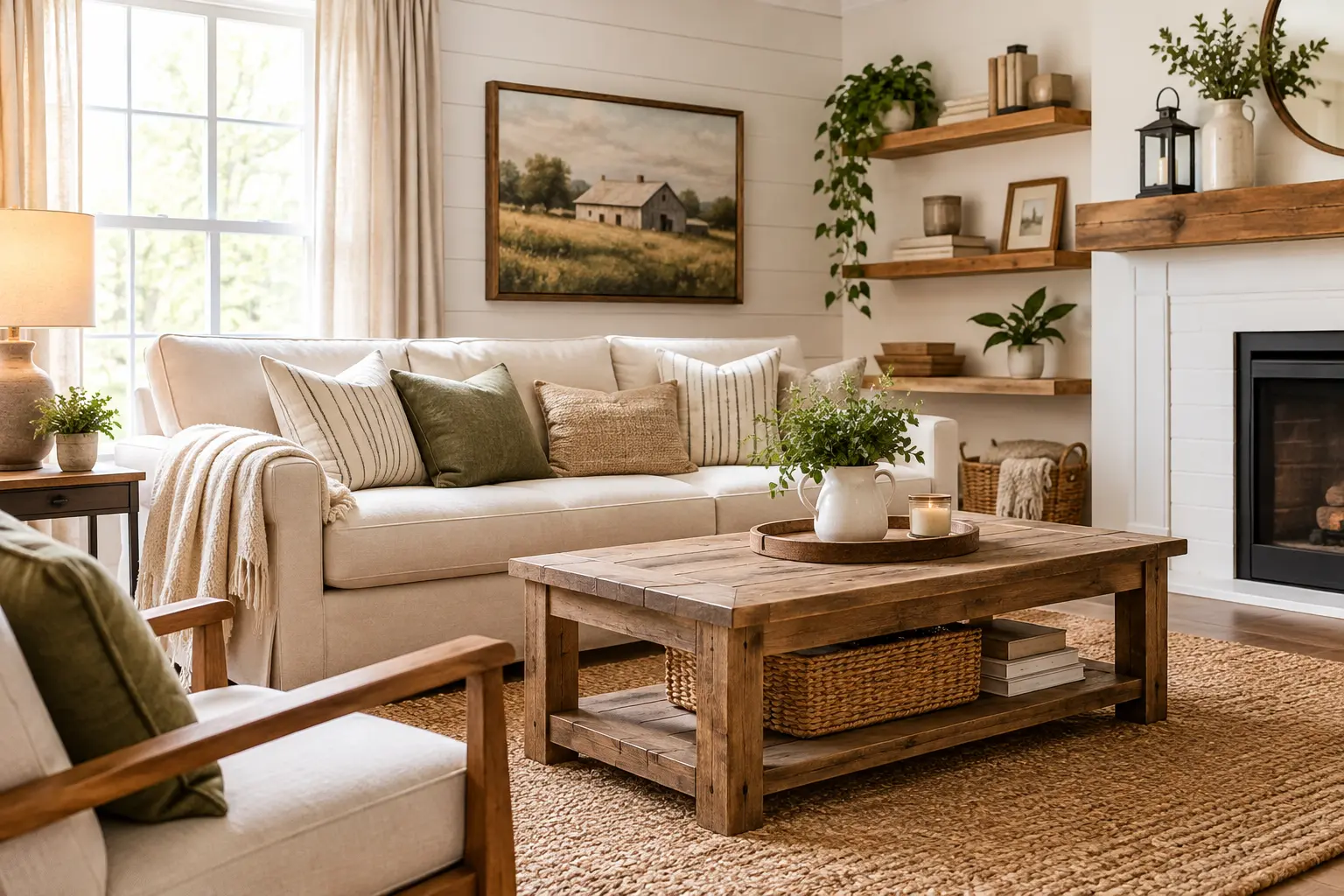
A living room should feel comfortable, welcoming, and connected to the people who use it every day. Farmhouse style creates this atmosphere through natural materials, comfortable furniture, warm colors, simple decorations, and a balance between rustic charm and modern convenience. Whether you live in a country house, a city apartment, or a small family home, you can use farmhouse decor to create a relaxing and attractive space.
The best farmhouse decor living room ideas do not require expensive furniture or a complete renovation. You can start with a neutral color palette, introduce wooden accents, choose soft fabrics, and display a few meaningful decorative pieces. Small changes can make a noticeable difference when every item works together.
Modern farmhouse design also offers flexibility. You can combine traditional wooden furniture with contemporary lighting, pair an old-fashioned coffee table with a simple sofa, or use black metal accents to create a cleaner appearance. The result can feel rustic without looking outdated.
In this guide, you will discover farmhouse decor living room ideas, furniture choices, color combinations, wall decorations, lighting options, and affordable styling techniques. You will also learn how to adapt farmhouse design to small spaces, family homes, and different personal preferences.
What Is Farmhouse Living Room Decor?
Farmhouse decor living room is an interior design style inspired by the comfort and simplicity of traditional rural homes. It uses natural textures, practical furniture, understated colors, and decorative details that create a relaxed atmosphere.
Traditional farmhouse interiors often include reclaimed wood, vintage furniture, woven baskets, linen curtains, and handmade accessories. Modern farmhouse interiors maintain some of these elements but combine them with cleaner lines, contemporary furniture, and more organized layouts.
The goal is not to make your living room look like an old barn. Instead, the style celebrates warmth, usefulness, and natural beauty.
Common features include:
- Neutral colors such as warm white, beige, cream, and soft gray.
- Wooden coffee tables, shelves, and side tables.
- Comfortable sofas with textured cushions.
- Natural fabrics such as cotton, linen, and wool.
- Black metal, aged brass, or understated hardware.
- Simple wall art, mirrors, and carefully chosen accessories.
- Warm lighting that makes the room inviting.
A successful farmhouse interior balances these elements rather than using all of them at once. A room with too many signs, distressed finishes, and decorative objects can feel crowded. Choose a few details that complement your home and leave enough open space for the room to breathe.
1. Start With a Warm Neutral Color Palette
Color is one of the easiest ways to establish a farmhouse atmosphere. A neutral foundation makes the living room feel calm and allows wood, textiles, and decorative objects to stand out.
Warm white is a useful starting point for walls because it reflects light without making the space feel too stark. Cream and beige add softness, while greige combines the subtle warmth of beige with the understated appearance of gray.
For a balanced palette, choose one main wall color, one or two supporting shades, and a small number of accent colors.
Popular farmhouse living room color combinations include:
- Warm white, natural oak, and beige.
- Cream, soft gray, and black metal.
- Sand, olive green, and medium brown.
- White, muted blue, and weathered wood.
- Taupe, charcoal, and warm ivory.
Use the main color on larger surfaces, such as walls, and repeat supporting colors in curtains, cushions, rugs, and artwork. Repeating a few shades throughout the room helps create a coordinated appearance.
If you want a brighter space, choose light walls and pale upholstery. If you prefer a cozy atmosphere, introduce deeper wood tones, earthy greens, or warm brown accents.
Before painting the entire room, test a small sample on the wall. Natural and artificial lighting can change how a paint color looks throughout the day.
2. Choose Comfortable Farmhouse Living Room Furniture
Furniture should support the way you use your living room. Farmhouse interiors look best when their main pieces feel comfortable and practical rather than overly formal.
A generously sized sofa can serve as the centerpiece. Look for simple shapes, durable upholstery, and colors that work with your walls and flooring. Beige, cream, oatmeal, and muted gray are versatile options.
A wooden coffee table adds rustic character. Choose a natural finish if you want to highlight the grain, or consider a painted finish for a softer, more traditional look.
Side tables, bookshelves, and storage cabinets can follow the same design direction. However, matching every piece of furniture is not necessary. Combining different wood finishes can create a more collected and personal interior.
When choosing farmhouse living room furniture, consider these practical points:
- Measure the available space before buying large pieces.
- Leave enough room to walk between furniture.
- Choose upholstery that suits your household and cleaning needs.
- Use storage furniture to control clutter.
- Balance solid wooden pieces with softer fabrics.
- Select furniture based on comfort as well as appearance.
For a small room, a compact sofa and a narrow coffee table may work better than oversized furniture. In a larger living room, you can create separate seating areas while maintaining a consistent color palette.
3. Add Natural Wood for Rustic Character
Wood is one of the most recognizable materials in rustic farmhouse living room decor. Its grain, texture, and natural color bring visual warmth to a room dominated by neutral fabrics.
You do not need wooden beams or expensive reclaimed timber to achieve this look. A coffee table, floating shelf, picture frame, or wooden tray can introduce enough texture to establish the style.
Light oak and pale wood create a fresh, airy appearance. Medium brown adds warmth, while darker wood creates contrast against cream or white walls.
Consider using wood in these ways:
- A solid wood coffee table.
- Floating shelves for books and accessories.
- A rustic console table behind the sofa.
- Wooden picture frames.
- A storage bench near the entrance.
- Decorative bowls and serving trays.
- A reclaimed wood feature shelf.
Mixing finishes can make the room look more natural. For example, pair a medium-brown coffee table with light oak shelves and a neutral sofa.
Avoid adding too many large wooden pieces in a small space. If the room begins to feel heavy, balance the wood with light walls, pale curtains, and soft textiles.
4. Create a Cozy Seating Area With Textiles
Soft furnishings help turn a simple living room into a comfortable place to relax. Textiles also introduce color and texture without requiring major changes.
Begin with a sofa and add cushions in different but related fabrics. Linen, cotton, knitted materials, and subtle woven patterns can work well together. Choose a limited color palette so the arrangement feels coordinated.
A throw blanket draped over the arm of a sofa adds a casual touch. Select a fabric that feels pleasant and suits the season. Lightweight cotton works for warmer weather, while wool or chunky knits can make the room feel cozier during colder months.
A large area rug can help define the seating area. Neutral rugs, subtle stripes, and understated geometric patterns often complement farmhouse interiors. Choose a rug that fits the furniture arrangement rather than one that looks too small beneath the seating.
For a cohesive result:
- Repeat two or three colors across cushions and throws.
- Mix smooth and textured fabrics.
- Avoid using too many competing patterns.
- Choose washable covers when practical.
- Select a rug suitable for your household’s daily activities.
You can refresh the entire room simply by changing cushion covers, rearranging throws, or replacing a worn rug.
5. Decorate the Walls With Farmhouse Wall Art
Empty walls can make a room feel unfinished, but covering every wall with decorations can create visual clutter. Farmhouse wall decor works best when each arrangement has a clear purpose.
A large framed landscape, botanical print, vintage-inspired illustration, or understated abstract painting can serve as a focal point above a sofa. For a gallery wall, combine a few complementary frames rather than collecting unrelated pieces.
Wooden frames introduce natural texture. Black frames create definition, while white or light oak frames maintain a softer appearance.
Other farmhouse wall decor ideas include:
- A large round mirror.
- Botanical artwork.
- Framed landscape photography.
- A simple gallery wall.
- Decorative wooden shelves.
- A textured wall hanging.
- A large clock with a clean design.
Before hanging artwork, consider the furniture below it. A piece placed too high can appear disconnected from the seating area. As a general starting point, position artwork near eye level and adjust it to suit the proportions of the wall and furniture.
For a more contemporary look, use fewer, larger pieces. For a traditional farmhouse atmosphere, a small gallery of carefully coordinated prints may be more suitable.
Avoid filling the room with generic farmhouse signs simply because they match the theme. Artwork that reflects your interests or memories gives the space a more personal identity.
6. Combine Modern and Traditional Farmhouse Details
Modern farmhouse living room design combines rustic materials with clean shapes and contemporary comfort. This approach is useful if you enjoy farmhouse warmth but do not want your home to feel old-fashioned.
Start with a modern sofa, a simple rug, and uncluttered walls. Introduce rustic character through a wooden coffee table, woven baskets, textured cushions, or a vintage-inspired cabinet.
Black metal lighting, streamlined shelves, and understated hardware can add contrast without making the room feel industrial.
A successful modern farmhouse living room usually includes:
- Clean furniture silhouettes.
- Natural wood or stone textures.
- A restrained neutral color palette.
- Comfortable, practical upholstery.
- A few traditional or vintage-inspired accents.
- Uncluttered surfaces and useful storage.
The key is balance. If every piece is rustic, the room may feel visually heavy. If everything is sleek and polished, the farmhouse character may disappear.
Try pairing one traditional element with one modern element. For example, place a contemporary sofa beside a weathered wooden side table, or use a classic patterned rug with minimalist lighting.
7. Use Farmhouse Lighting to Create a Warm Atmosphere
Lighting influences how colors, materials, and furniture appear. Even a beautifully decorated living room can feel uncomfortable if the lighting is too harsh or uneven.
Instead of relying on a single ceiling fixture, combine several sources of light. An overhead light provides general illumination, table lamps support reading and relaxing, and floor lamps help brighten darker corners.
Farmhouse-inspired fixtures often feature simple metal finishes, glass shades, natural materials, or understated vintage details.
Useful lighting options include:
- A black metal pendant or ceiling fixture.
- A table lamp with a ceramic base.
- A floor lamp beside a reading chair.
- Wall sconces near artwork.
- A lamp on a wooden console table.
Choose bulbs with a warm color temperature if you want a cozy evening atmosphere. Around 2700K to 3000K is a common starting range for warm residential lighting.
Consider the practical needs of each area. Reading corners need adequate task lighting, while general seating areas benefit from softer, more evenly distributed illumination.
If you rent your home, table lamps and plug-in floor lamps can improve the atmosphere without requiring electrical changes.
8. Bring Nature Indoors With Greenery
Plants add color and life to neutral farmhouse interiors. Their natural shapes work well with wooden furniture, woven baskets, and simple fabrics.
Choose plants according to the light and conditions in your home. A sunny window may support plants that need bright light, while darker corners require more shade-tolerant varieties.
You can display greenery in ceramic pots, simple planters, or woven-look containers with suitable waterproof liners. A large plant can soften an empty corner, while smaller plants work well on shelves and side tables.
If you prefer cut flowers, use a simple vase on the coffee table or console. Seasonal branches and dried arrangements can also introduce natural texture.
For homes with children or pets, check whether a plant is safe before bringing it indoors. Keep fragile pots and plants with specific care needs away from busy walkways.
Greenery should complement the room rather than compete with it. A few well-placed plants often create a cleaner result than filling every available surface.
9. Style the Coffee Table Without Creating Clutter
A coffee table is a useful place to introduce farmhouse accessories, but it should remain practical. People need room to set down drinks, books, and everyday items.
Begin with a small tray to group decorative objects. A wooden or woven tray can bring texture and keep smaller pieces organized.
Choose two or three items with different heights or shapes. For example, combine a small plant, a stack of books, and a ceramic bowl. A candle or simple vase can work as an alternative.
When arranging farmhouse living room accessories, consider:
- The size of the coffee table.
- The height of the objects.
- The colors already used in the room.
- The amount of space needed for daily activities.
- Whether the items are easy to move and clean.
Round tables often benefit from an arrangement centered on one tray. Rectangular tables can accommodate a longer arrangement positioned to one side.
Avoid copying a decorative arrangement that leaves no room for use. The best styling looks attractive while supporting everyday life.
10. Add Woven Baskets and Practical Storage
Storage is essential in a comfortable living room. Blankets, toys, books, remotes, and everyday belongings can quickly make a space feel untidy.
Woven baskets offer a practical way to store these items while adding texture. Place a large basket beside the sofa for throws, a smaller one near a reading chair for magazines, or a lidded basket in a family room for toys.
Wooden cabinets and console tables provide additional storage. Open shelving can display attractive items, but closed storage is often better for objects that do not need to remain visible.
For a neat appearance, give frequently used items a designated place. Keep a small tray for remotes and use baskets for loose accessories.
Choose storage according to what you actually need to organize. Buying several decorative baskets without a clear purpose can create more clutter rather than less.
If you have limited floor space, use wall shelves or furniture with built-in storage. Practical solutions make farmhouse design easier to maintain over time.
11. Decorate a Small Farmhouse Living Room
Small living rooms can benefit from farmhouse style because the design often uses light colors, natural textures, and comfortable furniture. The key is to avoid oversized pieces and too many accessories.
Start by measuring the room and identifying the main walking paths. Choose a sofa that fits comfortably without blocking doors or windows.
Light walls and curtains can help the space feel open. A mirror placed where it reflects natural light may also make the room feel brighter.
Try these small farmhouse living room ideas:
- Use a compact sofa with visible legs.
- Choose a narrow coffee table.
- Install floating shelves instead of bulky bookcases.
- Select a rug that suits the seating arrangement.
- Use a few larger decorative objects instead of many tiny ones.
- Choose nesting tables when flexible surfaces are useful.
- Add storage baskets beneath a console or bench.
- Keep window coverings simple.
Do not assume that every small room needs only white furniture. Warm beige, pale olive, muted blue, and light wood can create a welcoming atmosphere without making the room feel dark.
Use vertical space carefully. A tall bookcase or a few well-positioned shelves can provide storage without taking up much floor area.
The goal is to make the room feel comfortable and functional, not to squeeze in every farmhouse decoration you like.
12. Try Budget-Friendly Farmhouse Decorating
Creating farmhouse decor on a budget is possible because the style emphasizes simple materials, practical furniture, and thoughtful combinations rather than expensive accessories.
Begin by working with items you already own. A wooden table may look fresh after cleaning and refinishing, while existing cushions can be updated with new covers.
Secondhand shops, flea markets, and local online marketplaces can be useful places to find furniture and accessories. Inspect used items carefully, especially upholstered pieces, and check that furniture is stable and safe.
Affordable farmhouse decorating ideas include:
- Rearranging existing furniture.
- Painting a small piece of furniture.
- Adding inexpensive cushion covers.
- Framing your own landscape photographs.
- Using baskets for storage.
- Repurposing wooden boxes where appropriate.
- Displaying books and meaningful objects.
- Refreshing lampshades or changing light bulbs.
- Adding one affordable plant.
Prioritize changes that make the biggest difference. For example, improving the lighting or replacing a worn rug may have more impact than purchasing many small decorative objects.
Set a budget before shopping and compare measurements, materials, and quality. A low price is not always a saving if an item breaks quickly or does not fit the room.
You can complete the room in stages. Begin with the main furniture and layout, then add textiles, lighting, and accessories over time.
13. Mix Vintage Finds With Modern Pieces
Vintage items can give a farmhouse living room character and make it feel less like a showroom. A secondhand wooden cabinet, an old picture frame, or a well-made side table may bring more individuality than a matching set of new decorations.
The trick is to select items that work with the rest of the room. Look at color, scale, material, and condition before purchasing a vintage piece.
A weathered cabinet can become a focal point against light walls. A vintage-style mirror can sit above a modern console, while an old wooden stool can function as a side table.
You do not need every item to be genuinely antique. Modern reproductions can provide a similar visual effect if they suit your budget and preferences.
Check secondhand furniture for loose joints, damaged finishes, odors, pests, and other signs of wear. Repairing a sturdy item may be worthwhile, but a poor-quality purchase can become expensive.
Avoid mixing too many unrelated styles. Repeat a few materials or colors so vintage pieces feel intentional rather than randomly collected.
14. Choose Curtains and Window Treatments Carefully
Window treatments influence the amount of natural light entering a living room and contribute to its overall appearance.
Lightweight linen-look or cotton curtains work well with farmhouse interiors because their texture feels relaxed. Cream, white, beige, and muted earth tones are versatile choices.
If privacy is important, consider lined curtains or a combination of sheer panels and heavier curtains. In rooms that receive strong sunlight, suitable window coverings can also help manage glare and protect furnishings.
When selecting farmhouse curtains, think about:
- Window dimensions.
- Ceiling height.
- Available natural light.
- Privacy requirements.
- Fabric maintenance.
- The colors of the walls and furniture.
Hanging a curtain rod slightly higher and wider than the window frame can create a more spacious appearance when the wall and window layout allow it.
Avoid heavy patterns if the room already contains a patterned rug and decorative cushions. A simpler curtain can help balance the overall design.
Always measure before buying. Incorrect curtain lengths can make an otherwise attractive room feel unfinished.
15. Make the Living Room Family-Friendly
A farmhouse living room can be stylish and practical for everyday family life. Comfortable seating, accessible storage, durable fabrics, and flexible furniture make it easier to keep the space welcoming.
Choose upholstery that suits your household. Removable covers and washable textiles can help with routine cleaning. If your family uses the living room heavily, select rugs and cushions that tolerate regular use.
Use baskets to organize toys and books. Keep delicate accessories on higher shelves and avoid placing heavy objects where they could fall.
Consider these family-friendly choices:
- Rounded furniture edges where appropriate.
- Stable shelving and properly secured tall furniture.
- Washable cushion covers.
- Easy-to-clean rugs.
- Baskets for toys and blankets.
- Adequate lighting around walking paths.
- A clear route between entrances and seating.
Safety matters more than decorative appearance. Secure furniture that could tip, keep cords organized, and choose age-appropriate accessories.
For homes with pets, select fabrics that suit their needs and choose plants carefully. A practical room can still look attractive when storage and cleaning routines are part of the design.
How to Plan Your Farmhouse Living Room Layout
Before buying decorations, create a simple layout plan. A well-arranged room will feel more comfortable even if you have a limited budget.
First, identify the main purpose of the space. A family room may need a large sofa and storage, while a formal sitting room may prioritize conversation and visual balance.
Next, choose a focal point. This might be a fireplace, a large window, a television, or a prominent piece of artwork. Arrange the main seating so people can comfortably use the space.
Measure the room, doors, windows, and furniture. Mark where larger pieces will go before moving them. Make sure pathways remain clear and that doors, drawers, and cabinets can open fully.
For a rectangular room, a sofa facing the main focal point can create a straightforward arrangement. In a larger open-plan home, a rug and a pair of chairs can define a separate conversation area.
In small rooms, avoid pushing too many pieces against the walls if that makes the arrangement awkward. Sometimes moving a chair slightly inward creates a more natural seating area.
Finally, check lighting, storage, and access to electrical outlets. These practical details influence how well the room functions after the decorating work is complete.
Common Farmhouse Decorating Mistakes to Avoid
Farmhouse design is relatively flexible, but a few common mistakes can make the room less comfortable or visually confusing.
Using too many decorative signs
Farmhouse signs can be charming, but filling every wall with words can make the room look repetitive. Choose artwork, photographs, mirrors, and personal objects to create more variety.
Making everything white
White can brighten a room, but using only one shade may make it feel flat. Introduce warm wood, textured fabrics, earthy colors, and darker accents for contrast.
Buying furniture that is too large
Oversized sofas and tables can block pathways and make the room feel crowded. Measure carefully and leave enough space to move comfortably.
Mixing too many styles
Combining farmhouse, industrial, coastal, and highly ornate pieces can work when planned carefully, but too many competing elements may feel chaotic. Repeat a few materials and colors to create consistency.
Ignoring storage
Decorating without a plan for everyday belongings often leads to clutter. Include baskets, cabinets, shelves, or furniture with built-in storage.
Choosing appearance over comfort
A living room should support daily activities. Before purchasing a sofa, chair, rug, or table, consider how people will use it and how easy it will be to maintain.
Following trends without considering your home
A popular look may not suit your room size, lighting, budget, or lifestyle. Use trends as inspiration rather than rules.
A Simple Farmhouse Living Room Decorating Plan
If you are unsure where to begin, follow this practical sequence.
Step 1: Declutter the room. Remove items you no longer use and decide what needs to remain accessible.
Step 2: Choose your color palette. Select a main neutral color and two or three supporting shades.
Step 3: Arrange the furniture. Create a comfortable seating area with clear walking paths.
Step 4: Introduce natural materials. Add wood, woven textures, or a simple ceramic accessory.
Step 5: Improve the lighting. Use a combination of general and task lighting.
Step 6: Add textiles. Introduce a suitable rug, cushions, curtains, and a throw blanket.
Step 7: Decorate the walls. Select artwork or a mirror that fits the room’s proportions.
Step 8: Organize everyday items. Use storage baskets, cabinets, and shelves.
Step 9: Add personal details. Display photographs, books, plants, or meaningful objects.
Step 10: Review the finished space. Remove unnecessary decorations and adjust anything that feels crowded.
This process helps you avoid unnecessary purchases and makes it easier to evaluate what the room actually needs.
Frequently Asked Questions About Farmhouse Living Room Decor
What colors work best in a farmhouse living room?
Warm white, cream, beige, greige, soft gray, and earthy tones are popular choices. Natural wood and muted green or blue accents can add contrast. The best palette depends on the room’s natural light, flooring, and existing furniture.
How do I make my living room look like a modern farmhouse?
Combine clean-lined furniture with natural materials, neutral colors, textured fabrics, and a few rustic accents. Avoid excessive decorations and use contemporary lighting or simple metal finishes to keep the design fresh.
Can farmhouse decor work in a small living room?
Yes. Choose appropriately sized furniture, light colors, simple window treatments, and practical storage. Use a few well-selected accessories rather than filling every surface with decorations.
How can I decorate a farmhouse living room cheaply?
Reuse existing furniture, shop secondhand, change cushion covers, rearrange your layout, and use affordable baskets or framed artwork. Focus on improvements that make the room more functional as well as attractive.
What furniture is essential for farmhouse living room decor?
A comfortable sofa, a suitable coffee table, useful lighting, and practical storage are good starting points. Add side tables, rugs, and accent chairs according to your space and budget.
Is modern farmhouse style still suitable for contemporary homes?
Farmhouse design can work in many contemporary homes because it emphasizes comfort, natural textures, and practical furniture. You can adapt the look by using clean shapes, restrained colors, and fewer rustic accessories.
How do I decorate farmhouse living room walls?
Try a large landscape print, a round mirror, botanical artwork, a small gallery wall, or a few wooden shelves. Choose pieces that fit the wall and furniture rather than filling every available space.
Which materials suit farmhouse interiors?
Wood, cotton, linen, wool, woven fibers, ceramic, glass, and metal can all work well. Select durable materials that suit your budget, maintenance preferences, and daily routine.
Final Thoughts
Farmhouse decor living room ideas can help you create a home that feels warm, relaxed, and personal. The style does not depend on expensive furniture or a complete renovation. A thoughtful color palette, comfortable seating, natural wood, soft textiles, suitable lighting, and practical storage can establish the look.
Start with the features that matter most in your home. If the room feels dark, improve the lighting. If it feels crowded, simplify the layout. If it lacks warmth, add wood and textured fabrics. Make changes gradually and choose pieces that support your lifestyle.
The most successful farmhouse living rooms combine visual appeal with everyday comfort. Rather than copying every trend, use these ideas as a starting point and create a space that feels right for you.
