A small backyard does not mean small dreams. In fact, some of the prettiest gardens in the world are tiny ones. When space is limited, every plant has to work a little harder, but that is not a bad thing. It pushes you to choose plants with real personality, plants that look good in every season, and plants that do not take over the whole yard the moment you turn your back.
If you have ever stood in your backyard wondering what to plant, you are not alone. Small yards come with big questions. Which plants stay small? Which ones need the least care? What will still look nice in winter? This guide answers all of that in plain, simple language. No confusing garden jargon, just honest advice you can use today.
By the end of this post, you will have a full list of the best plants for a small backyard, tips on how to plan your space, and answers to the most common questions people ask about small yard gardening.
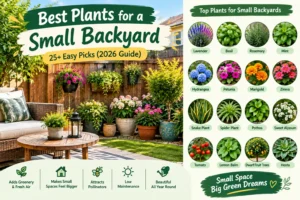
Why Small Backyards Need a Different Approach
Big yards can hide mistakes. A tree planted in the wrong spot, a shrub that grows too wide, a flower bed that gets messy by August. In a large space, these little problems blend into the background.
Small backyards do not offer that kind of cover. Every plant is on display. That is actually a good thing, because it forces you to plan with more care, and the result is usually a yard that looks more finished and more thoughtful than a bigger one.
Here are a few ideas to keep in mind before you start picking plants:
- Think about mature size, not just the size at the store: A tiny shrub in a plastic pot can grow into a giant in five years. Always check how big a plant will get when it is fully grown.
- Choose plants that do more than one job: A shrub that flowers in spring, has nice leaves in summer, and turns red in fall gives you three seasons of beauty from one plant.
- Layer your plants by height: Tall plants in the back, medium plants in the middle, low plants in front. This trick makes even a small space feel full and organized.
- Repeat a few plants instead of using one of everything: A small yard with five kinds of plants repeated often looks calmer and more put-together than a yard with twenty different plants scattered around.
- Use pots and containers: Containers let you grow plants that would normally take up too much ground space, and you can move them around whenever you want a fresh look.
With those basics in mind, let’s get into the best plants for a small backyard, organized by type so you can build a full garden plan.
Best Small Trees for a Small Backyard
Trees give a small backyard structure and shade, but the wrong tree can quickly outgrow the space. These trees stay compact and still bring big beauty.
1. Japanese Maple
Japanese maples are a favorite for small yards because they grow slowly and stay a manageable size, often between 6 and 15 feet tall depending on the variety. Their leaves come in shades of red, orange, purple, and green, and they put on a stunning show in autumn. They also do well in containers if your space is really tight.
2. Serviceberry
Serviceberry is a small tree that gives you white flowers in spring, tasty berries in early summer, and bright orange-red leaves in fall. Birds love the berries, so it is a great choice if you enjoy watching wildlife in your yard. It usually stays under 20 feet, making it perfect for a smaller space.
3. Crape Myrtle (Dwarf Varieties)
Dwarf crape myrtles stay small, often three to six feet tall, but they still produce those long-lasting summer flowers in pink, purple, red, or white. They also have attractive bark that adds interest once the leaves drop in winter.
4. Dwarf Citrus Trees
If you live somewhere warm, a dwarf lemon, lime, or orange tree is a wonderful choice. These trees can even be grown in large pots, so they work for patios and courtyards too. You get fragrant flowers, glossy green leaves, and fresh fruit, all from one plant.
5. Amur Maple
Similar to Japanese maple but tougher and more cold-hardy, the Amur maple stays under 20 feet and offers bright red fall color. It handles a wider range of climates, which makes it a solid pick if you live somewhere with cold winters.
Best Shrubs for a Small Backyard
Shrubs are the backbone of most gardens. They fill in space, add color, and often need less care than flowers once they are established.
6. Bobo Hydrangea
This compact hydrangea variety stays around two to three feet tall but still produces the big, cone-shaped white flower clusters that hydrangeas are known for. Because it stays small, it fits neatly along a fence or near a patio without crowding the space.
7. Dwarf Boxwood
Boxwood is a classic choice for small gardens because it can be shaped into neat little balls, hedges, or borders. It stays green all year, which is helpful in winter when many other plants look bare.
8. Compact Butterfly Bush
Regular butterfly bushes can grow huge, but newer dwarf types stay around three feet tall while still attracting butterflies and hummingbirds all summer with their long, fragrant flower spikes.
9. Dwarf Korean Lilac
This lilac variety stays small, usually around four to five feet, but still gives you that classic lilac scent and purple blooms in late spring. It is a great option if you love lilacs but do not have room for the full-size version.
10. Spirea
Spirea shrubs are easy to grow and come in many sizes, with dwarf types staying under three feet. They bloom in pink or white and often have colorful leaves that shift from gold to orange through the seasons.
11. Caryopteris (Bluebeard)
This shrub is a pollinator magnet, covered in blue flowers in late summer when many other plants have finished blooming. It stays compact, usually two to three feet, and does not need much water once established.
Best Flowers and Perennials for a Small Backyard
12. Coral Bells (Heuchera)
Coral bells are grown mainly for their colorful leaves, which come in shades of purple, lime green, amber, and deep red. They stay low to the ground, which makes them perfect for the front of a flower bed or along a walkway.
13. Tickseed (Coreopsis)
This cheerful yellow flower blooms for months and needs very little care. It tolerates dry soil, which makes it a good choice if you do not want to water often.
14. Catmint
Catmint produces soft purple-blue flowers over a long season and has a lovely scent. It also tends to keep pests away from nearby plants, which is a nice bonus.
15. Dianthus
Dianthus, sometimes called pinks, stays compact and produces fringed flowers in shades of pink, red, and white, often with a spicy, clove-like scent. It blooms from late spring into fall.
16. Sedum
Sedum is a succulent-like plant that stores water in its thick leaves, so it needs very little watering. It flowers in late summer with star-shaped blooms that pollinators love, and it holds up well through fall.
17. Salvia
Salvia produces tall spikes of purple, blue, or red flowers and blooms for a long stretch of the growing season. It is also a favorite of hummingbirds, so it adds movement and life to your yard.
18. Lavender
Lavender brings a calming scent, silvery-green leaves, and purple flower spikes. It likes dry, sunny spots and pairs beautifully with stone paths or gravel areas, which are common in small backyard designs.
Best Ornamental Grasses for a Small Backyard
Ornamental grasses add movement and texture that flowers alone cannot provide. They sway in the wind and often look beautiful even after they turn brown in winter.
19. Sedge (Carex)
Sedges stay low and grow in neat, tidy clumps. Many varieties tolerate shade, which makes them useful in the parts of a small yard that do not get much sun.
20. Prairie Dropseed (Sporobolus heterolepis)
This native grass forms a soft, fountain-like clump and turns a warm orange-gold in fall. It stays compact, usually around two feet, and does not spread aggressively.
21. Blue Fescue
Blue fescue is a small ornamental grass, usually under a foot tall, with a striking blue-silver color. It works well as a border plant or scattered through a rock garden.
Best Plants for Containers and Small Patios
If your backyard is more patio than lawn, containers are your best friend. They let you grow a huge range of plants without needing any ground space at all.
22. Compact Tomato Varieties
Newer compact tomato plants, sometimes staying under four feet tall, are bred specifically for small spaces and containers. You still get a good harvest of sweet, juicy tomatoes without needing a full vegetable garden.
23. Basil
Basil grows well in pots and can sit right outside your kitchen door for easy picking. Newer heat-tolerant varieties stay productive all summer, even during hot spells.
24. Pentas
Pentas are round, cheerful annuals that bloom in bright colors and handle heat well. They are excellent for hanging baskets, window boxes, or mixed containers, and butterflies and hummingbirds love them.
25. Dwarf Ornamental Grasses in Pots
26. Succulents
For a very low-maintenance patio, a mix of succulents in shallow pots gives you interesting shapes and colors while needing very little watering.
How to Plan a Small Backyard Garden Step by Step
Once you know which plants you like, it helps to have a simple plan before you start digging. Here is an easy way to approach it.
Step 1: Measure your space
Before buying a single plant, walk your yard and get a rough sense of the square footage. This helps you avoid buying more plants than you have room for.
Step 2: Watch the sun
Spend a day noticing how much sun different parts of your yard get. Full sun areas get six or more hours of direct light. Partial shade areas get some sun but not all day. Full shade areas get very little direct light. Matching plants to the right light level is one of the biggest keys to success.
Step 3: Pick a color theme
Choosing two or three main colors, plus green, keeps a small yard from looking cluttered or chaotic. For example, you might choose purple, pink, and white as your main flower colors.
Step 4: Start with the biggest plants first
Place your tree or largest shrub first, since it sets the structure for everything else. Then add medium shrubs, then perennials, then low-growing plants or ground cover last.
Step 5: Leave room to grow
It is tempting to plant things close together so the yard looks full right away, but this often leads to overcrowding in a couple of years. Always plant based on the mature size of the plant, not the size it is when you buy it.
Step 6: Add a few containers for flexibility
Containers let you experiment with color and texture without committing to a permanent spot in the ground. They are also great for adding plants near seating areas or entryways.
Low-Maintenance Options for Busy Homeowners
If you want a beautiful backyard without spending every weekend on upkeep, focus on plants that are naturally tough and do not need constant attention. Some of the easiest options from the list above include:
- Sedum, because it stores its own water and rarely needs extra watering
- Catmint, because it tolerates poor soil and dry spells
- Boxwood, because it needs only occasional trimming
- Ornamental grasses, because they need little more than a yearly cutback
- Lavender, because it thrives on neglect once it is established
Choosing several of these low-care plants means your small backyard can look great even on the weeks when life gets busy.
Common Mistakes to Avoid in a Small Backyard
Even with the best plants for a small backyard on your list, a few common mistakes can still trip people up.
Planting too close together
It is easy to underestimate how much a small plant will grow. Always check the mature width, not just the height, and give plants enough breathing room.
Choosing plants that need a lot of water in a dry climate
If you live somewhere hot and dry, lean toward plants like lavender, sedum, and catmint instead of thirsty options that will need constant watering.
Ignoring winter appearance:
A backyard that looks great in June but bare and boring in January can feel disappointing. Mixing in evergreen shrubs like boxwood, or plants with interesting bark like crape myrtle, keeps the yard interesting even in the cold months.
Using too many different plant types
A small yard with too many different plants can look messy. Repeating a smaller number of plant types throughout the space usually creates a calmer, more polished look.
Forgetting about maintenance access
Leave enough space to walk around your plants for watering, trimming, and general care. A backyard that is too tightly packed becomes hard to maintain.
Frequently Asked Questions
What are the easiest plants to grow in a small backyard?
Sedum, catmint, lavender, and ornamental grasses are among the easiest choices. They tolerate a range of conditions and do not need constant care once they are established.
What trees stay small enough for a tiny backyard?
Japanese maple, serviceberry, dwarf crape myrtle, and Amur maple are all good choices that rarely grow taller than 20 feet.
Can I grow vegetables in a small backyard?
Yes. Compact tomato varieties, basil, and many herbs grow well in containers, so you can enjoy fresh produce even without a dedicated vegetable garden.
How many plants should I put in a small backyard?
There is no exact number, since it depends on your space, but it usually looks better to repeat a smaller number of plant types rather than cramming in one of everything. Quality and repetition beat quantity in a small space.
What plants work well in shade in a small backyard?
Sedge (Carex) and coral bells both tolerate shade well and add color and texture to darker corners of the yard.
Final Thoughts
A small backyard is not a limitation, it is an opportunity to create a garden that feels personal, tidy, and full of character. By choosing the best plants for a small backyard based on their mature size, matching them to your sunlight and climate, and planning your layout with a bit of care, you can turn even the tiniest outdoor space into a place you love spending time in.
Start with a few trees or shrubs for structure, layer in perennials and grasses for color and texture, and finish with containers near your seating area for flexibility. With the right plant choices, your small backyard can feel just as full and beautiful as a much bigger garden.