Owning a home is exciting. You get your own space, your own walls, and your own yard. But a home is also a big responsibility. Things break. Things wear out. And if you don’t take care of small problems early, they can turn into big, costly repairs.
That’s why every homeowner needs a home maintenance checklist. A good checklist tells you what to check, when to check it, and how to keep your home safe and strong for many years.
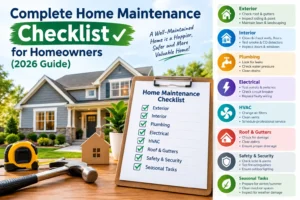
In this guide, we will walk through a complete home maintenance checklist for homeowners. We will use easy words and simple steps, so anyone can follow it — even if you are a first-time homeowner. We will cover:
- Why home maintenance matters
- A monthly checklist
- A seasonal checklist (spring, summer, fall, winter)
- A yearly checklist
- Room-by-room maintenance tips
- Signs you need to call a professional
- A simple home maintenance budget
- Common mistakes to avoid
Let’s get started.
Why Home Maintenance Matters
Many homeowners skip regular maintenance because they are busy, or they simply forget. But small tasks, done on time, can save you thousands of dollars.
Here’s why maintenance is so important:
- It saves money: A small leak, if ignored, can lead to mold, rotten wood, and a huge repair bill. Fixing it early costs much less.
- It keeps your family safe: Smoke detectors, carbon monoxide detectors, and electrical systems need regular checks to keep your home safe from fire and other dangers.
- This protects your home’s value: A well-kept home is worth more when you decide to sell it.
- It helps things last longer: Your HVAC system, water heater, roof, and appliances all last longer when you take care of them.
- It gives you peace of mind: You won’t have to worry about sudden breakdowns if you stay ahead of small problems.
Most experts say homeowners should set aside about 1% to 4% of their home’s value each year for routine maintenance and repairs. So if your home is worth $300,000, you might plan to spend $3,000 to $12,000 a year on upkeep. This amount will change depending on the age of your home and how well it was built.
Now, let’s break the checklist into simple parts.
Monthly Home Maintenance Checklist
Some tasks need your attention every single month. These are usually quick and easy, but they matter a lot. Try to pick one day each month — maybe the first Saturday — to go through this list.
Inside the Home
- Check and replace HVAC filters: A dirty filter makes your heating and cooling system work harder. This wastes energy and can shorten the life of the system. Check the filter every month and replace it when it looks dirty (usually every 1 to 3 months).
- Test smoke detectors and carbon monoxide detectors: Press the test button on each device. If it doesn’t beep, replace the battery. This is one of the most important safety checks you can do.
- Clean the garbage disposal: Run cold water and ice cubes through it, then add a few lemon or lime slices to freshen it up.
- Check under sinks for leaks: Look under your kitchen and bathroom sinks for any drips, wet spots, or mold. Small leaks are much cheaper to fix than big ones.
- Test GFCI outlets: These are the outlets with test and reset buttons, usually found in kitchens, bathrooms, and garages. Press “test,” then “reset,” to make sure they are working.
- Clean range hood filters: Grease builds up in your kitchen exhaust filter. A clean filter reduces fire risk and keeps your kitchen air fresh.
- Flush slow drains: Pour hot water and a bit of vinegar down slow drains to help prevent clogs.
- Check fire extinguishers: Make sure the pressure gauge shows a safe reading and the extinguisher isn’t expired.
Outside the Home
- Check the garage door: Test the auto-reverse safety feature by placing an object in the door’s path.
- Look at outdoor faucets and hoses: Check for leaks or drips.
- Walk around the house: Look for anything unusual — cracks, loose siding, or standing water near the foundation.
- Clear dryer vent lint: A clogged dryer vent is a common cause of house fires. Clean the lint trap after every load, and check the outside vent monthly.
Seasonal Home Maintenance Checklist
Some tasks depend on the weather. Doing the right task at the right time of year will protect your home from seasonal damage.
Spring Home Maintenance Checklist
Spring is the season of new growth — and also a great time to check for any damage left behind by winter.
- Clean gutters and downspouts: Remove leaves and debris so rainwater can flow away from your home properly.
- Inspect your roof: Look for missing, cracked, or loose shingles. Winter storms and ice can cause damage that’s easy to miss from the ground, so use binoculars or hire a professional.
- Check for water damage: Look in the basement, attic, and around windows for any signs of leaks or dampness.
- Service your air conditioner: Have a professional check your AC system before the hot months arrive. Clean or replace the filter and clear away any leaves or debris around the outdoor unit.
- Check the exterior paint and siding: Look for peeling paint, cracks, or rotting wood. Repair these early to avoid bigger problems.
- Inspect windows and screens: Repair or replace torn screens and clean the windows.
- Look at the driveway and walkways: Check for cracks that may have formed from winter freezing.
- Check sprinkler systems: Turn the system back on and look for leaks or broken sprinkler heads.
- Service your lawn mower: Sharpen the blades and check the oil before mowing season begins.
- Check the foundation: Look for new cracks or shifting, especially after a cold winter.
Summer Home Maintenance Checklist
Summer is a great time for outdoor projects since the weather is warm and dry in most places.
- Clean or replace air filters again: Your AC works overtime in summer, so keep the filter clean.
- Check the attic for proper ventilation: Good airflow keeps your attic from getting too hot, which protects your roof and lowers cooling costs.
- Inspect outdoor deck and patio: Look for loose boards, popped nails, or peeling stain. Reseal wood decks if needed.
- Clean the grill: Remove grease buildup and check that gas lines and connections are secure.
- Check hoses and sprinklers for leaks: Fix any leaks to save water.
- Trim trees and bushes: Cut back branches that are too close to your roof or windows.
- Check window air conditioning units: Clean filters and check the seal around the unit.
- Reverse ceiling fans: Set fans to spin counterclockwise in summer to push cool air down.
- Inspect the roof after storms: Summer storms can cause damage, so check your roof after any major weather event.
Fall Home Maintenance Checklist
Fall is all about getting ready for cold weather.
- Rake leaves and clear yard debris: This prevents damage to your lawn and stops leaves from clogging gutters and drains.
- Clean gutters again: Falling leaves can clog gutters quickly, so check them a second time this season.
- Have your furnace inspected: A professional can clean the system and check for any issues before you need to use it every day.
- Check the chimney. If you have a fireplace, have the chimney cleaned and inspected for creosote buildup, which can cause fires.
- Seal drafts: Add weatherstripping or caulk around windows and doors to keep warm air in and cold air out.
- Drain outdoor faucets and hoses: Disconnect hoses and shut off water to outdoor faucets before the first freeze.
- Store outdoor furniture: Clean and store patio furniture, cushions, and umbrellas to protect them from winter weather.
- Check insulation: Make sure your attic has enough insulation to keep heat from escaping.
- Apply fall fertilizer: This helps your lawn build strong roots before winter.
- Test your heating system: Turn on the heat for a short time before the cold months arrive, just to make sure everything works.
Winter Home Maintenance Checklist
Winter maintenance is mostly about keeping your home warm, safe, and free from ice or water damage.
- Insulate exposed pipes: Wrap pipes in unheated areas like basements, attics, or garages to prevent freezing and bursting.
- Check for ice dams: Ice dams form when snow melts and refreezes at the roof edge. Make sure your attic is properly insulated and ventilated to help prevent this.
- Test your carbon monoxide detectors: Heating systems run more often in winter, so it’s important to make sure these detectors work.
- Keep vents and radiators clear: Make sure furniture or curtains aren’t blocking heat vents or radiators.
- Check the water heater: Drain a bit of water to remove sediment, and check for leaks or rust.
- Inspect weatherstripping: Cold air can sneak in through worn seals around doors and windows.
- Clear snow and ice from walkways: This keeps your family and visitors safe from slipping.
- Let faucets drip during extreme cold: This can help prevent pipes from freezing on very cold nights.
- Change furnace filters more often: Your furnace runs a lot in winter, so check the filter monthly.
Yearly Home Maintenance Checklist
Some tasks only need to be done once a year, but they are just as important as the monthly and seasonal ones.
- Flush the water heater: This removes sediment buildup and helps the unit run efficiently.
- Inspect the roof closely: A yearly professional inspection can catch problems before they turn into leaks.
- Service the HVAC system: Have a professional clean and inspect your heating and cooling system once a year, ideally before each major season.
- Clean the dryer vent duct: Lint can build up deep inside the duct, not just the trap, so a full cleaning once a year is important.
- Check the foundation and crawl space: Look for cracks, moisture, or pest activity.
- Get a termite or pest inspection: Termites can cause serious damage before you even notice them.
- Reseal grout and caulking: Bathroom and kitchen caulk wears down over time and needs to be replaced to prevent water damage.
- Test your home’s water pressure: High water pressure can wear out pipes and appliances faster than normal.
- Check the septic system, if you have one: Have it inspected and pumped as needed, usually every 3 to 5 years.
- Review your home insurance policy: Make sure your coverage still matches the value of your home and belongings.
- Deep clean and declutter: Go through closets, the garage, and storage areas once a year to donate or toss things you no longer need.
Room-by-Room Maintenance Tips
Sometimes it helps to think about maintenance room by room, rather than by month or season. Here’s a quick breakdown.
Kitchen
- Clean behind and under large appliances once or twice a year.
- Check the refrigerator door seal for a tight close.
- Clean the dishwasher filter and run a cleaning cycle monthly.
- Inspect under-sink pipes for leaks.
Bathroom
- Check for leaks around the toilet base.
- Reseal caulking around the tub and shower once a year.
- Clean the exhaust fan to prevent dust buildup and mold.
- Check water pressure in the shower head and clean out mineral buildup.
Bedrooms and Living Areas
- Check windows for proper sealing and easy opening.
- Test any smoke detectors in or near these rooms.
- Look at carpets and floors for signs of moisture or pest damage.
Garage
- Check the garage door springs and cables for wear.
- Clean and organize to reduce fire hazards from stored chemicals or clutter.
- Inspect the garage floor for cracks.
Basement and Attic
- Check for moisture, mold, or musty smells.
- Make sure insulation is even and not compressed.
- Look for signs of pests like droppings or chewed materials.
Signs You Need to Call a Professional
Not every task is a do-it-yourself job. Here are some signs it’s time to call in an expert:
- You smell gas or notice a strange odor near your furnace or water heater.
- Your electrical panel shows scorch marks, or breakers trip often.
- You see water stains on the ceiling or walls.
- Your roof has missing shingles, sagging spots, or leaks.
- Your HVAC system is making loud or unusual noises.
- You notice cracks in your foundation that are growing over time.
- You see signs of termites or other pests.
When in doubt, it’s always safer and often cheaper in the long run to call a licensed professional rather than risk making a problem worse.
Simple Home Maintenance Budget Tips
Planning ahead makes home maintenance much less stressful. Here are a few easy tips:
- Set up a maintenance savings fund: Even setting aside a small amount each month can help you cover surprise repairs.
- Prioritize safety first: Smoke detectors, carbon monoxide detectors, and electrical issues should always come before cosmetic fixes.
- Track your maintenance tasks: Use a simple calendar, spreadsheet, or app to remind yourself what needs to be done and when.
- Keep records: Save receipts and notes about repairs. This helps when it’s time to sell your home, and it also helps you spot patterns, like an appliance that keeps breaking down.
- Do the easy tasks yourself: Changing filters, testing detectors, and cleaning gutters are simple tasks that can save you money on service calls.
Common Home Maintenance Mistakes to Avoid
Even well-meaning homeowners make mistakes. Watch out for these common ones:
- Ignoring small leaks: A tiny drip can turn into major water damage and mold over time.
- Forgetting to change filters: This is one of the easiest tasks, yet one of the most skipped.
- Skipping yearly HVAC service: Waiting until the system breaks down often costs more than regular maintenance.
- Not testing safety devices: Many house fires and carbon monoxide incidents happen because detectors had dead batteries.
- Putting off small repairs: A loose railing or a small crack in the driveway can turn into a bigger, more expensive problem if ignored.
- Not knowing where the main water shut-off valve is: In an emergency, knowing this location can prevent major water damage.
Tools Every Homeowner Should Keep on Hand
Having the right tools ready makes small maintenance jobs much easier. You don’t need a huge collection, just a few basics:
- A good screwdriver set (flathead and Phillips)
- An adjustable wrench and pliers
- A stud finder for hanging shelves or pictures safely
- A step ladder that reaches your gutters and light fixtures
- A flashlight or headlamp for checking dark spaces like attics and crawl spaces
- A plunger and a drain snake for clogged drains
- Extra furnace filters and smoke detector batteries, so you’re never caught without them
- A caulking gun and a tube of caulk for small gaps and leaks
- A multi-tool or utility knife
- Work gloves and safety glasses
Keeping these items organized in one spot, like a toolbox or a bin in the garage, saves you time when a small task comes up. You won’t have to search the house for a screwdriver when a cabinet hinge comes loose.
How to Build a Home Maintenance Schedule That Actually Works
Many homeowners start strong with a checklist, then forget about it a few months later. Here are a few simple ways to make your maintenance habit stick:
- Pick one day a month: Choose a day, like the first Saturday, and treat it like an appointment. Walk through your monthly checklist on that day, every month.
- Use reminders: Set alerts on your phone calendar for seasonal tasks, like scheduling HVAC service in spring and fall.
- Break big jobs into small steps: Instead of trying to do everything in one day, spread seasonal tasks across a few weekends.
- Get the whole family involved: Kids and partners can help with simple jobs like testing smoke detectors or wiping down window sills.
- Keep a maintenance log: Write down what you did and when. This helps you remember when filters were last changed or when the roof was last inspected, and it’s useful information if you ever sell your home.
- Reward yourself for finishing: A small treat after finishing your seasonal checklist can help build the habit over time.
A checklist only works if you actually use it. Keeping it simple and building it into your routine is the real key to success.
Frequently Asked Questions
How often should I really check my smoke detectors? Test the buttons every month, and replace the batteries at least once a year, even if they still seem to work. Most smoke detectors should be fully replaced every 8 to 10 years.
What is the most important home maintenance task? Safety tasks come first. That means smoke detectors, carbon monoxide detectors, and checking for gas or electrical hazards. After that, water-related tasks like checking for leaks and cleaning gutters help prevent the most common, and most costly, home damage.
How much should I budget for home maintenance each year? A common rule of thumb is to set aside 1% to 4% of your home’s value every year. Older homes, or homes with older systems, usually need a bit more on the higher end of that range.
Can I do most of this checklist myself, or do I need a professional? Many tasks, like changing filters, testing detectors, and cleaning gutters, are easy to do yourself. Bigger systems, like HVAC, roofing, and electrical work, are usually safer and more reliable when handled by a licensed professional, especially once a year.
What happens if I skip maintenance for a year? Skipping a year won’t ruin your home, but small problems tend to grow. A missed gutter cleaning can lead to water damage. A skipped furnace inspection can lead to a costly breakdown in the middle of winter. It’s always easier to catch up sooner rather than later.
Do older homes need a different checklist? Older homes often need more frequent checks, especially for plumbing, electrical wiring, and the foundation. If your home is more than 30 years old, consider a professional inspection every year or two to catch issues early, even if nothing seems wrong.
Final Thoughts
A home maintenance checklist doesn’t need to be complicated. The secret is to break big tasks into small, regular habits — a little bit each month, a bit more each season, and a few bigger checks once a year. When you stay on top of small things, you avoid the stress and cost of big emergencies.
Print this checklist, save it, or add the tasks to your phone calendar. Your home will thank you with fewer surprises, lower repair bills, and a safer place for you and your family to live.
Taking care of your home is really taking care of your future. Start with just one task today, and build the habit from there.