

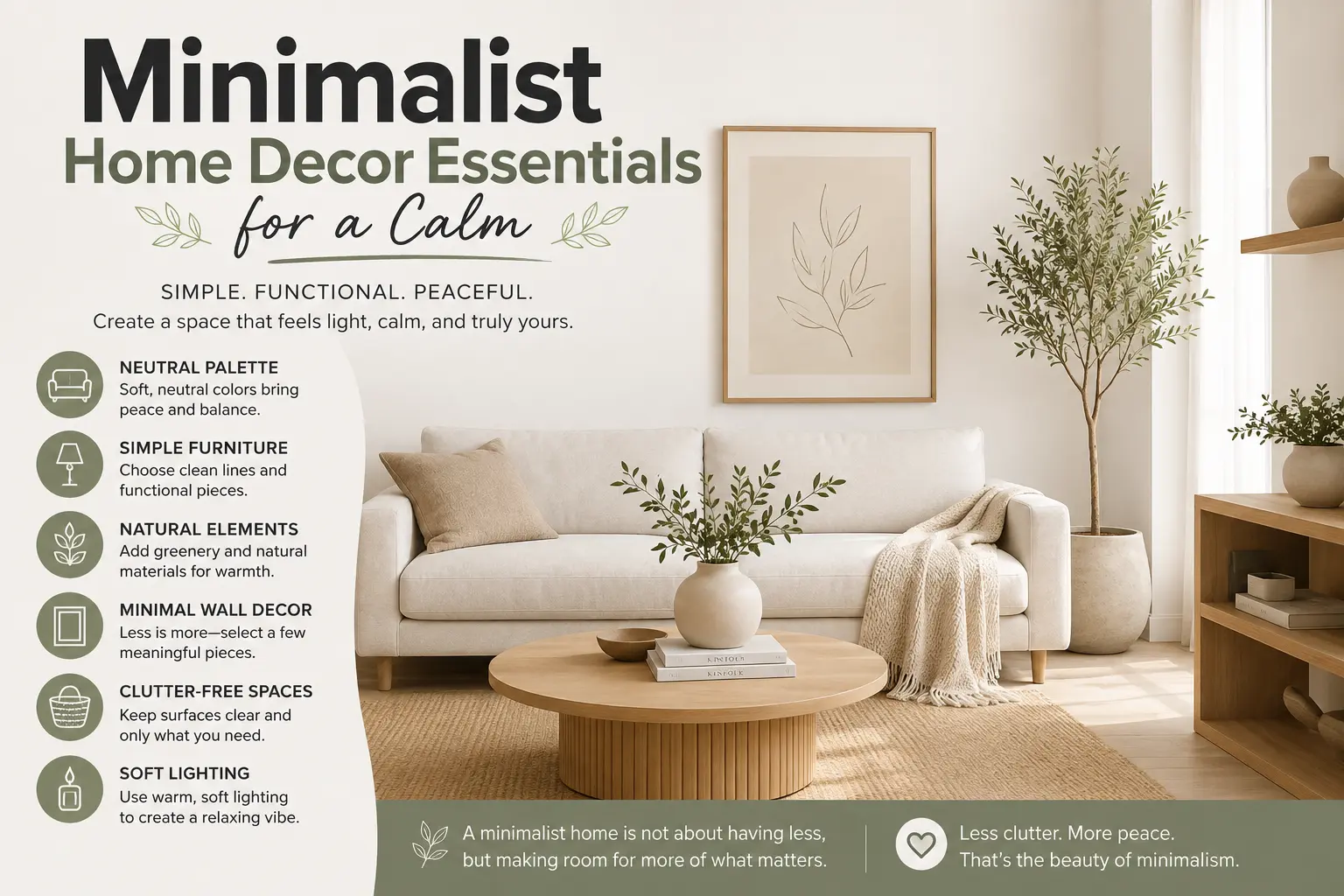
Do you ever walk into your living room and feel tired just by looking at it? Too many things on the shelves. Too many colours on the walls. Or stuff everywhere. If this sounds like you, you are not alone. Many people feel the same way, and that is why more and more homes are turning to a simple, calm style called minimalism.
Minimalist home decor is not about having an empty house with nothing in it. It is about keeping only the things you truly need and love, and letting go of the rest. It is about clean lines, soft colours, and open space. A minimalist home feels light. It feels calm. It gives your mind a place to rest after a long day.
In this guide, we will walk through everything you need to know about Minimalist home decor essentials. We will keep the words simple and easy to follow, so anyone can use this guide, even if you are just starting your decorating journey. By the end, you will know exactly what to buy, what to remove, and how to build a home that feels peaceful and beautiful.
What Does “Minimalist Home Decor” Really Mean?
Before we jump into the list of essentials, let’s talk about what minimalism actually means in home design.
Minimalist home decor means:
- Keeping only what you need and love
- Choosing simple shapes and clean lines
- Using a small, soft color palette
- Avoiding too many patterns or bold prints
- Letting each item in the room have a clear purpose
- Leaving open space so the room can “breathe”
Minimalism is not about being cold or empty. In fact, the newest minimalist styles for this year are warm and cozy. Think soft beige walls, natural wood furniture, and comfy linen curtains. It is minimalism with a heart, not minimalism with nothing at all.
The main idea is simple: less stuff, more meaning. Every item you keep should either be useful or make you happy. If it does neither, it probably does not belong in your home.
Why Choose a Minimalist Home?
You might be wondering, why should I even try this style? Here are some simple reasons why people love minimalist homes.
1. Less stress: A messy room can make your mind feel messy too. When your space is clean and simple, your brain feels calmer.
2. Easier to clean: Fewer things means less time spent dusting, organizing, and tidying up.
3. Saves money: When you stop buying things just because they look nice in a store, you save money for things that truly matter.
4. Timeless look: Trendy decor goes out of style fast. Simple, clean design never really goes out of style.
5. More focus on what you love: When you remove the clutter, the few special items you keep really stand out and shine.
Now that you understand the “why,” let’s get into the “what.” Below is a full list of minimalist home decor essentials for every part of your home.
1. A Neutral Color Palette
The base of any minimalist home starts with color. Instead of bright, loud colors, minimalist homes use soft, neutral shades. Think of colors like:
- Soft white and off-white
- Warm beige and taupe
- Light gray
- Soft sand or oatmeal tones
- Warm clay or terracotta as an accent
These colors act like a blank canvas. They make your room feel open and bright. They also make it easy to add small pops of color later without the room feeling too busy.
A simple tip: paint your walls in one soft, neutral shade. Then, if you want a bit of warmth, use one deeper earthy tone like clay or soft brown on a single wall or through your furniture. This keeps the room calm but not boring.
2. Simple, Functional Furniture
In a minimalist home, furniture is not just for looks. Every piece should have a clear job to do. Before buying any furniture, ask yourself, “Do I really need this, and will I use it often?”
Some minimalist furniture essentials include:
- A simple sofa in a solid, neutral color
- A clean-lined coffee table (wood or stone tops work well)
- A bed frame with a simple headboard, without heavy carving or bold patterns
- Open shelves instead of large, bulky cabinets
- Dining chairs with simple shapes, no extra decoration
Try to avoid furniture with too many curves, patterns, or shiny materials. Choose pieces made from natural materials like wood, stone, or linen. These materials add warmth without adding visual noise.
Another helpful idea is to pick fewer, better pieces. Instead of five small side tables around your home, choose one or two good-quality tables that will last for years. Quality over quantity is a core rule of minimalist living.
3. Smart and Hidden Storage
Clutter is the number one enemy of a minimalist home. But that doesn’t mean you have to throw everything away. The trick is to use smart storage that hides your everyday items out of sight.
Here are some storage essentials to think about:
- Storage ottomans that double as seating and hidden storage
- Built-in cabinets with clean, handle-less doors
- Baskets made of natural materials like jute or rattan for blankets and toys
- Under-bed storage boxes for out-of-season clothes
- A simple media console that hides remotes, cables, and chargers
The goal is to keep surfaces clear. A clear countertop, a clear coffee table, and a clear entryway all help your home feel more open and calm. When things have a proper home to go back to, your space stays tidy without much daily effort.
4. Natural Textures and Materials
Just because a room is simple does not mean it should feel flat or boring. This is where texture comes in. Texture is what makes a minimalist room feel warm, cozy, and interesting, even without a lot of color or pattern.
Some easy ways to add texture:
- A chunky knit throw blanket on the sofa
- A soft wool or jute rug on the floor
- Linen curtains instead of heavy, shiny fabric
- Wooden bowls, trays, or shelves
- A stone vase or ceramic pot with a rough, natural finish
Mixing different textures together, like a smooth leather chair next to a soft knit blanket, adds depth to a room. It gives your eyes something interesting to notice, without adding any clutter or extra colors.
5. A Few Meaningful Decor Pieces
Minimalism does not mean bare walls and empty shelves. It means being picky about what you display. Instead of filling every wall and shelf with decorations, choose a small number of pieces that really mean something to you.
Ideas for meaningful minimalist decor:
- One piece of art that you truly love, instead of five small prints
- A small collection of books you have actually read
- A single plant in a simple pot
- A handmade bowl or vase from a trip you took
- A family photo in a simple frame
The rule here is quality over quantity. One large, beautiful piece of art on a wall is much more powerful than ten small, random pictures. Give your favorite items room to breathe, and they will stand out even more.
6. Indoor Plants
Plants are a simple and beautiful way to bring life into a minimalist home. They add color, softness, and a sense of nature, without adding “stuff” or clutter. This idea is often called biophilic design, which just means bringing nature indoors.
Easy plant ideas for a minimalist home:
- A large leafy plant in the corner of a living room, like a fiddle leaf fig
- A small pot of herbs on the kitchen counter
- A trailing plant like pothos on a bookshelf
- A single stem of dried flowers or branches in a tall vase
You do not need a jungle of plants to get this effect. Even one or two well-placed plants can completely change the feeling of a room, making it feel fresh and alive.
7. Soft, Warm Lighting
Lighting plays a bigger role in home design than most people think. Harsh, bright, white lighting can make even a beautiful room feel cold and uninviting. Soft, warm lighting does the opposite. It makes a room feel cozy, calm, and welcoming.
Minimalist lighting essentials:
- A simple pendant light with a clean shape over the dining table
- Warm-toned light bulbs instead of cool white ones
- A floor lamp with a simple design for reading corners
- Candles or small lamps for soft evening light
Try to avoid lighting fixtures with too many crystals, patterns, or shiny metal parts. A simple, sculptural light fixture can even work as a piece of art on its own, without needing anything extra around it.
8. Simple Window Treatments
Windows are often overlooked, but they matter a lot in minimalist design. Heavy, patterned curtains can make a room feel busy and closed in. Simple window treatments let in natural light and keep the room feeling open.
Good minimalist window options:
- Plain linen or cotton curtains in a neutral color
- Simple roller blinds
- No curtains at all, if privacy is not a concern
Natural light is one of the best (and free) design tools you have. Letting in as much soft daylight as possible will instantly make your space feel bigger, brighter, and calmer.
9. A Decluttered Entryway
Your entryway is the first thing you and your guests see when entering your home. A cluttered entryway with shoes, bags, and mail everywhere sets the wrong tone right away.
Minimalist entryway essentials:
- A small bench or stool for sitting to put on shoes
- A hook or two for coats, instead of a big messy coat rack
- A simple tray or bowl for keys and mail
- A shoe rack or cabinet to hide shoes from view
Keep this area extra simple, since it is the “first impression” of your whole home. A calm entryway sets the tone for the calm feeling you want throughout the rest of your house.
10. A Clutter-Free Kitchen
Kitchens can get messy fast, with gadgets, jars, and small appliances taking over the counters. A minimalist kitchen focuses on keeping counters clear and using only what you truly need.
Minimalist kitchen essentials:
- Handle-less or simple flat-front cabinets
- Only the appliances you use daily left out on the counter
- Matching jars or containers for pantry items
- Neutral countertops without busy patterns
- Open shelving with only a few, matching dishes displayed
A clear kitchen counter not only looks better, it also makes cooking easier and less stressful. Try to put everything else away in cabinets or drawers, and only leave out the items you use every single day.
11. A Peaceful Bedroom
Your bedroom should be the calmest room in your whole home, since it is where you rest and recharge. Minimalist bedroom design focuses on comfort, simplicity, and softness.
Minimalist bedroom essentials:
- Simple bedding in soft, neutral colors
- A bed frame without heavy, bold designs
- One or two soft pillows, instead of ten decorative ones
- A small nightstand with only the basics on top, like a lamp and a book
- Hidden storage for clothes, so drawers and closets stay tidy
Avoid putting a TV, a desk, and a treadmill all in the same room as your bed if you can help it. The fewer distractions in your bedroom, the easier it will be to relax and sleep well.
12. Matte and Soft Finishes
Shiny, glossy surfaces can sometimes feel too flashy for a minimalist home. Instead, look for matte finishes on paint, furniture, and fixtures. Matte surfaces feel calmer and softer to the eye.
Where to use matte finishes:
- Matte wall paint instead of glossy paint
- Matte black or brushed metal for door handles and faucets
- Soft, matte fabric for sofas and chairs instead of shiny materials
This small choice makes a big difference. Matte finishes give a room a soft, quiet feeling, which fits perfectly with the minimalist style.
How to Start Decluttering Your Home
Now you know the essentials, but what if your home is currently full of clutter? Don’t worry. Every minimalist home started out as a cluttered one. Here is a simple step-by-step process to help you begin.
Step 1: Start small: Do not try to declutter your whole house in one day. Start with one small area, like a single drawer or shelf.
Step 2: Sort into three piles: Keep, donate, and throw away. Be honest with yourself about what you actually use and love.
Step 3: Ask the right question: For each item, ask, “Have I used this in the last year? Does it make me happy?” If the answer is no to both, it is probably time to let it go.
Step 4: Give everything a home: Once you know what you are keeping, find a proper spot for each item. This makes it much easier to keep things tidy going forward.
Step 5: Repeat room by room: Move through your home one room at a time, using the same simple steps.
Decluttering is not a one-time task. It becomes a habit over time. The more you practice it, the easier it becomes to keep a simple, calm home.
Common Minimalist Decorating Mistakes to Avoid
Even with good intentions, it is easy to make a few small mistakes when trying out this style. Here are some common ones to watch for.
Mistake 1: Making the space feel cold: Minimalism does not mean empty and boring. Add warmth through natural materials, plants, and soft lighting.
Mistake 2: Buying too many “minimalist looking” items: Ironically, some people buy lots of new decor just to make their home look minimalist. Remember, the goal is to buy less overall, not just less colorful items.
Mistake 3: Following trends too closely: Minimalism is about timeless design, not chasing every new trend. Choose pieces you will still love in five or ten years.
Mistake 4: Forgetting about comfort: A home can be simple and still be comfortable. Do not sacrifice cozy blankets, soft rugs, or comfortable seating just to keep things minimal.
Mistake 5: Doing it all at once: Trying to redesign your entire home in one weekend can feel overwhelming and expensive. Take your time and make changes slowly, room by room.
Room-by-Room Minimalist Shopping List
If you want a quick and simple checklist to follow, here is a short shopping list for each main room in your home.
Living Room:
- Neutral sofa
- Simple coffee table
- One statement art piece
- A soft rug
- One or two plants
Bedroom:
- Simple bed frame
- Soft, neutral bedding
- One nightstand with a lamp
- Hidden storage baskets or boxes
Kitchen:
- Matching jars for pantry items
- A simple set of dishes
- Hidden bins for trash and recycling
- A small tray for daily-use items
Bathroom:
- Matching bottles for soap and shampoo
- A simple woven basket for towels
- One or two plants that like humidity
- A small tray for daily toiletries
Entryway:
- A simple bench
- A shoe rack or cabinet
- A tray for keys and mail
- One or two hooks for coats
Final Thoughts
Minimalist home decor is not about being perfect or having a picture-ready home at all times. It is about creating a space that feels calm, easy to care for, and full of things you truly love. It is less about strict rules, and more about being thoughtful with what you bring into your home.
Start small. Pick one room. Remove what you don’t need, and choose simple, natural, and meaningful pieces to keep. Over time, your whole home will start to feel lighter, calmer, and more like a place where you can truly relax.
A minimalist home is not built in one day, but every small step you take gets you closer to that calm, clutter-free space you are dreaming of. So take a deep breath, look around your home, and ask yourself: what is one small change I can make today?
