

Owning a home is a big achievement. It is also a big job. Your house works hard for you every day. It keeps you warm, dry, and safe. In return, it needs a little care from you.
Most people only fix things when they break. A leaky pipe becomes a flooded floor. A dirty air filter becomes a broken heater. A dead smoke alarm battery becomes a real danger. These problems cost a lot of money and cause a lot of stress.
The good news is that you can avoid most of them. You do not need to be a handyman or spend whole weekends on repairs. You just need a simple habit. If you do a few small jobs each month, your home stays in good shape for years.
In this guide, you will learn the home maintenance tasks you should do every month. Each task is explained in easy words. You will see why it matters, how to do it, and how long it takes. By the end, you will have a clear monthly routine you can follow with confidence.
Why Monthly Home Maintenance Matters
Before we get to the list, let us look at why this habit is worth your time.
It saves you money
Small repairs are cheap. Big repairs are not. A new furnace filter costs a few dollars. A broken furnace can cost thousands. When you catch a problem early, you fix it for a fraction of the price. Regular care also helps your appliances last longer, so you replace them less often.
It keeps your family safe
Some home maintenance tasks are about safety, not just comfort. Working smoke alarms, clean dryer vents, and safe electrical outlets protect the people you love. A few minutes each month can prevent a fire, a leak, or an injury.
It protects your home’s value
If you ever sell your home, buyers will notice how well it was cared for. A house with a clean, steady maintenance record sells faster and for more money. Even if you never sell, you still enjoy living in a home that feels fresh and solid.
It makes big jobs smaller
Think of it like brushing your teeth. A few minutes every day is easy. Waiting a year and then fixing ten cavities is painful. Monthly home maintenance works the same way. Small jobs done often are much easier than one giant job done late.
It gives you peace of mind
When you know your home is in good shape, you worry less. You sleep better. You are ready for storms, cold weather, and surprises because you already checked the important things.
How to Build a Monthly Home Maintenance Habit
Here are a few tips to make this routine stick.
Pick one day each month: Many people choose the first Saturday or the first day of the month. Put it on your calendar with a reminder.
Keep your supplies in one place: Store a flashlight, spare batteries, a screwdriver, cleaning supplies, and air filters together. That way you never waste time searching.
Make a checklist: Write down your tasks or use a notes app. Checking things off feels good and keeps you on track.
Share the work: If you live with family or roommates, give everyone a task. Kids can test smoke alarms with an adult. A partner can wipe down the fridge. Many hands make light work.
Keep notes: Write down the date when you change a filter or fix a leak. Over time, this record shows you what needs attention and when.
Start small: You do not have to do everything perfectly in month one. Add one or two new tasks each month until the routine feels natural.
Now let us get into the list.
1. Test Your Smoke Alarms and Carbon Monoxide Detectors
This is the most important of all home maintenance tasks you should do every month. Smoke alarms and carbon monoxide detectors save lives, but only when they work.
How to do it:
- Press and hold the test button on each alarm until it beeps.
- Make sure you hear a loud, clear sound.
- If the sound is weak or the alarm chirps, replace the battery.
- Check that every bedroom, hallway, and level of your home has an alarm.
Good to know: Most alarms last about ten years. Look for the date printed on the back. If your alarm is older than ten years, replace the whole unit, not just the battery.
Time needed: About 5 to 10 minutes.
2. Check and Replace Your HVAC Air Filter
Your heating and cooling system pulls air through a filter. Over time, the filter fills up with dust, pet hair, and dirt. A clogged filter makes your system work harder, raises your energy bill, and lowers your air quality.
How to do it:
- Find your filter. It is usually near the furnace or behind a large vent.
- Slide it out and hold it up to the light.
- If you cannot see light through it, it is time for a new one.
- Slide the new filter in with the arrow pointing toward the system.
Good to know: Some filters last 90 days, but homes with pets, allergies, or heavy dust may need a new one every month. Checking monthly is a smart habit even if you do not always replace it.
Time needed: About 5 minutes.
3. Look for Leaks Under Sinks and Around Pipes
Water damage is one of the most expensive problems a homeowner can face. A small drip can slowly rot wood, grow mold, and ruin cabinets. The trick is to spot it early.
How to do it:
- Open the cabinets under your kitchen and bathroom sinks.
- Use a flashlight to look at the pipes and connections.
- Feel for dampness, and look for water stains, rust, or a musty smell.
- Check the hoses behind your washing machine and dishwasher.
- Look at the ceiling and walls for yellow or brown spots.
Good to know: If you find a drip, tighten the connection by hand or with a wrench. If it keeps leaking, call a plumber before it gets worse.
Time needed: About 10 minutes.
4. Check Faucets, Showerheads, and Toilets
While you are checking for leaks, take a look at the water fixtures themselves. A dripping faucet or a running toilet wastes a lot of water and money over time.
How to do it:
- Turn each faucet on and off. Make sure it shuts off fully.
- Look at the showerhead for slow flow, which can mean mineral buildup.
- Listen to your toilets. If you hear water running after a flush, something is wrong.
- Add a few drops of food coloring to the toilet tank. If color shows in the bowl after 10 minutes, you have a leak.
Good to know: A running toilet is often fixed with a cheap part called a flapper. It takes minutes to replace.
Time needed: About 10 minutes.
5. Clean Your Garbage Disposal
If you have a garbage disposal, it can get smelly and dull over time. A monthly clean keeps it fresh and working well.
How to do it:
- Turn off the disposal and never put your hand inside.
- Pour a half cup of baking soda down the drain, followed by a cup of white vinegar.
- Let it fizz for a few minutes.
- Drop in a handful of ice cubes and run the disposal with cold water. The ice helps scrub the blades.
- Finish by grinding a few lemon or orange peels for a fresh smell.
Good to know: Avoid putting grease, coffee grounds, eggshells, or fibrous foods like celery down the disposal. These cause clogs.
Time needed: About 5 to 10 minutes.
6. Flush and Clean Your Drains
Slow drains are a warning sign. Hair, soap, and grease build up inside your pipes until water cannot pass. Cleaning drains each month helps you avoid ugly clogs.
How to do it:
- Remove any hair or gunk you can see from the drain covers.
- Pour hot (not boiling) water down each drain.
- For a deeper clean, use baking soda and vinegar, then flush with hot water.
- Use a drain strainer in the shower and tub to catch hair.
Good to know: Be careful with harsh chemical drain cleaners. They can damage older pipes. A simple plastic drain snake works well and costs very little.
Time needed: About 10 to 15 minutes.
7. Clean the Range Hood Filter
The filter above your stove catches grease from cooking. If it gets too dirty, it stops working well and can even become a fire risk.
How to do it:
- Remove the metal filter from the range hood.
- Soak it in hot water mixed with dish soap and a little baking soda.
- Scrub gently with a soft brush.
- Rinse well and let it dry fully before putting it back.
Good to know: If you cook often, especially with frying, clean it every month. If you cook less, every two or three months may be enough.
Time needed: About 15 minutes.
8. Clean Your Dishwasher
It sounds odd to clean a machine that cleans, but dishwashers collect food bits, soap scum, and grease. A dirty dishwasher can leave smells and spots on your dishes.
How to do it:
- Remove the bottom rack and check the drain for food scraps.
- Wipe the door edges and seal with a damp cloth.
- Place a cup of white vinegar on the top rack and run a hot cycle.
- For extra freshness, sprinkle baking soda on the bottom and run a short hot cycle.
Time needed: About 10 minutes of work, plus the cycle time.
9. Clean Your Washing Machine
Washing machines also build up soap, dirt, and mold, especially front-loaders. If your laundry smells musty, your machine may need a cleaning.
How to do it:
- Run an empty hot cycle with white vinegar or a washing machine cleaner.
- Wipe the rubber door seal, where mold likes to hide.
- Clean the detergent drawer.
- Leave the door open after each wash so the inside can dry.
Time needed: About 10 minutes of work, plus the cycle time.
10. Clean the Dryer Lint Trap and Vent
Dryer fires are more common than most people think, and lint is the main cause. Cleaning the lint trap after every load is a must. A deeper check each month adds extra safety.
How to do it:
- Remove lint from the trap after every load.
- Once a month, wash the trap with soap and water to remove film from dryer sheets.
- Look behind the dryer and make sure the vent hose is not crushed or bent.
- Go outside and check that the vent flap opens freely when the dryer runs.
Good to know: If your clothes take much longer to dry, the vent may be clogged. A full vent cleaning once a year is a smart idea.
Time needed: About 10 minutes.
11. Clean the Refrigerator
A clean fridge runs better, keeps food fresh longer, and smells nicer. Monthly care also helps you spot spoiled food before it becomes a problem.
How to do it:
- Throw away old food and expired items.
- Wipe the shelves and drawers with warm, soapy water.
- Check the door seals for cracks or dirt. A weak seal lets cold air escape.
- Vacuum the coils at the back or bottom of the fridge if you can reach them. Dusty coils make the fridge work harder.
- Check that the temperature is at or below 40°F (4°C) in the fridge and 0°F (-18°C) in the freezer.
Time needed: About 20 minutes.
12. Test GFCI Outlets
GFCI outlets are the ones with “Test” and “Reset” buttons. They are found in kitchens, bathrooms, garages, and outdoors. They shut off power fast if they sense a problem, which helps prevent electric shock.
How to do it:
- Plug a small lamp or radio into the outlet.
- Press the “Test” button. The power should turn off.
- Press the “Reset” button. The power should come back on.
- If the outlet does not shut off when you press “Test,” replace it or call an electrician.
Time needed: About 5 to 10 minutes.
13. Check Your Electrical Cords and Power Strips
Damaged cords can cause shocks and fires. A quick look each month keeps you safe.
How to do it:
- Look for cords that are frayed, cracked, or hot to the touch.
- Make sure you are not overloading power strips or outlets.
- Do not run cords under rugs or furniture.
- Replace anything that looks worn out.
Time needed: About 5 minutes.
14. Inspect Your Fire Extinguisher
Every home should have at least one fire extinguisher, usually in the kitchen. But an extinguisher only helps if it works.
How to do it:
- Check the gauge. The needle should be in the green zone.
- Make sure the pin is in place and the hose is not cracked.
- Look for dents, rust, or leaks.
- Check the date on the label. Replace it if it is expired.
Good to know: Everyone in your home should know where it is and how to use it. Remember the word PASS: Pull, Aim, Squeeze, Sweep.
Time needed: About 3 minutes.
15. Check the Water Heater
Your water heater runs every day, so it deserves a look. Catching small problems early can stop a messy flood.
How to do it:
- Look around the base for puddles, rust, or moisture.
- Check the pipes on top for leaks.
- Make sure nothing is stored too close to the heater.
- Listen for strange popping or rumbling sounds. These can mean sediment buildup.
- Check that the temperature is set to about 120°F (49°C). This is safe and saves energy.
Good to know: Flushing the tank once or twice a year removes sediment and helps the heater last longer.
Time needed: About 5 to 10 minutes.
16. Look Over Your Home’s Exterior
The outside of your home takes a beating from sun, rain, wind, and snow. A short walk around your house each month helps you spot trouble early.
How to do it:
- Look at the roof for missing, curled, or cracked shingles.
- Check the siding for cracks, holes, or peeling paint.
- Look at windows and doors for gaps or damaged seals.
- Check the foundation for cracks or wet spots.
- Make sure the ground slopes away from your house so water does not pool near the walls.
Time needed: About 15 to 20 minutes.
17. Check Gutters and Downspouts
Gutters carry rainwater away from your home. When they are clogged, water spills over and can damage your roof, walls, and foundation.
How to do it:
- Remove leaves, twigs, and dirt from the gutters.
- Run water from a hose to make sure it flows freely.
- Make sure downspouts point at least a few feet away from your house.
- Look for sagging, loose, or rusty parts.
Good to know: Gutters need extra attention in fall when leaves drop. If your home has many trees nearby, check them more often.
Time needed: About 20 to 30 minutes.
18. Test Your Garage Door
Your garage door is often the largest moving part of your home. It is heavy, so safety matters.
How to do it:
- Run the door up and down and listen for grinding or squeaking.
- Lubricate the hinges, rollers, and springs with garage door lubricant. Do not use thick grease.
- Test the safety sensors by placing an object in the door’s path. The door should reverse when it touches it.
- Check the weatherstripping at the bottom for cracks.
Good to know: Do not try to fix the springs or cables yourself. They are under high tension and can cause serious injury. Call a pro.
Time needed: About 10 minutes.
19. Clean Bathroom Exhaust Fans
Bathroom fans pull out steam and moisture. When they get dusty, they work poorly, and mold can grow.
How to do it:
- Turn off the fan at the switch.
- Take off the cover and wash it with soap and water.
- Use a vacuum or damp cloth to remove dust from the fan blades.
- Put everything back and test the fan.
Good to know: Hold a piece of tissue near the fan. If it sticks to the cover, the fan is pulling air well.
Time needed: About 10 minutes.
20. Check Caulk and Grout in Bathrooms and Kitchens
Caulk and grout seal gaps so water cannot get behind walls and floors. When they crack or fade, water sneaks in and causes hidden damage.
How to do it:
- Look around the tub, shower, sink, and backsplash.
- Check for cracks, gaps, or black spots of mold.
- Remove old caulk with a small tool and apply fresh caulk where needed.
- Let the caulk dry fully before using the shower.
Time needed: About 10 minutes to check, longer if you need to re-caulk.
21. Check Windows and Doors
Windows and doors affect your comfort and your energy bill. Small gaps let in drafts, bugs, and moisture.
How to do it:
- Open and close each window and door to make sure they move smoothly.
- Check locks and latches.
- Look for gaps, cracked glass, or worn weatherstripping.
- Clean window tracks with a vacuum and a damp cloth.
- Lubricate squeaky hinges with a little silicone spray.
Time needed: About 15 minutes.
22. Look for Signs of Pests
Pests can damage your home and your health. Catching them early is much easier than getting rid of a big infestation.
How to do it:
- Look for droppings, chewed wires, or nests in the attic, basement, and garage.
- Check around the kitchen for crumbs and open food.
- Seal small gaps and holes around pipes and doors.
- Keep trash cans closed and food in sealed containers.
- Look for signs of termites, such as mud tubes or soft wood.
Time needed: About 10 to 15 minutes.
23. Check Your Attic and Basement
These areas are easy to forget, but problems often start there.
How to do it:
- Look for water stains, damp insulation, or mold.
- Check that vents are not blocked.
- Look for signs of animals or insects.
- Make sure nothing is stored too close to the furnace or water heater.
Time needed: About 10 to 15 minutes.
24. Test Your Sump Pump (If You Have One)
If your basement is prone to flooding, your sump pump is your first line of defense. You do not want to find out it is broken during a storm.
How to do it:
- Pour a bucket of water into the sump pit.
- The pump should turn on, drain the water, and shut off.
- Listen for odd noises and check that the discharge pipe is clear.
- Test the backup battery if you have one.
Time needed: About 5 to 10 minutes.
25. Take Care of Your Yard and Outdoor Areas
Your yard is part of your home. A little monthly care keeps it healthy and safe.
How to do it:
- Trim branches that hang over your roof or power lines.
- Check fences, gates, and decks for loose boards or nails.
- Look at walkways and steps for cracks or trip hazards.
- Turn on outdoor faucets and check for leaks.
- Keep mulch and plants away from the walls of your house.
Time needed: About 20 to 30 minutes.
26. Check Your Emergency Supplies
Emergencies often come without warning. A storm, a power cut, or an accident can happen at any time. Having supplies ready makes a big difference.
How to do it:
- Check flashlights and replace weak batteries.
- Look at your first-aid kit and replace used or expired items.
- Make sure you have bottled water and non-perishable food.
- Keep important phone numbers and documents in an easy-to-find place.
Time needed: About 10 minutes.
27. Do a Quick Deep Clean of One Area
Cleaning is part of maintenance too. Dust and dirt wear down surfaces over time. Instead of cleaning the whole house deeply each month, pick one area.
Ideas:
- Wash windows and screens.
- Wipe down baseboards and light fixtures.
- Vacuum under couches and beds.
- Clean ceiling fans and vents.
- Wash curtains and rugs.
Rotating areas keeps your home fresh without wearing you out.
Time needed: About 30 to 60 minutes.
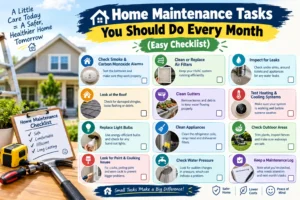
Monthly Home Maintenance Checklist (Quick Version)
Here is a short list you can copy and use every month.
Safety
- Test smoke and carbon monoxide alarms
- Check the fire extinguisher
- Test GFCI outlets
- Inspect electrical cords
- Review emergency supplies
Heating, Cooling, and Air
- Check or replace the HVAC filter
- Clean bathroom exhaust fans
- Clean range hood filter
Plumbing and Water
- Check under sinks for leaks
- Check faucets, showerheads, and toilets
- Flush drains
- Clean the garbage disposal
- Check the water heater
- Test the sump pump
Appliances
- Clean the dishwasher
- Clean the washing machine
- Clean the dryer lint trap and check the vent
- Clean the refrigerator
Inside the House
- Check caulk and grout
- Check windows and doors
- Look for pests
- Check the attic and basement
- Do a quick deep clean of one area
Outside
- Inspect the exterior
- Clean gutters and downspouts
- Test the garage door
- Tidy the yard
Seasonal Tips to Add to Your Monthly Routine
Some jobs depend on the time of year. Here are a few extras to keep in mind.
Spring: Check for winter damage on the roof and siding. Service your air conditioner. Clean outdoor furniture. Start your garden.
Summer: Watch for pests. Check the AC for strange noises. Keep gutters clear after storms. Protect your deck and fence from sun and rain.
Fall: Clean gutters often. Have your furnace checked. Seal gaps around doors and windows. Bring in hoses and shut off outdoor water.
Winter: Protect pipes from freezing by letting faucets drip on very cold nights. Check for ice dams on the roof. Keep walkways clear. Test your carbon monoxide detectors more often when heaters run all day.
When to Call a Professional
You can handle many home maintenance tasks yourself, but some jobs need an expert. Call a pro if you see:
- Large cracks in the foundation or walls
- Signs of mold that cover a large area
- Electrical problems like sparks, burning smells, or flickering lights
- Gas smells (leave the home and call the gas company right away)
- Roof damage or major leaks
- Problems with garage door springs or cables
- A furnace or water heater that does not work
Paying a professional for hard or risky jobs is not a waste. It is a way to stay safe and avoid bigger costs.
Common Mistakes to Avoid
Waiting for something to break: The whole point of monthly care is to catch problems early.
Skipping safety checks: Smoke alarms and GFCI outlets are easy to forget, but they matter most.
Using the wrong products: Harsh chemicals can damage pipes, surfaces, and appliances. Use gentle cleaners when you can.
Ignoring small signs: A strange noise, a faint smell, or a small stain often points to a bigger issue.
Doing risky work alone: Some tasks, like roof repairs or electrical work, are dangerous. Know your limits.
Not keeping records: Write down what you did and when. It helps you stay organized and is useful if you sell your home.
Frequently Asked Questions
How long do monthly home maintenance tasks take?
Most homeowners can finish the basic monthly list in about two to three hours. You can split the work into small sessions across the month if that is easier.
What is the most important monthly home maintenance task?
Testing smoke alarms and carbon monoxide detectors. These devices protect your family from the most serious dangers, and the test takes only a few minutes.
How much should I budget for home maintenance?
A common rule is to save about 1% to 3% of your home’s value each year for upkeep and repairs. Monthly care helps you stay on the low end of that range.
Do I need special tools?
No. A flashlight, screwdriver, wrench, vacuum, soft brush, and basic cleaning supplies cover most jobs. Add tools slowly as you need them.
Can renters do these tasks too?
Yes. Renters can test alarms, check for leaks, clean appliances, and look for pests. If you find a bigger problem, tell your landlord right away.
What if I miss a month?
Do not worry. Just pick up where you left off. A little care is always better than none.
Final Thoughts
A home is more than a place to live. It is where you rest, laugh, and make memories. It deserves a little care each month.
The home maintenance tasks you should do every month are simple. Test your alarms. Change your filters. Look for leaks. Clean your appliances. Walk around your home and look with fresh eyes. None of these jobs is hard, and most take only a few minutes.
But together, they make a big difference. They save you money, keep you safe, and help your home last for many years. They also give you something priceless: peace of mind.
Start this month. Pick a day, grab your checklist, and begin with the first task. Soon it will feel like second nature, and you will be glad you built the habit.
Your future self, and your home, will thank you.
