Growing your own vegetables is one of the most rewarding things you can do at home. You don’t need a big yard, fancy tools, or years of experience. All you need is a little sunlight, some soil, and the willingness to learn. This guide will walk you through everything you need to know to start your first vegetable garden, step by step, using simple words and easy tips anyone can follow.
Whether you have a large backyard or just a small balcony, this guide will help you grow fresh, healthy vegetables at home.
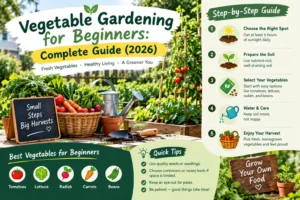
Why Start a Vegetable Garden?
Before we jump into the “how,” let’s talk about the “why.” There are many good reasons to start growing your own food.
Fresh, healthy food: Vegetables from your garden are fresher than anything you buy at a store. You pick them right before you eat them, so they keep more nutrients and taste better.
Save money: A single packet of seeds can cost less than one bag of vegetables from the store, but it can give you many meals over several months.
Good for your health: Gardening gets you outside, moving your body, and breathing fresh air. Many people find it relaxing and calming too. It’s a great way to reduce stress.
Better for the planet: When you grow your own food, you cut down on plastic packaging and the fuel used to transport food from farms to stores.
A fun hobby for the whole family: Kids love watching seeds turn into real food. It teaches patience and responsibility in a fun, hands-on way.
Now that you know why gardening is worth it, let’s get into how to actually start.
Step 1: Choose the Right Spot
The first step in vegetable gardening for beginners is picking a good location. Most vegetables need at least 6 hours of direct sunlight each day. Some, like lettuce and spinach, can grow with a little less light, but most vegetables — tomatoes, peppers, beans, and squash — need full sun to grow well.
Here’s what to look for when choosing your spot:
- Sunlight: Watch your yard or balcony for a day and note which areas get the most sun.
- Water access: Pick a spot close to a hose or water source, so watering is easy.
- Good drainage: Avoid low spots where water collects after rain. Vegetables don’t like “wet feet.”
- Flat ground: A flat or gently sloped area is easier to plant and water evenly.
If you don’t have a yard, don’t worry. You can grow vegetables in containers on a balcony, patio, or even a sunny windowsill. Container gardening works great for beginners with limited space.
Step 2: Decide What to Grow
One common mistake beginners make is trying to grow too many different vegetables at once. It’s better to start small and pick a few easy vegetables that grow well for new gardeners.
Here are some of the easiest vegetables for beginners:
- Tomatoes – Popular, productive, and forgiving of small mistakes.
- Lettuce – Grows fast and doesn’t need much space.
- Radishes – Ready to harvest in as little as 3–4 weeks.
- Green beans – Easy to grow and produce a lot of food.
- Zucchini – Grows quickly and produces plenty of vegetables.
- Peppers – Simple to grow once the weather warms up.
- Carrots – Great for loose, sandy soil.
- Cucumbers – Fast-growing and great for salads or pickles.
- Herbs (basil, mint, parsley) – Easy to grow in pots and useful in the kitchen.
Choose 3 to 5 vegetables that you and your family actually like to eat. There’s no point growing something nobody will enjoy eating.
Step 3: Gather Basic Tools and Supplies
You don’t need to spend a lot of money to start gardening. Here are the basic tools every beginner should have:
- Hand trowel – A small shovel for digging holes and moving soil.
- Garden gloves – To protect your hands from dirt, thorns, and bugs.
- Watering can or hose – To keep your plants hydrated.
- Rake – To clear debris and level soil.
- Garden fork – To loosen and turn soil.
- Seeds or seedlings – Depending on what you want to grow.
- Compost or fertilizer – To feed your soil and plants.
- Plant labels – To remember what you planted where.
If you’re gardening in containers, you’ll also need pots with drainage holes and good quality potting soil.
Step 4: Prepare Your Soil
Healthy soil is the secret to a healthy vegetable garden. Vegetables need soil that is loose, rich in nutrients, and able to drain water well.
Here’s how to prepare your soil in simple steps:
- Clear the area: Remove grass, weeds, rocks, and debris from your garden spot.
- Loosen the soil: Use a garden fork or shovel to dig down about 8 to 12 inches. This helps roots grow deep and strong.
- Add compost: Mix in compost or aged manure to add nutrients. This is one of the best things you can do for your garden.
- Check the soil texture: Good garden soil should crumble easily in your hand, not stick together in a hard clump or fall apart like sand.
- Test the pH (optional): Most vegetables like slightly acidic to neutral soil, with a pH between 6.0 and 7.0. You can buy a simple soil test kit at most garden stores.
If your soil is very poor, or if you’re gardening in a small space, you might choose to build a raised garden bed. Raised beds let you control the quality of soil from the start and often drain better than ground soil.
Step 5: Decide Between Seeds and Seedlings
As a beginner, you can either start your vegetables from seeds or buy young plants called seedlings (also called transplants) from a garden store.
Starting from seeds:
- Costs less money
- Gives you more variety to choose from
- Takes longer to grow into a full plant
- Some vegetables (like carrots and beans) grow best when planted directly as seeds in the ground
Starting from seedlings:
- Costs more money
- Saves time, since the plant is already growing
- Easier for beginners, especially for tomatoes, peppers, and herbs
- Gives you a head start on the growing season
Step 6: Planting Your Vegetables
Once your soil is ready and you’ve chosen your seeds or seedlings, it’s time to plant. Here’s a simple planting guide:
- Check the planting depth: Most seed packets tell you exactly how deep to plant the seed. As a general rule, plant seeds about twice as deep as their size.
- Space your plants properly: Crowded plants compete for light, water, and nutrients. Follow the spacing guide on your seed packet or plant tag.
- Water right after planting: This helps seeds settle into the soil and helps seedlings recover from being moved.
- Label your rows: It’s easy to forget what you planted where, especially with several types of vegetables.
- Be patient: Some seeds take just a few days to sprout, while others can take a couple of weeks.
If you’re planting in containers, make sure each pot is big enough for the vegetable’s roots to grow. Tomatoes and peppers need larger pots, while lettuce and herbs can grow in smaller containers.
Step 7: Watering Your Garden the Right Way
Watering seems simple, but many beginners either overwater or underwater their plants. Here are some easy tips to get it right:
- Water deeply, not often: It’s better to water your garden deeply a few times a week than to give it a little water every day. Deep watering helps roots grow strong and deep.
- Water in the morning: This gives plants time to dry before nightfall, which helps prevent disease.
- Check the soil before watering: Stick your finger about an inch into the soil. If it feels dry, it’s time to water. If it’s still moist, wait a day.
- Use mulch: A layer of mulch (straw, wood chips, or dried leaves) around your plants helps the soil hold moisture and keeps weeds down.
- Watch for wilting: Slightly wilted leaves in the hot afternoon sun are normal, but if plants are still wilted in the morning, they likely need water.
Container plants usually need more frequent watering than garden beds because pots dry out faster.
Step 8: Feeding Your Plants
Vegetables need nutrients to grow strong and produce a good harvest. While compost added at planting time is a great start, most vegetable gardens benefit from extra feeding during the growing season.
- Compost adds slow-release nutrients and improves soil health over time.
- Organic fertilizer (like fish emulsion or compost tea) gives plants a quick nutrient boost.
- Balanced fertilizer with equal parts nitrogen, phosphorus, and potassium works well for most vegetables.
As a simple rule, feed your plants every 3 to 4 weeks during the growing season, following the instructions on the fertilizer package. Too much fertilizer can actually harm plants, so it’s better to use a little and add more later if needed.
Step 9: Dealing With Weeds, Pests, and Diseases
Every garden, even a small one, will face some challenges. Here’s how to handle the most common problems in simple, beginner-friendly ways.
Weeds:
- Pull weeds by hand while they’re small, before they spread roots.
- Use mulch to block weeds from growing.
- Weed regularly, about once a week, so it never feels like an overwhelming job.
Pests:
- Check your plants often for holes in leaves, chewed edges, or tiny bugs.
- Handpick larger pests like caterpillars and beetles off your plants.
- Use natural options like neem oil or insecticidal soap for smaller pests like aphids.
- Attract helpful insects like ladybugs and bees by planting flowers near your vegetables.
Diseases:
- Avoid watering leaves directly; water the soil at the base of the plant instead.
- Give plants enough space for air to flow between them.
- Remove and throw away any diseased leaves or plants right away, so the problem doesn’t spread.
Beginners often worry too much about pests and diseases. A few bug bites on a leaf won’t ruin your harvest. Focus on keeping your plants healthy overall, and most small problems will take care of themselves.
Step 10: Companion Planting Basics
Companion planting means growing certain vegetables next to each other because they help one another grow better. This is a simple trick that many beginner gardeners use.
Some easy companion planting pairs include:
- Tomatoes and basil – Basil is said to improve the flavor of tomatoes and helps repel certain pests.
- Carrots and onions – Onions can help keep pests away from carrots.
- Beans and corn – Beans add nitrogen to the soil, which corn needs to grow well.
- Cucumbers and sunflowers – Sunflowers can act as a natural trellis for climbing cucumbers.
You don’t need to master companion planting right away. It’s a helpful bonus tip, not a requirement for a successful vegetable garden.
Step 11: Container Gardening for Small Spaces
If you don’t have a yard, container gardening is a great way to grow vegetables on a balcony, porch, or patio.
Tips for successful container gardening:
- Choose the right size pot: Small plants like herbs and lettuce need about 6 to 8 inches of soil depth. Larger plants like tomatoes need pots that are at least 18 inches deep.
- Use good quality potting soil: not regular garden soil, which can be too heavy for containers.
- Make sure pots have drainage holes: so extra water can escape.
- Water more often: since containers dry out faster than garden beds.
- Place pots where they get enough sunlight: ideally 6 or more hours a day.
Container gardening is perfect for beginners because it’s easier to control the soil, water, and sunlight your plants get.
Step 12: A Simple Seasonal Care Calendar
Here’s a basic guide to what beginner gardeners should focus on throughout the year. (Exact timing will depend on your local climate.)
Early Spring:
- Prepare soil and add compost.
- Start seeds indoors for warm-season vegetables like tomatoes and peppers.
- Plant cool-season vegetables like lettuce, spinach, and peas outdoors.
Late Spring:
- Transplant seedlings outdoors after the last frost.
- Begin regular watering and weeding.
- Watch for early signs of pests.
Summer:
- Water deeply and regularly, especially during hot weather.
- Harvest fast-growing vegetables like lettuce and radishes.
- Feed plants with fertilizer or compost tea.
Fall:
- Harvest remaining vegetables before the first frost.
- Clean up dead plants and add them to your compost pile.
- Plant cool-season vegetables for a fall harvest, if your climate allows.
Winter:
- Plan next year’s garden.
- Order seeds early for the best selection.
- Rest your soil, or grow indoor herbs on a sunny windowsill.
Common Mistakes Beginners Make (and How to Avoid Them)
Learning from common beginner mistakes can save you time, money, and frustration.
- Planting too much at once: Start small with a few vegetables you know you’ll enjoy eating.
- Ignoring sunlight needs: Always check how much sun your chosen spot gets before planting.
- Overwatering or underwatering: Check the soil before watering instead of following a fixed schedule.
- Skipping soil preparation: Healthy soil leads to healthy plants; don’t skip this important step.
- Planting too close together: Give plants enough space to grow and get airflow.
- Giving up after one problem: Every gardener faces challenges. Learn from mistakes and try again.
How to Harvest Your Vegetables
Knowing when and how to harvest is just as important as planting. Here are some simple tips:
- Harvest in the morning: when vegetables are cool and full of moisture.
- Pick regularly: Many vegetables, like zucchini and beans, produce more when you harvest often.
- Check for ripeness signs: Tomatoes should be fully colored, cucumbers firm and green, and lettuce leaves large enough to eat but not bitter.
- Use scissors or garden shears: for delicate plants to avoid damaging the rest of the plant.
- Don’t wait too long: Vegetables left too long on the plant can become tough, bitter, or overripe.
Frequently Asked Questions
How much space do I need to start a vegetable garden?
You can start with as little as a few containers on a balcony or a small 4×4 foot garden bed. You don’t need a large space to grow a good amount of food.
How long does it take to grow vegetables?
This depends on the vegetable. Radishes can be ready in about 3 to 4 weeks, while tomatoes can take 60 to 90 days from planting to harvest.
Do I need to use fertilizer?
It’s not always required, especially if your soil is already rich in nutrients, but adding compost or organic fertilizer usually leads to healthier, more productive plants.
Can I grow vegetables indoors?
Yes, many herbs and small vegetables like lettuce can grow indoors near a sunny window or under grow lights.
What is the easiest vegetable for a total beginner to grow?
Radishes, lettuce, and green beans are often considered the easiest vegetables for first-time gardeners because they grow quickly and don’t need much care.
Final Thoughts
Starting a vegetable garden might feel a little overwhelming at first, but it doesn’t have to be complicated. This complete guide to vegetable gardening for beginners covers everything you need: choosing a good spot, picking the right vegetables, preparing your soil, planting correctly, and taking care of your garden as it grows.
Remember, every experienced gardener started exactly where you are now — as a beginner. You don’t need perfect conditions or advanced skills. You just need to start small, stay consistent, and learn as you go. Before long, you’ll be enjoying fresh, homegrown vegetables straight from your own garden.