Your roof works hard every day. It stands in the sun, rain, wind, and snow so that you and your family stay safe and dry. But when was the last time you gave it some care? Most people only think about the roof when something goes wrong, like a leak or a missing shingle. By then, the damage may already be big and costly.
So, how often should you clean your roof? This is one of the most common questions homeowners ask, and the answer varies by home. In this guide, we will explain everything in simple words. You will learn how often to clean your roof, what changes the schedule, how to spot the warning signs, and how to do the job safely. By the end, you will know exactly what your roof needs.
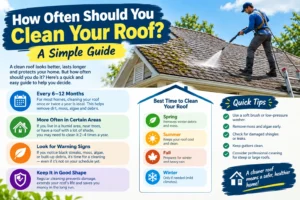
The Short Answer: How Often Should You Clean Your Roof?
For most homes, the best answer is once every one to three years. That is a good rule of thumb if you want a roof that stays clean and healthy.
Here is a quick look at the schedule:
- Every 1 to 2 years: Homes in warm, wet, or shady areas where moss and algae grow fast.
- Every 2 to 3 years: Homes in normal weather with a few trees nearby.
- Every 3 to 5 years: Homes in dry, sunny places with very few trees.
You should also do a light check twice a year, once in spring and once in fall. During this check, you look for debris, dirt, and early signs of growth. A quick look can save you from a big repair later.
Think of it like caring for your car. You do not wash it only when it is covered in mud. You wash it often enough to keep the paint safe. Your roof is the same. Regular care keeps small problems from turning into large ones.
Why Is Roof Cleaning So Important?
Some people believe a dirty roof is only an eye problem. They think black streaks and green patches are just ugly. But dirt on your roof is more than a looks issue. Here is why it matters.
1. It Makes Your Roof Last Longer
A roof is a big investment. Replacing it can cost thousands of dollars. When moss, algae, and lichen grow on your roof, they hold water against the surface. Over time, this wet layer eats away at the roof material. Shingles can curl, crack, or lose their tiny stone granules. A clean roof stays dry and strong, so it can last for many more years.
2. It Stops Leaks Before They Start
Leaves, twigs, and dirt can block the flow of water. When water cannot run off your roof, it pools in low spots. Pooled water can seep under shingles and into your home. Cleaning your roof helps rain move off the roof the way it should.
3. It Saves You Money on Energy Bills
Dark streaks on your roof soak up heat from the sun. This can make your home hotter in summer, and your air conditioner has to work harder. A clean, light-colored roof reflects more sunlight. That can lower your cooling costs.
4. It Raises Your Home Value
First looks matter. A clean roof makes your whole house look neat and well cared for. If you plan to sell your home, a clean roof can help you get a better price. Buyers often worry about the cost of a new roof, and a clean roof gives them peace of mind.
5. It Protects Your Warranty
Many roof makers say you must keep your roof in good shape to keep the warranty. Some warranties even list moss and algae growth as a problem you must fix. Regular cleaning shows that you take care of your roof.
6. It Keeps Pests Away
Damp moss and piles of leaves are a perfect home for insects, birds, and small animals. Mice and squirrels may even find their way into your attic. Keeping your roof clean makes it a less friendly place for pests.
What Decides How Often You Should Clean Your Roof?
Now you know the basic schedule. But your home is not the same as your neighbor’s home. Several things change how often you should clean your roof. Let us go through each one.
Your Local Climate
Weather is the biggest factor. Moss and algae love damp, warm, and humid places. If you live where it rains a lot or where the air is moist most of the year, growth will be fast. In these areas, you may need to clean your roof every year or every other year.
If you live in a hot, dry place, growth is slower. Dust and dirt may still build up, but you can wait longer between cleanings. Cold places with lots of snow have their own trouble. Melting snow can leave water on the roof for a long time, which can help moss and algae grow when the weather warms up.
Trees Near Your Home
Trees are lovely, but they make a mess. Leaves, pine needles, seeds, and branches all fall on your roof. They pile up in valleys and along the gutters. As they break down, they hold water and feed moss and algae.
Trees also give shade. A roof that does not get much sun stays damp longer, so growth is faster. If your home has many trees around it, plan to clean your roof more often. You may also need to clear off falling debris a few times each year.
The Type of Roof Material
Different materials need different care. A metal roof does not hold moss as easily as an asphalt shingle roof. A tile roof has small gaps where dirt can hide. We will look at each material in detail in the next section.
The Angle of Your Roof
A steep roof lets water and debris slide off easily. A flat or low-slope roof holds water and dirt longer. If your roof has a low angle, you should check it and clean it more often.
Sun and Shade
The north side of a roof in many places gets less sun. That side often stays damp, so you may see more green and black growth there. If part of your roof is always in shade, that part may need extra attention.
Nearby Pollution and Dust
Living near a busy road, a factory, a farm, or a construction site means more dust and dirt in the air. This dirt lands on your roof and builds up. If you live in a spot like this, you may need more frequent cleaning.
The Age of Your Roof
Older roofs have rougher surfaces. Rough surfaces hold dirt and growth more easily. A newer roof is smooth and stays cleaner for longer. If your roof is old, check it more often and clean it with extra care so you do not harm it.
How Often Should You Clean Your Roof by Roof Type?
Let us look at the most common roof materials and how often each one needs cleaning.
Asphalt Shingle Roofs
Asphalt shingles are the most common roof type in many homes. They are affordable, but they are also the easiest for algae and moss to grow on. The black streaks you often see on roofs are usually algae.
How often to clean: Every 2 to 3 years in normal weather, and every 1 to 2 years in damp or shady places.
Tip: Be very gentle. Harsh cleaning can wash away the small granules that protect shingles from the sun. Always use a soft wash method, not strong pressure.
Metal Roofs
Metal roofs are strong and shed water and debris well. Moss and algae do not stick to them as easily. Still, dirt, leaves, and pollen can build up, and some metals can stain.
How often to clean: Every 2 to 4 years, and a light rinse once a year if there are many trees nearby.
Tip: Use soft brushes and mild soap. Hard scrubbing can scratch the paint or coating.
Clay and Concrete Tile Roofs
Tile roofs look beautiful and can last for decades. But tiles have a rough, porous surface, so moss, lichen, and algae can hold on tightly. Dirt can also collect between the tiles.
How often to clean: Every 2 to 3 years, and check each year for broken tiles and growth.
Tip: Tiles can crack if you walk on them the wrong way. This job is best left to an expert.
Slate Roofs
Slate is one of the strongest roof materials. It can last more than 100 years. Slate is natural stone, so it is not hurt by moss as quickly as some other materials, but lichen can still grow on it.
How often to clean: Every 3 to 5 years, with a yearly check.
Tip: Slate is also fragile when you walk on it. Hire a pro who knows slate.
Wood Shake and Shingle Roofs
Wood roofs are lovely and natural, but they hold water, which makes them a home for moss, mold, and rot. They need the most care of all roof types.
How often to clean: Every 1 to 2 years, with checks twice a year.
Tip: Never use strong pressure on wood. It can tear the fibers and shorten the life of the roof.
Flat or Low-Slope Roofs
Flat roofs collect leaves, dirt, and standing water. These can cause leaks and damage to the roofing layer.
How often to clean: Every 6 months to 1 year, plus a check after every big storm.
Tip: Keep drains clear at all times so water can flow away.
Signs Your Roof Needs Cleaning Right Now
Even if you follow a schedule, your roof may sometimes need help sooner. Here are the signs to look for. You can often spot them from the ground, and a pair of binoculars helps.
Black or Dark Streaks
Long dark streaks running down the roof are a sign of algae. They show up most on the shaded side. They may look like dirt, but they are living things that are slowly harming your shingles.
Green Patches of Moss
Moss looks like soft green carpet. It grows in thick clumps and holds water. If you see moss, act soon. It can lift shingles and let water in underneath.
Lichen
Lichen looks like flat, crusty, gray-green or orange spots. It attaches itself firmly to the roof and is hard to remove. It is a sign that your roof has been damp for a long time.
Piles of Leaves and Debris
If you see leaves, twigs, and pine needles stuck in the valleys or around vents and chimneys, it is time to clear them away. They hold water and cause rot.
Granules in Your Gutters
If you find lots of small, sand-like grains in your gutters or at the end of your downspouts, your shingles may be losing their protective layer. A clean roof and a repair check are needed.
Curling or Lifting Shingles
Shingles that curl at the edges or lift up may be damaged by moisture and growth. Have them checked quickly.
Musty Smells or Stains Inside
If you notice a damp smell in the attic or brown stains on your ceiling, water may be getting in. A roof check is a must.
Higher Energy Bills
If your cooling bills have gone up for no clear reason, a dark, dirty roof may be soaking in too much heat.
How to Clean Your Roof: The Main Methods
Knowing how often to clean your roof is only half the job. You also need to clean it the right way. A wrong method can do more harm than good.
Soft Washing
Soft washing uses low water pressure with a gentle cleaning mix. The mix kills moss, algae, and lichen at the root. Then the roof is rinsed with soft water flow. This is the safest method for most roofs, especially asphalt shingle, tile, and wood. It also keeps growth away for longer, because it kills the source and not just the surface.
Manual Cleaning
For small amounts of moss, you can remove it by hand with a soft brush or a plastic scraper. Work slowly and always brush downward, from the top of the roof to the bottom. Brushing upward can lift shingles and let water get under them.
Chemical Treatments
Some treatments are made to kill moss and algae and stop them from coming back. They are often sprayed on the roof and left to work for a while. Always follow the label, and protect your plants and pets, since some cleaning products can hurt them.
Why You Should Avoid High-Pressure Washing
Many people think that a strong pressure washer is the best way to clean a roof. It is actually one of the worst. High pressure can blast away shingle granules, crack tiles, push water under shingles, and cancel your warranty. If a company offers to pressure wash your asphalt roof, think twice and ask about soft washing instead.
DIY Roof Cleaning vs. Hiring a Professional
Should you do the job yourself or call a pro? Let us look at both sides.
When DIY Can Work
If you have a single-story home, a low roof, and only light dirt or a bit of moss, you may be able to do it yourself. You will need a sturdy ladder, a soft brush, a garden hose, the right cleaner, and good safety gear. Take your time and never rush.
When to Call a Professional
Call an expert if:
- Your roof is steep, high, or has more than one story.
- You have tile, slate, or wood shake, which break or get damaged easily.
- There is heavy moss or lichen growth.
- You are not sure about the safe way to clean your roof type.
- You feel unsafe or are afraid of heights.
A professional has the right tools, training, and safety equipment. They also know which method suits each roof. Hiring one costs money, but it may save you far more than a bad DIY job would.
Roof Cleaning Safety Tips
Falls from roofs are one of the most common causes of home injury. Your safety comes first. Keep these tips in mind:
- Never work on a wet roof. Wet surfaces are very slippery, and moss makes it worse.
- Use a strong ladder on flat, firm ground, and have someone hold it.
- Wear shoes with good grip, such as rubber-soled shoes.
- Use a safety harness if you must go on the roof.
- Stay away from power lines and electrical wires.
- Pick a calm, dry day, not too hot and not windy.
- Do not work alone. Have someone close by in case of an accident.
- Protect your plants by wetting them first and covering them, since cleaners can harm them.
If at any point you feel unsure, step down and call a professional. No clean roof is worth an injury.
How Much Does Roof Cleaning Cost?
The cost depends on your roof size, material, height, and how dirty it is. A professional soft wash for an average home often costs a few hundred dollars. Larger or steeper roofs, and delicate materials like slate or wood, may cost more.
It may seem like a lot, but think of it this way. Cleaning your roof every few years costs far less than replacing it early. A roof that could last 25 years may fail in 15 if it is never cleaned. Regular cleaning is a small price to pay to protect a big investment.
Easy Ways to Keep Your Roof Clean for Longer
Cleaning is only one part of roof care. These simple habits can help your roof stay clean between cleanings.
Trim Back Tree Branches
Cut branches that hang over your roof. This lowers the amount of leaves and debris that fall and lets more sun reach your roof to dry it out. Aim to keep branches at least a few feet away from the roof.
Clean Your Gutters Regularly
Blocked gutters make water back up onto the roof edge. Clean your gutters at least twice a year, and more if you have many trees nearby.
Remove Debris Often
Use a soft broom or a leaf blower to clear leaves and sticks. Do this from a ladder or from the ground with a long-handled tool if you can. Do it after storms, too.
Install Zinc or Copper Strips
When rain flows over zinc or copper strips placed near the top of the roof, tiny amounts of metal wash down the roof. These metals make it hard for moss and algae to grow. It is a simple trick that can keep your roof cleaner for years.
Choose Algae-Resistant Shingles
If you are replacing your roof, ask for algae-resistant shingles. They have special copper granules that help stop dark streaks from forming.
Improve Attic Ventilation
Good airflow in the attic keeps the roof deck dry and cool. This helps stop moisture and heat from building up under your roof.
Fix Small Problems Early
If you see a cracked shingle or loose flashing, repair it right away. Small problems become big ones very fast.
A Simple Seasonal Roof Care Checklist
Here is an easy plan you can follow all year.
Spring:
- Look for storm damage from winter.
- Check for moss, algae, and loose shingles.
- Clean the gutters and clear debris.
- Schedule a cleaning if you spot growth.
Summer:
- Trim any tree branches that have grown close.
- Check for signs of heat damage.
- This is a great season for cleaning, since the weather is dry.
Fall:
- Clear fallen leaves and pine needles.
- Clean the gutters again.
- Check the roof before the cold and wet season starts.
Winter:
- Look at your roof from the ground after storms.
- Watch for ice build-up and sagging areas.
- Do not climb on an icy roof.
Common Mistakes to Avoid
Many homeowners harm their roof while trying to help it. Avoid these mistakes:
- Using a high-pressure washer on shingles or tiles.
- Waiting too long and cleaning only when the roof looks terrible.
- Scrubbing upward, which can lift shingles.
- Using harsh bleach with no care, which can harm plants, metal, and roof parts.
- Walking on fragile roofs like tile and slate with no training.
- Skipping safety gear.
- Ignoring small leaks or damage found during cleaning.
Frequently Asked Questions
How often should you clean your roof if you live in a rainy area?
If you live in a rainy or humid area, plan to clean your roof every 1 to 2 years. Damp weather helps moss and algae grow fast, so regular cleaning is the best way to stop damage.
Is it bad to never clean your roof?
Yes. If you never clean your roof, moss, algae, and debris can slowly damage the material. This can cause leaks, rot, and a shorter roof life. It can also cost you a lot more in the long run.
Can I clean my roof myself?
You can for small, easy jobs on a low roof. But for steep roofs, tall homes, or fragile materials, it is safer and smarter to hire a professional.
Does roof cleaning damage shingles?
Not if it is done the right way. Soft washing and gentle hand cleaning are safe. The damage comes from using high pressure or rough tools.
What is the best time of year to clean a roof?
Late spring through early fall is usually the best time. The weather is dry and warm, so the roof dries fast after cleaning. Avoid very hot, windy, or rainy days.
How long does roof cleaning take?
For an average home, a professional can often finish in a few hours to one day. The time depends on the size of the roof and how dirty it is.
How long does a roof stay clean after cleaning?
This depends on your weather and trees. In many cases, a soft-washed roof can stay clean for 2 to 3 years. Using zinc strips and trimming trees can help it last even longer.
Will cleaning my roof stop leaks?
Cleaning helps by clearing debris and stopping moisture build-up, but it will not fix a roof that already leaks. If you have a leak, have a roofer look at it right away.
Should I clean my roof before selling my house?
Yes. A clean roof improves the look of your home and can help it sell faster. It also shows buyers that the home has been well cared for.
Do I need to clean a new roof?
A new roof is usually clean for the first few years. But you should still check it twice a year and remove debris. Growth may start earlier than you think in damp or shady places.
Final Thoughts: Make Roof Cleaning Part of Your Routine
So, how often should you clean your roof? For most homes, once every one to three years is a good plan, with simple checks in spring and fall. If you live in a wet, shady, or tree-filled area, clean it more often. If you live in a dry, sunny place, you can wait a little longer.
The key is to stay alert. Watch for dark streaks, moss, lichen, piles of debris, and shingle granules in your gutters. Clean your roof the safe way, use soft washing instead of high pressure, and never put your safety at risk. When in doubt, call a trusted professional.
A clean roof is more than a pretty sight. It protects your home, lowers your energy bills, keeps pests away, and saves you from costly repairs. A little care today can add many years to the life of your roof. Start with a simple check this week, and make roof cleaning a regular part of your home care routine. Your roof protects you every day, so give it the care it deserves.