If you love good food, you have probably heard the words “China Kitchen” before. Maybe it was the name of a restaurant near your house. Maybe you were thinking about cooking Chinese food at home. Or maybe you were just curious about what makes Chinese cooking so special and loved all over the world.
Whatever the reason, you are in the right place. In this guide, we will talk about everything related to China Kitchen — the food, the cooking style, the tools used, the health benefits, and even tips on how you can enjoy this amazing cuisine at home or at your favourite local spot. We will use simple, easy words so that anyone can understand and enjoy this article, even if you are not a food expert.
Let’s dive in.
What Does “China Kitchen” Mean?
The term “China Kitchen” is used in many ways. Most often, it is the name given to Chinese restaurants around the world. You will find a “China Kitchen” in almost every town or city, from small local shops to bigger dine-in places. It usually means a place where you can get tasty, home-style Chinese food, made fresh and served fast.
But “China Kitchen” can also mean something bigger — the whole idea of Chinese-style cooking. This includes the tools, the ingredients, the way food is cooked, and the traditions passed down for hundreds of years. In this article, we will look at both sides: the restaurant experience and the cooking style, so you get a full picture of what China Kitchen truly stands for.
Why Is Chinese Food So Popular?
Chinese food is one of the most loved cuisines on our planet. You can find a Chinese restaurant in almost every country. There are a few simple reasons why so many people enjoy this kind of food:
- It has many flavors: Sweet, sour, spicy, salty — Chinese food has a taste for everyone.
- It is fast to cook: Many dishes use quick cooking methods like stir-frying, which keeps the food tasty and the kitchen efficient.
- This uses fresh ingredients: Vegetables, meats, and sauces are often cooked quickly, which helps keep their color, taste, and nutrients.
- It has variety: From noodles to rice, soups to dumplings, there is something for every mood and every meal.
- It fits many diets: Chinese cooking includes vegetarian dishes, seafood dishes, and meat dishes, so there is something for everyone.
This is why a China Kitchen restaurant can serve so many different customers — families, students, workers on lunch break, and people who want a quick, tasty dinner.
A Short History of Chinese Cooking
Chinese cooking is not new. It goes back thousands of years. Over time, different parts of China created their own cooking styles based on the land, weather, and local ingredients. This is why Chinese food today has so many different tastes and dishes.
Long ago, cooking in China was closely tied to balance. Cooks tried to mix different flavors and textures in one meal — something soft with something crunchy, something spicy with something mild. This idea of balance is still very important in Chinese cooking today, even in a small local China Kitchen restaurant.
Rice and noodles have always been important foods in China. In the south, rice was easier to grow, so rice became a main food. In the north, wheat grew better, so noodles and bread-like foods became popular there. This is why you will often see both rice and noodle dishes on a China Kitchen menu.
The Main Regional Styles You’ll Find at a China Kitchen
China is a huge country, and its cooking styles change from region to region. Most China Kitchen restaurants mix dishes from different parts of China, so customers can enjoy a wide range of tastes. Here are the main styles you might notice on the menu:
1. Cantonese Style
This style comes from southern China and is known for light, fresh flavors. Dishes are often steamed or lightly stir-fried, letting the natural taste of the food shine. Dim sum, a popular small-plate meal, comes from this style.
2. Szechwan (Sichuan) Style
This style is famous for bold, spicy flavors. It uses chili peppers and a special ingredient called Szechuan pepper, which gives a tingly feeling on your tongue. If you love spicy food, dishes from this style are a great choice.
3. Hunan Style
Similar to Szechwan food, but often even spicier and more sour. It uses fresh chilies rather than dried ones, giving a sharper, hotter taste.
4. Shandong Style
This style comes from northern China and focuses on seafood, soups, and simple seasoning. It is known for being a little saltier and heartier.
5. Jiangsu Style
Known for a slightly sweet taste and careful presentation. Dishes are often cooked slowly to bring out deep flavors. Many China Kitchen menus combine dishes from these regions, which is why you can order a spicy Szechuan dish and a light Cantonese dish in the very same meal.
Popular Dishes You’ll Find at Almost Every China Kitchen
Whether you are eating at a restaurant or cooking at home, these are some of the most loved Chinese dishes:
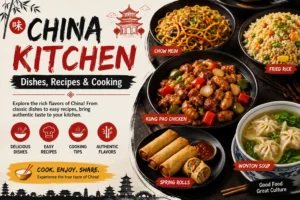
- Fried Rice — Rice cooked with eggs, vegetables, and sometimes meat. A simple, filling favorite.
- Chow Mein — Stir-fried noodles with vegetables and your choice of meat or tofu.
- Kung Pao Chicken — A spicy, slightly sweet dish with chicken, peanuts, and vegetables.
- Sweet and Sour Pork — Crispy pork pieces in a tangy, sweet sauce.
- Dumplings — Small pockets of dough filled with meat or vegetables, either steamed or fried.
- Spring Rolls — Crispy rolls filled with vegetables or meat, a favorite starter dish.
- Hot and Sour Soup — A warm, tangy, slightly spicy soup, great for cold days.
- Mapo Tofu — Soft tofu in a spicy, savory sauce, a Szechuan favorite.
- Egg Drop Soup — A simple, comforting soup made with egg and broth.
- Beef and Broccoli — Tender beef with fresh broccoli in a savory sauce.
These dishes are loved not just because they taste good, but because they are easy to share, easy to order, and fit almost every taste.
What Makes China Kitchen Cooking Special?
There are a few cooking methods that make Chinese food stand out from other cuisines. Understanding these can help you enjoy the food even more, or even try cooking it yourself at home.
Stir-Frying
This is one of the most famous Chinese cooking methods. Food is cooked quickly over high heat in a round pan called a wok. This keeps vegetables crunchy and meat juicy, while locking in flavor.
Steaming
Steaming is a gentle way to cook food without using oil. It keeps the natural taste and nutrients of the ingredients. Dumplings, buns, and fish are often steamed.
Deep-Frying
Some dishes, like spring rolls or sweet and sour pork, are deep-fried to make them crispy on the outside while staying soft inside.
Braising
This slow-cooking method involves simmering meat or vegetables in a flavorful liquid for a long time. It makes the food tender and full of taste.
Balancing Flavors
Chinese cooks often try to balance five main tastes in their meals: sweet, sour, bitter, spicy, and salty. This is why a single meal at a China Kitchen might have a mix of different flavors that work well together.
Tools You Need for Your Own Home China Kitchen
If you want to bring the magic of China Kitchen into your own home, here are some simple tools that can help:
- A Wok — A round, deep pan perfect for stir-frying. It heats up fast and cooks food evenly.
- A Rice Cooker — Makes cooking rice quick and easy, with no guesswork.
- A Bamboo Steamer — Great for cooking dumplings, buns, and vegetables gently.
- A Sharp Knife — Chinese cooking often needs food cut into small, even pieces for fast cooking.
- Chopsticks — Not just for eating! Long chopsticks are also handy for cooking and mixing food while it’s hot.
- Basic Sauces — Soy sauce, oyster sauce, rice vinegar, and sesame oil are the building blocks of many dishes.
You do not need a big budget to start your own home China Kitchen. Even with just a wok, a knife, and a few sauces, you can make simple, tasty dishes at home.
Health Benefits of Chinese-Style Cooking
Many people wonder if Chinese food is healthy. The answer is: it can be, especially when it is cooked the traditional way. Here are some reasons why:
- Lots of vegetables: Most Chinese dishes include a good amount of vegetables, giving you vitamins and fiber.
- Quick cooking keeps nutrients: Stir-frying and steaming cook food fast, which helps keep more of the natural vitamins inside.
- Balanced meals: Traditional Chinese meals often mix protein, vegetables, and rice or noodles for a balanced plate.
- Light on dairy: Chinese cooking uses very little dairy, which can be helpful for people who are sensitive to it.
- Many choices for special diets: Vegetarian, gluten-free (with rice noodles), and low-oil dishes are often easy to find.
Of course, some dishes — like deep-fried items or those with a lot of sugar and oil — should be enjoyed in smaller amounts. But overall, a good China Kitchen menu can offer plenty of healthy options if you choose wisely.
How to Order Smart at a China Kitchen Restaurant
If you are eating out, here are some simple tips to enjoy your meal while keeping it balanced:
- Choose steamed dishes: over fried ones when you can.
- Ask for sauce on the side: so you can control how much you use.
- Order a vegetable dish: to go along with your main course.
- Share dishes: with friends or family to enjoy more variety without overeating.
- Pick brown rice: instead of white rice, if it’s offered, for extra fiber.
- Watch the portion size: many restaurant servings are bigger than a single meal needs.
These small choices can help you enjoy your favorite China Kitchen dishes while still eating in a balanced way.
Chinese Dining Etiquette: Simple Tips to Know
Eating Chinese food, especially in a group, has some fun traditions. Here are a few simple tips:
- Sharing is normal: Chinese meals are often served in the middle of the table, and everyone shares.
- Chopstick manners matter: Try not to stick chopsticks straight up in a bowl of rice, as this can be seen as bad luck in Chinese culture.
- Tea is common: Many China Kitchen restaurants serve tea with meals. It’s polite to pour tea for others before yourself.
- Try a little bit of everything: Since dishes are shared, it’s normal to take small portions from each plate.
- Say thank you to the cook or server: A simple smile and thank you go a long way.
These small customs make eating at a China Kitchen not just about food, but also about connecting with the people around you.
Cooking Chinese Food at Home: A Beginner’s Guide
Want to try making your own China Kitchen-style meal at home? Here is a simple step-by-step guide for beginners:
- Start simple: Try an easy dish first, like fried rice or a basic stir-fry with vegetables.
- Prepare everything first: Chinese cooking moves fast, so cut all your vegetables and meat before you start cooking.
- Heat your pan well: A hot wok or pan helps food cook quickly and evenly, giving that classic “stir-fry” taste.
- Add ingredients in the right order: Usually, aromatics like garlic and ginger go in first, followed by meat, then harder vegetables, then softer vegetables.
- Season at the end: Add your sauces and seasoning near the end of cooking so the flavors stay fresh and don’t burn.
- Serve hot: Chinese food tastes best fresh off the stove, so try to serve it right away.
With a little practice, you can bring the taste of China Kitchen right into your own home.
Simple Chinese Recipes to Try This Week
Here are three easy recipes you can try, even if you are new to cooking:
Easy Vegetable Fried Rice
Cook rice ahead of time and let it cool. Heat a little oil in a pan, add chopped vegetables like carrots, peas, and onions, then add the rice. Push everything to one side, scramble an egg on the other side, then mix it all together. Add a splash of soy sauce and stir well.
Simple Chicken Stir-Fry
Cut chicken into small pieces and cook in a hot pan with a little oil until done. Add sliced vegetables like bell peppers and broccoli. Stir-fry for a few minutes, then add a sauce made from soy sauce, a little sugar, and garlic. Cook until everything is coated and warm.
Quick Egg Drop Soup
Heat chicken or vegetable broth in a pot. Once it’s simmering, slowly pour in a beaten egg while stirring gently, creating soft egg ribbons. Add a little salt, pepper, and a dash of sesame oil before serving.
These recipes are a great starting point for anyone who wants to explore home cooking in the China Kitchen style.
Frequently Asked Questions About China Kitchen
Is China Kitchen food spicy? Not always. Some regional styles, like Szechuan and Hunan, are known for spice, but many dishes, especially Cantonese-style, are mild and light.
What is the healthiest option at a China Kitchen restaurant? Steamed dishes with lots of vegetables and lean protein are usually the healthiest choice. Try to avoid deep-fried or heavily sauced dishes if you’re watching your diet.
Do I need special tools to cook Chinese food at home? No, you can start with basic kitchen tools you already have. A wok and rice cooker make things easier, but they are not required to get started.
What sauces should I always have at home? Soy sauce, oyster sauce, rice vinegar, and sesame oil are great basics that can be used in many different dishes.
Is Chinese food good for a quick weeknight dinner? Yes! Many Chinese dishes, especially stir-fries, cook in under 20 minutes, making them perfect for busy nights.
Final Thoughts on China Kitchen
Whether “China Kitchen” means your favorite local restaurant or the exciting world of Chinese home cooking, one thing is clear — this style of food brings people together. It offers bold flavors, fast cooking, healthy choices, and dishes for every taste. Next time you visit a China Kitchen restaurant, or decide to cook a Chinese meal at home, remember the balance of flavors, the fresh ingredients, and the joy of sharing food with others. That is really what makes this cuisine so special and loved all around the world.
So go ahead — order your favorite dish, try a new recipe, or explore a new regional style. There is always something new and tasty waiting for you in the world of China Kitchen.