If you have ever brought a new plant home and then wondered, “How often should you water indoor plants?“, you are not alone. It is the number one question that new plant owners ask. It is also the one that trips up many experienced plant lovers.
Water is life for a plant. But too much water can hurt a plant just as much as too little. Every year, far more houseplants die from bad watering habits than from any bug or disease. The good news is that watering is a skill anyone can learn. You do not need a green thumb. You need to know what to look for.
In this guide, you will learn how often to water indoor plants, why the answer changes from plant to plant, and how to tell what your plant needs right now. You will also find easy tips, a watering chart, and answers to the most common questions.
Let’s get started.
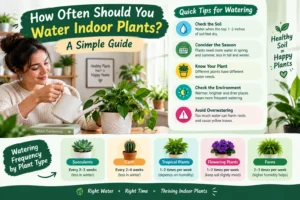
The Short Answer: How Often Should You Water Indoor Plants?
Most indoor plants need water about once every 1 to 2 weeks. But this is only a starting point. Some plants, like cacti, may only need water once a month. Others, like ferns, may want water two or three times a week.
Here is a quick chart to give you a rough idea.
| Plant Type | Water How Often (Average) | Examples |
|---|---|---|
| Succulents and cacti | Every 2 to 4 weeks | Aloe vera, jade plant, echeveria |
| Low-water tropicals | Every 2 to 3 weeks | Snake plant, ZZ plant |
| Common tropical foliage plants | Every 1 to 2 weeks | Pothos, philodendron, monstera |
| Moisture-loving plants | Every 3 to 5 days | Ferns, calathea, peace lily |
| Orchids | Every 7 to 10 days | Moth orchid (Phalaenopsis) |
| Herbs | Every 2 to 4 days | Basil, mint, parsley |
| Air plants | Soak every 1 to 2 weeks | Tillandsia |
Please remember: these are guides, not rules. Your home is different from every other home. The light, the heat, the pot, and the soil all change how fast your plant drinks. That is why the best answer to “how often should you water indoor plants” is this: water when the plant needs it, not just when the calendar says so.
Why There Is No Single Watering Schedule for All Indoor Plants
It would be nice if there were one simple schedule, like “water every Sunday.” Many people try this, and it works for a while. But then a plant gets soggy in winter or crispy in summer.
Here is why a fixed schedule often fails:
- Plants come from different places: A cactus grew up in a hot, dry desert. A fern grew up on a damp forest floor. They have very different needs.
- Your home changes through the year: Heaters dry the air in winter. Sunny days in summer make soil dry out fast.
- Plants grow at different speeds: A plant that is growing fast uses more water than a plant that is resting.
- Pots and soil are not the same: Some hold water for days. Others let it drain away in hours.
So instead of watching the calendar, watch your plant and its soil. The next section shows you how.
How to Tell When Your Plant Needs Water
The best watering tool you own is your own hand. Here are simple ways to check if it is time to water.
1. The Finger Test
This is the easiest and most popular method. Push your finger into the soil, up to your first knuckle (about 1 to 2 inches, or 2 to 5 cm).
- If the soil feels dry: It is usually time to water (for most plants).
- If the soil feels damp or cool: Wait a day or two and check again.
- If the soil feels wet: Do not water. Give the plant more time.
Note that some plants, like succulents, want the soil to dry out all the way before you water. For those, push your finger deeper or use a wooden stick.
2. The Wooden Stick Test
Push a plain wooden skewer or chopstick deep into the soil, close to the bottom of the pot. Leave it there for a minute, then pull it out.
- If it comes out clean and dry, the soil is dry deep down.
- If it comes out dark with soil sticking to it, the soil is still wet.
This test is very helpful for large pots where the top looks dry but the bottom is still soggy.
3. The Pot Weight Test
Lift the pot right after you water it. Notice how heavy it feels. A few days later, lift it again. A dry pot feels much lighter. With a little practice, you can tell if a plant needs water just by picking it up.
4. Look at the Leaves
Leaves can tell you a lot. If they look a little droopy or soft, the plant may be thirsty. But be careful. Droopy leaves can also mean too much water. That is why you should always check the soil too, before you reach for the watering can.
5. Use a Moisture Meter
A moisture meter is a small, cheap tool with a probe that you push into the soil. It shows how wet or dry the soil is. It is a good option if you are new to plants or if you have a big pot that is hard to judge. Keep in mind that cheap meters are not always exact, so use it along with the finger test.
8 Things That Change How Often You Should Water Indoor Plants
Now let’s look at the main things that decide how often your plants need a drink. Once you understand these, you can make good watering choices for any plant in your home.
1. The Type of Plant
This is the biggest factor. Plants fall into a few rough groups:
- Drought-loving plants (cacti, succulents, snake plants, ZZ plants) store water in their leaves or roots. They like to dry out between drinks.
- Average plants (pothos, spider plants, monstera, rubber plants) like soil that dries a little on top but stays a bit moist below.
- Moisture-loving plants (ferns, calatheas, peace lilies) like soil that stays lightly damp most of the time.
Before you decide how often to water, find out which group your plant belongs to. A quick search of the plant’s name will tell you.
2. The Amount of Light
Light and water go hand in hand. Plants use light to make food, and they drink water as they do it. A plant in a bright, sunny window will use water much faster than the same plant in a dim corner.
- Bright light: Soil dries faster. Water more often.
- Low light: Soil stays wet longer. Water less often.
This is why plants in a dark room are more likely to rot. They are not using much water, but the owner keeps watering on schedule.
3. The Size of the Pot
Small pots dry out quickly because they hold very little soil. Large pots hold more water and dry out slowly.
A tiny 4-inch pot in a sunny spot might need water every few days. A big 12-inch pot may go two weeks or longer. Also, a pot that is too big for a small plant can stay wet for a long time, because the roots cannot soak up all that water.
4. The Type of Pot
The material of your pot matters more than most people think.
- Terracotta (clay) pots: These are porous, so air and moisture move through the walls. Soil dries faster. They are great for plants that hate wet feet.
- Plastic pots: These hold water longer. Soil stays damp for more time.
- Glazed ceramic pots: These are also slow to dry, much like plastic.
- Metal or glass pots: These can trap water, especially if they have no drainage holes.
Drainage holes are a must. Water needs a way to escape. If a pot has no holes, the roots can sit in water and rot. If you love a pot with no holes, use it as a decorative cover and keep your plant in a simple plastic pot inside it.
5. The Type of Soil
Different soil mixes hold different amounts of water.
- Regular potting mix holds a fair amount of water and works for many plants.
- Cactus and succulent mix has extra sand or perlite, so water drains fast.
- Mixes with peat moss or coconut coir hold more moisture.
- Chunky mixes with bark (used for orchids) drain very fast and dry quickly.
If your plant always seems too wet or too dry, the soil may be the problem. Changing the mix can fix it.
6. The Season
Plants have a growing season and a resting season. In spring and summer, days are long and bright, and most plants grow fast. They need more water. In fall and winter, days are short, and growth slows down or stops. They need much less.
A common mistake is to keep the same watering plan all year. In winter, you may need to water half as often as you do in summer.
7. Temperature and Humidity
Warm air and dry air pull water out of soil and leaves faster. If your home is hot, or you run a heater or air conditioner a lot, your plants will dry out faster. Rooms with lots of humidity, like a bathroom, keep soil damp longer.
Plants that sit near a heater, a vent, or a drafty window can also dry out much faster than plants in a calm corner.
8. The Size and Growth of the Plant
A big plant with lots of leaves uses more water than a small one. A plant that is growing fast uses more water than one that is sitting still. Newly repotted plants may need a bit less water at first, since their roots are still settling in.
How Often to Water Popular Indoor Plants
Let’s go through the most common houseplants and how often they usually want water. Use these as a guide, and always check the soil first.
Succulents and Cacti
Water every 2 to 4 weeks: These plants store water in thick leaves and stems. Water deeply, then wait until the soil is fully dry before you water again. In winter, some cacti only need water once every 6 to 8 weeks, or even less.
Snake Plant
Water every 2 to 3 weeks. Snake plants are tough and forgiving. They hate wet soil. If you are unsure, it is safer to wait a few more days.
ZZ Plant
Water every 2 to 3 weeks: The ZZ plant stores water in thick underground stems called rhizomes. It can go a long time without a drink. Overwatering is the main way people harm it.
Pothos
Water every 1 to 2 weeks: Pothos is a great plant for beginners. It tells you when it is thirsty by drooping its leaves a little, and it bounces back quickly after a drink. Let the top inch or two of soil dry out first.
Philodendron
Water every 1 to 2 weeks: Like pothos, philodendrons like the top layer of soil to dry before you water again. Keep the soil lightly damp, but never soggy.
Monstera
Water every 1 to 2 weeks: Let the top 2 inches of soil dry out. Monsteras grow fast in bright, indirect light and will want more water in summer.
Peace Lily
Water every 5 to 7 days: Peace lilies love steady moisture. They droop dramatically when they are thirsty, which makes them easy to read. Water them when the top inch of soil is dry.
Spider Plant
Water every 1 to 2 weeks: Spider plants like soil that is lightly moist but not soaked. They can be sensitive to chemicals in tap water, so if the leaf tips turn brown, try using filtered or rain water.
Rubber Plant
Water every 1 to 2 weeks: Let the top layer of soil dry out before watering again. In winter, water less often.
Fiddle Leaf Fig
Water every 7 to 10 days: This plant can be picky. It does not like to sit in wet soil, but it also does not like to dry out completely. Aim for steady, even watering.
Boston Fern and Other Ferns
Water every 3 to 5 days: Ferns like soil that stays evenly damp, along with high humidity. Never let a fern dry out fully.
Calathea and Prayer Plant
Water every 5 to 7 days: These plants like moist soil and are sensitive to harsh tap water. Use filtered or distilled water if you can.
Aloe Vera
Water every 2 to 3 weeks: Aloe is a succulent. Water deeply and let the soil dry out fully before the next drink.
Orchids (Moth Orchids)
Water every 7 to 10 days: Orchids grow in bark, not regular soil. A popular trick is to soak the pot in water for about 10 to 15 minutes, drain it well, and wait until the bark is nearly dry before the next soak.
Herbs (Basil, Mint, Parsley)
Water every 2 to 4 days: Herbs grown indoors usually sit in small pots and get lots of light, so they dry out fast. Keep the soil lightly moist.
Air Plants (Tillandsia)
Soak once a week or every other week: Air plants do not grow in soil. Soak them in water for about 20 to 30 minutes, shake off the extra water, and let them dry upside down so water does not sit in the center.
Bonsai Trees
Check daily; water when the top soil is just dry: Bonsai pots are small and dry out quickly, so they need close attention.
How to Water Indoor Plants the Right Way
Knowing how often to water is only half the job. How you water matters too. Follow these simple steps.
Step 1: Check the Soil First
Always use the finger test or another method before you water. Never water just because it is “watering day.”
Step 2: Water Deeply, Not Just a Little
Give the plant a good, slow drink until water runs out of the drainage holes at the bottom. A deep drink helps the roots grow down and out, which makes the plant stronger. Small sips only wet the top of the soil and lead to weak roots.
Step 3: Let the Extra Water Drain
After you water, let the pot sit in the sink or on a tray for 10 to 15 minutes so the extra water can drain away.
Step 4: Empty the Saucer
Never let your plant sit in a saucer full of water. Standing water can lead to root rot. Empty the saucer after about 15 to 30 minutes.
Step 5: Water the Soil, Not the Leaves
For most plants, pour water on the soil, not on the leaves. Wet leaves can lead to spots or fungus, especially in low light. Some plants, like African violets, are especially sensitive to water on their leaves.
Step 6: Use Room-Temperature Water
Very cold water can shock the roots. Very hot water can burn them. Water that feels neutral to the touch is best.
Step 7: Water in the Morning If You Can
Morning is a great time to water. The plant has the whole day to use the water and dry out a bit, which lowers the chance of mold and rot.
Top Watering vs. Bottom Watering
There are two main ways to give water to your plants.
Top Watering
This is the usual way: pour water gently over the soil until it drains out the bottom. It helps flush out extra salts from the soil. It is best for most plants.
Bottom Watering
Set the pot in a bowl or sink filled with a few inches of water. Let it sit for 15 to 30 minutes so the soil can soak water up through the drainage holes. Take it out when the top of the soil feels damp.
Bottom watering is great for plants that do not like wet leaves, such as African violets and cyclamen. It also helps when soil has become so dry that water runs straight through. You can also mix both methods. Water from the top now and then to flush the soil, and use bottom watering in between.
Signs You Are Overwatering Your Indoor Plants
Overwatering is the most common plant mistake. It happens when soil stays wet for too long, and the roots cannot get air. Without air, the roots start to rot. Watch for these signs:
- Yellow leaves, especially lower leaves that fall off easily
- Soft, mushy stems near the base of the plant
- Soil that stays wet for many days
- A musty or rotten smell from the soil
- Fungus gnats (tiny flies) hovering around the pot
- Mold or green algae on the soil surface
- Brown, black, or mushy roots if you check them
- Drooping leaves even though the soil is wet
What to Do If You Overwater
- Stop watering and let the soil dry out.
- Move the plant to a brighter, airier spot (but not harsh direct sun).
- Check the roots if the problem is serious. Slide the plant out of the pot. Healthy roots are white or light tan and firm. Rotten roots are dark and mushy.
- Trim rotten roots with clean scissors and repot in fresh, dry soil in a pot with drainage holes.
- Water less in the future, and check the soil before each drink.
Signs You Are Underwatering Your Indoor Plants
Plants that do not get enough water will also show signs. Look for these:
- Dry, crispy leaf edges or tips
- Brown, curled, or shriveled leaves
- Leaves that droop and feel thin or dry
- Soil that is dry, hard, and pulling away from the sides of the pot
- Slow or stopped growth
- A very light pot
What to Do If You Underwater
- Water deeply: Give the plant a slow, good drink.
- If water runs straight through and the soil is very hard, try bottom watering. Let the pot soak for 20 to 30 minutes so the soil can take in water again.
- Trim dead leaves to help the plant focus on new growth.
- Set a check-in habit: Look at your plants twice a week so you can catch dryness early.
How to Tell the Difference Between Too Much and Too Little Water
Both problems can cause drooping and yellow leaves. That is what makes them so confusing. The best clue is the soil:
- Droopy plant + dry soil = needs water
- Droopy plant + wet soil = too much water
Always check the soil before you do anything.
A Simple Seasonal Watering Guide
Here is how your watering habits may change through the year.
Spring
Days get longer and plants wake up. Growth starts to speed up. Slowly water more often. This is a good time to repot plants and feed them with plant food.
Summer
Plants grow fast, and the air is warmer. Soil dries quickly. You may need to water twice as often as you do in winter. Check pots in sunny windows often. Move plants away from windows that get scorching afternoon sun.
Fall
Days get shorter and growth slows. Cut back on water little by little. Keep checking the soil, as it may stay damp longer than you expect.
Winter
Most plants rest in winter. They need far less water. Soil stays wet longer, especially in cool rooms. Overwatering is most common in winter, so be careful. Keep plants away from cold drafts and hot heaters.
Does the Type of Water Matter?
Yes, it can. Here is what to know.
- Tap water is fine for most plants. If your tap water is very hard (full of minerals) or has a lot of chlorine, you may see white crust on the soil or brown leaf tips over time.
- Letting tap water sit out overnight helps some chlorine escape. It also brings the water to room temperature.
- Filtered or distilled water is a good choice for sensitive plants like calatheas, prayer plants, and carnivorous plants.
- Rain water is a favorite of many plants because it is soft and free of chemicals. Collect it if you can.
- Avoid softened water, as it contains salt that can hurt plants.
Helpful Tools for Watering Indoor Plants
You do not need much, but a few simple tools can make watering easier.
- A watering can with a long, thin spout lets you pour water at the base of the plant without soaking the leaves.
- A moisture meter helps you check the soil, especially in big pots.
- A wooden skewer is a cheap way to test deep soil.
- A saucer or tray catches the extra water.
- A spray bottle is useful for plants that like humidity, but note that misting does not replace real watering.
- A plant care app or calendar reminder can remind you to check your plants (not to water blindly, but to look and touch the soil).
Common Mistakes to Avoid When Watering Indoor Plants
Let’s go over the most common watering mistakes so you can avoid them.
- Watering on a strict schedule: Always check the soil first.
- Giving small sips every day: This keeps the top wet and the bottom dry. Water deeply and less often.
- Using pots without drainage holes: Water gets trapped and roots rot.
- Leaving water in the saucer: Roots sit in water and start to rot.
- Treating all plants the same: A cactus and a fern need very different care.
- Watering too much in winter: Plants rest in winter and use little water.
- Ignoring light: A low-light plant needs far less water than a bright-light plant.
- Misting instead of watering: Misting adds a bit of humidity but does not reach the roots.
- Panicking when the plant droops: Check the soil before you act.
- Using cold water: Water that is too cold can shock roots.
Do Misting and Humidity Replace Watering?
Not at all. Misting only wets the leaves for a short time. It does very little to give the plant the water it needs at the roots. If your plant loves humidity, better options are a humidifier, a pebble tray with water, or grouping plants together. But you still need to water the soil as normal.
Should You Water Plants When You Go on Vacation?
If you are away for a week or two, most plants will be fine. Here are some easy tricks:
- Water deeply right before you leave.
- Move plants out of hot, direct sun to a bright, cooler spot.
- Use self-watering spikes or a wick system. A wick made from cotton rope, with one end in a jar of water and the other in the soil, can feed a plant slowly.
- Ask a friend to check on your plants and water the thirsty ones.
- Group plants together in a shady spot to keep humidity higher.
For longer trips, ask someone you trust to water while you are gone.
Frequently Asked Questions About Watering Indoor Plants
How often should you water indoor plants in general?
Most indoor plants need water every 1 to 2 weeks. But the right timing depends on the plant, the light, the pot, and the season. Always check the soil first.
Is it better to water indoor plants every day?
No. Daily watering is too much for most plants and can cause root rot. Only a few plants, like herbs in small pots or some ferns in warm rooms, might need water every day or two. For most plants, water only when the top inch or two of soil has dried.
How much water should I give my indoor plant each time?
Water until you see water drain from the bottom of the pot. This means the whole root ball got a good drink. For a small plant, that may be half a cup. For a large plant, it may be a few cups.
How do I know if I am overwatering or underwatering?
Check the soil. If the plant droops and the soil is dry, it needs water. If the plant droops and the soil is wet, you have watered too much. Yellow, mushy leaves point to too much water. Dry, crispy leaves point to too little.
Should I water my plants in the morning or at night?
Morning is best. Plants have the day to use the water, and the soil can dry out a bit by night. Watering at night can keep soil wet for too long in cool, dark hours.
How often should I water indoor plants in winter?
Much less than in summer. Many plants need water only half as often in winter. Always check the soil, since it dries slowly in cool, low-light months.
How often should I water a newly bought plant?
Check the soil often for the first few weeks. Plants from stores are often grown in fast-draining mixes and may dry out sooner than you think. Follow the same rule: water when the top inch or two of soil is dry, then adjust based on how your plant behaves in your home.
Can I use ice cubes to water my plants?
Some people use ice cubes for orchids as a slow way to give water. But many plant experts do not like this, because the cold can stress tropical roots. Slow, room-temperature water is a safer choice.
Do self-watering pots work?
Yes, for many plants. They have a small tank at the bottom that feeds the soil as needed. They work well for plants that like steady moisture. They are not a good match for succulents or plants that need to dry out fully.
Why are my plant’s leaves turning yellow?
Yellow leaves are often a sign of overwatering, but they can also come from low light, old age, or a need for food. Check the soil first. If it is wet, cut back on water.
Can I revive a plant that has been overwatered?
Often, yes. Let the soil dry, remove any rotten roots, and repot into fresh, well-draining soil if needed. Give the plant time. Not all plants recover, but many do if you catch the problem early.
What is the best way to water a plant with very dry soil?
If the soil is hard and water runs off, try bottom watering. Set the pot in a bowl of water for 20 to 30 minutes so the soil can slowly soak it up. Then let it drain fully.
A Simple Weekly Routine to Keep Indoor Plants Happy
You do not need to spend hours caring for your plants. Try this quick routine once or twice a week:
- Walk by each plant and look at the leaves.
- Do the finger test on the soil.
- Water only the plants that need it.
- Empty any saucers that have extra water.
- Turn each pot a little so all sides get light.
- Wipe or remove dead leaves to keep the plant tidy.
In just a few minutes, you will know your plants well. Over time, you will start to feel when a plant needs water without even thinking about it.
Final Thoughts: How Often Should You Water Indoor Plants?
So, how often should you water indoor plants? For most houseplants, the answer is about once every 1 to 2 weeks, but the true answer is “when the plant needs it.” Some need water every few days. Others can go a month.
To sum up the key points:
- Check the soil before every watering. The finger test is simple and works well.
- Know your plant type: Drought-loving plants want less water; moisture-loving plants want more.
- Think about light, pot, soil, and season: They all change how fast soil dries.
- Water deeply and let the extra water drain away.
- Use pots with drainage holes and never leave plants sitting in water.
- Water less in winter and more in the growing season.
- Watch the leaves and the soil to spot signs of too much or too little water.
Remember that every home, and every plant, is a little different. Do not worry if you make a mistake. Even expert plant owners lose a plant now and then. With each plant, you learn a little more about what it needs. Soon, watering will feel simple and natural, and your indoor plants will reward you with fresh, green growth.
Happy watering!