Walk into almost any beautiful Indian home, and you will notice something special near the entrance or the pooja room — a door with small, pretty holes cut into a pattern. This is called a jali door. The word “jali” simply means “net” or “mesh” in Hindi. These doors have small gaps cut in wood, metal, or other material, arranged in lovely patterns like flowers, leaves, or geometric shapes.
A jali door design is not just a door. It is a piece of art that also does useful work. It lets in fresh air and sunlight, keeps out dust and bugs, gives your home a rich look, and still keeps your space private. This is why more and more homeowners today are choosing jali doors for their main entrance, pooja room, balcony, and even as room partitions.
In this guide, we will walk through everything you need to know about jali door design — what it is, why people love it, the different types you can pick from, ideas for every part of your home, tips from Vastu, and simple advice on cost and care. By the end, you will know exactly which jali door design best fits your home.
What Is a Jali Door?
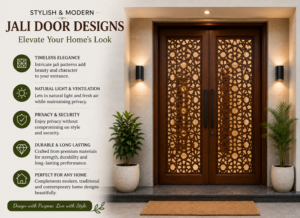
A jali door is a door that has a pattern of small openings cut into it. These openings can be in wood, metal, glass, or even modern materials like MDF (a type of pressed wood board) or WPC (wood-plastic composite). The pattern can be simple straight lines and squares, or it can be very detailed, like flowers, vines, peacocks, or old temple art.
Jali work is not new. It has been part of Indian buildings for hundreds of years. You can see this beautiful lattice art in old forts, palaces, and temples across India, especially in places like Rajasthan. Builders in the past used stone jali on walls and windows to let in light and air while keeping the inside cool and private. Over time, this same idea moved to doors, and today it has become a favourite feature in modern Indian homes too.
So when we talk about a jali door design, we are really talking about a mix of old craft and new style, made to fit today’s homes.
Why Choose a Jali Door for Your Home?
You might be wondering — why pick a jali door over a plain, solid door? Here are the biggest reasons homeowners love this style.
1. Fresh Air and Ventilation
One of the best things about a jali door is that it lets air pass through the small gaps. This keeps rooms cool and fresh, which is very helpful in Indian weather, where summers can get hot. A plain solid door blocks all air, but a jali door keeps your home breathing even when it is closed.
2. Natural Light
The gaps in the pattern also let in soft sunlight during the day. This gentle light makes rooms feel warm and welcoming, without needing to turn on lights during the daytime. It also helps save on electricity bills.
3. Privacy With Style
You may think that a door with holes cannot give privacy. But that’s not true. A well-made jali door design gives just enough cover so people outside cannot see clearly inside, while you still get airflow. Many homeowners also add a layer of frosted glass or a soft curtain behind the jali pattern for extra privacy.
4. Beautiful Look
This is probably the biggest reason people choose a jali door. The detailed patterns instantly make your home look richer and more elegant. Whether your home is very modern or has a traditional Indian touch, there is a jali door design to match. It becomes a talking point for anyone who visits your home.
5. Keeps Out Dust and Pests
Many jali doors, especially the ones with a fine mesh backing, help keep dust, flies, and insects out of the house while still letting in air. This is especially useful for kitchen doors or doors that open to gardens and balconies.
6. Good for the Environment
Since jali doors let in more natural light and air, you may end up using less electricity for fans, lights, and air conditioning. Some jali doors are also made from eco-friendly materials like bamboo or reused wood, which is great if you care about the environment.
7. Adds Character and Tradition
A jali door design connects your home to India’s rich art and history. Even in a fully modern flat, one jali door can bring in a sense of culture and warmth that a plain door simply cannot give.
Types of Jali Doors Based on Material
Jali doors come in different materials, and each one has its own look, strength, and price. Let’s go through the most popular choices.
Wooden Jali Doors
Wood is the most loved material for jali doors in India. It has a warm, natural look that fits both traditional and modern homes. Skilled workers carve the wood by hand or cut it with machines to create patterns like flowers, leaves, or simple geometric shapes.
Popular wood types used are teak, sheesham (Indian rosewood), and other hardwoods. These are strong and can last many years if cared for properly. Rustic wooden jali doors, hand-carved from solid woods like teak or sheesham, showcase traditional Indian craftsmanship, and their textured surfaces, antique finishes, and natural grain give warmth to any space.
The only downside is that wood needs a little more care than other materials, especially to keep away termites (small insects that eat wood) in humid areas.
Metal Jali Doors
Metal jali doors, made from steel, iron, or aluminium, are becoming very popular in modern homes. They give a clean, sharp, and minimal look and are known for being strong and long-lasting. Metal jali doors are strong, low-maintenance, and modern in style, and are commonly found in urban homes or industrial-style interiors, often paired with glass for a sleek, modern look.
Because they don’t rot or attract termites, metal jali doors are a smart pick for homes near the coast or in wet, humid regions.
Laser-Cut Jali Doors
This is a newer and very trendy option. With laser-cut technology, machines can cut super fine and detailed patterns into metal or MDF sheets with great accuracy.These doors are created using CNC or fibre laser machines and are typically crafted from stainless steel, MDF, or mild steel with a durable powder coating, blending traditional motifs like paisleys and florals with clean, modern symmetry.
Laser-cut jali doors give you the freedom to choose almost any pattern you like — from old Indian motifs to sleek modern shapes — with a very neat finish.
Glass and Jali Combination Doors
Some jali door designs mix glass with wood or metal for a stunning look. These designs combine stained or frosted glass inserts with jali wood or metal framing, creating a design where floral or abstract motifs often draw inspiration from Gothic or Mughal themes.
This kind of door works beautifully as a focal point at the main entrance, letting in soft coloured light while still giving the home a rich, artistic feel.
MDF and HDHMR Jali Doors
MDF (Medium Density Fibreboard) and HDHMR boards are engineered wood products that can be cut into detailed jali patterns using CNC machines. They are usually more budget-friendly than solid wood and work well for interior doors like pooja rooms or partition doors that don’t face heavy outdoor weather.
WPC Jali Doors
WPC, or wood-plastic composite, is a material that looks like wood but resists water and moisture much better. This makes it a smart choice for bathroom doors, balcony doors, or homes in damp areas, since it won’t warp or rot easily.
Bamboo Jali Doors
For homeowners who love a natural and green lifestyle, bamboo jali doors are a lovely pick. Eco-friendly bamboo jali doors are an excellent choice for a modern jali door design, especially in sustainability-focused homes. Bamboo grows quickly and is a renewable resource, making it kind to the environment while still giving a warm, natural look.
Jali Door Design Ideas for Every Part of Your Home
Now let’s look at where you can use a jali door design and the best styles for each spot.
1. Main Entrance Door
Your main door is the first thing guests see, so it deserves a design that makes a strong first impression. Jali main doors have long been a hallmark of Indian architecture, blending traditional craftsmanship with modern design, enhancing the visual appeal of your home while offering privacy and ventilation.
For the main door, many homeowners choose a double-layer setup — a strong solid door on the inside for safety, and a beautiful jali door on the outside for style and airflow. The wooden jali door can be set in a hardwood frame on and above the main door for a more authentic look, and the main purpose of this design is to enhance security and deter theft besides giving a polished look to the entrance.
Popular main door patterns include:
- Floral and vine patterns — soft, traditional, and elegant
- Geometric grid patterns — clean lines for a modern look
- Sun motif jali — believed to bring good luck and positive energy
- Peacock and nature themes — rich and eye-catching, inspired by Mughal art
2. Pooja Room (Prayer Room) Door
The pooja room is one of the most loved spots for a jali door design in Indian homes. Pooja room jali doors hold special meaning, serving both functional and spiritual purposes, with traditional designs featuring symbols like Om, Swastik, lotus flowers, and temple silhouettes.
The jali pattern allows incense smoke and the smell of oil lamps to move freely while still keeping the prayer space feeling sacred and separate. Usually, pooja room jali patterns are smaller and closer together than other doors, so they give a gentle sense of privacy while still letting light and air pass through. Gold or brass fittings are a popular choice here, as they add a rich, spiritual touch.
3. Balcony Doors
A jali door on your balcony is perfect if you want fresh air but also want to keep the space a little more private from neighbours or the street. It also adds a decorative touch to an otherwise plain-looking balcony entry.
4. Room Partitions
Instead of a solid wall, many modern homes now use a jali-style partition to divide rooms while still letting light travel between spaces. This works great between a living room and dining area, or to create a soft break between a study nook and the rest of the room.
5. Kitchen Doors
Kitchen jali doors need to handle humidity, cooking smells, and changing temperatures common in Indian kitchens, so a moisture-resistant board makes an ideal base material for this area. A jali door here helps push out cooking smoke and smells faster while keeping curious pets or bugs out.
Popular Patterns and Themes in Jali Door Design
Choosing a pattern can feel overwhelming with so many lovely options. Here are some popular themes to inspire you:
- Geometric patterns — squares, diamonds, and grids that suit modern and minimal homes
- Floral motifs — flowers, leaves, and vines for a soft, romantic feel
- Islamic and Mughal-inspired art — detailed, symmetrical patterns with a royal touch
- Nature themes — peacocks, trees, and birds that bring a garden-like charm
- Traditional temple art — classic Indian carvings, great for pooja rooms
- Abstract modern art — bold, unusual shapes for a bold, artistic statement
Jali Door Design and Vastu
Many Indian families like to follow Vastu Shastra, an old belief system about how buildings and their design affect the flow of positive energy in a home, when choosing their main door design.
Vastu often recommends a solar theme for the main entrance, using golden metallic bars along with a plain wooden door inside the entrance frame, believing this brings a royal and meaningful touch to the home. This kind of jali door design is seen as an effective way to combine tradition, beauty, and positive energy at the same time.
For the pooja room specifically, Vastu principles suggest that pooja room doors should ideally face east or north. Following these directions along with a tasteful jali pattern is a common way Indian homeowners try to balance spiritual beliefs with home design.
If Vastu is important to you, it’s a good idea to speak with a Vastu expert or a trusted interior designer before finalising your main door direction and jali pattern, since every home’s layout is a little different.
How Much Does a Jali Door Design Cost?
The price of a jali door depends on a few things:
- Material — Solid wood like teak costs more than MDF or engineered wood. Metal doors can vary widely based on the type of metal and finish.
- Pattern complexity — A simple grid pattern costs less than a very detailed, hand-carved design.
- Size — Bigger doors, like double main doors, cost more than a single small pooja room door.
- Cutting method — Hand carving generally costs more than machine or laser cutting, since it takes more time and skill.
- Finishing — Polish, paint, brass fittings, or added glass will all add to the final price.
As a simple rule of thumb, MDF or HDHMR jali doors with CNC cutting tend to be the most wallet-friendly option, metal and laser-cut doors sit in the middle, and hand-carved solid wood doors are usually the most expensive but also the most long-lasting and rich-looking.
It’s always smart to get quotes from two or three local carpenters or door companies before deciding, since prices can change quite a bit based on your city and the workshop you choose.
How to Care for Your Jali Door
A jali door design, with all its detailed cuts and small gaps, needs a little bit of regular care to stay beautiful for years. Here are some simple tips:
For Wooden Jali Doors
- Polish the door regularly, as this helps protect the wood’s surface from moisture and dust and keeps it from becoming dull or discoloured over time.
- Apply a good-quality termite-resistant treatment and reapply it from time to time to keep the wood safe from insects.
- Check the door now and then for small holes or fine wood dust, which are early signs of termite activity, so you can treat the problem quickly.
- Dust the pattern gently with a soft brush, since dirt can gather easily in the small carved gaps.
For Metal Jali Doors
- Metal jali doors require only minimal upkeep, but they still benefit from periodic attention such as checking for rust spots and touching up the paint or coating when needed.
- Wipe down with a dry or slightly damp cloth to avoid water spots.
For All Jali Doors
- Use a soft brush, small vacuum attachment, or air blower to remove dust from tight corners of the pattern.
- If privacy is a concern, add a removable mesh or frosted film behind the jali so dust and rain don’t pass through as easily, while still keeping the door easy to wipe clean.
- Get the door checked by a professional every couple of years, especially wooden ones, to catch any early damage.
Tips to Choose the Right Jali Door Design for Your Home
Feeling a bit confused about which design to pick? Here are some easy tips to help you decide:
- Think about the location first: A main door needs strength and weather resistance, while a pooja room door can be lighter and more detailed.
- Match your home’s overall style: A modern flat looks best with clean geometric jali, while a traditional home suits floral or carved patterns better.
- Consider your climate: In humid or coastal areas, metal or WPC jali doors are safer choices than solid wood, since they resist moisture damage much better.
- Balance pattern and privacy: A very open pattern lets in more light and air but gives less privacy. A denser pattern is more private but blocks a bit more light.
- Set a budget early: Decide how much you’re willing to spend before falling in love with a very detailed, expensive design, so you can find similar-looking options that fit your budget.
- Think about maintenance time: If you don’t want to spend much time on care, metal or engineered wood jali doors are easier to manage than solid carved wood.
- Get expert help if needed: A local carpenter, interior designer, or door company can guide you on the best size, material, and pattern for your specific space.
Frequently Asked Questions About Jali Door Design
- What does “jali” mean? Jali means “net” or “mesh” in Hindi. It refers to a pattern of small openings cut into a surface, usually in a decorative shape.
- Are jali doors safe for the main entrance? Yes, as long as they are paired with a strong solid door behind them, or made from thick metal with a secure lock. Many homes use the jali door as an outer, decorative layer and a solid door as the main security layer.
- Which material is best for outdoor jali doors? Metal and WPC are usually best for outdoor use since they handle rain, sun, and moisture better than solid wood.
- Can I add a jali door to my existing house without much construction? In many cases, yes. A jali door can often be fitted into an existing door frame, especially for interior spots like the pooja room or a room partition. For main doors, it’s best to check the frame size with a professional first.
- Do jali doors reduce privacy too much? Not necessarily. You can choose a denser pattern, add a mesh or frosted glass backing, or hang a light curtain behind the jali to balance privacy with airflow.
- Is a jali door design good for small homes? Yes, jali doors work beautifully in small homes and flats. They make rooms feel more open and airy without needing to remove a wall, which is great when space is limited.
Final Thoughts
A jali door design brings together the best of both worlds — old-world Indian art and modern-day comfort. Whether you choose a rich wooden main door, a sleek metal partition, or a delicate laser-cut pooja room door, this timeless style adds beauty, airflow, and character to your home.
The most important thing is to choose a design and material that fits your lifestyle, your climate, and your budget. Take your time, look at different patterns, and don’t be afraid to mix styles — a little bit of tradition and a little bit of modern can create something truly special for your home’s entrance or any special corner within it.
With the right jali door design, your home can feel brighter, cooler, and more beautiful — one small, artistic opening at a time.